

Butane stoves are cheap, clean and easy to light, but they have real limits. Standard butane boils at about 31°F (−0.5°C), so performance drops on cold mornings and at altitude. The bulky 8 oz canisters are hard to find in some areas, and a single small burner can struggle to cook for a group. If any of that sounds familiar, it is worth looking at a different fuel.
We compared the most popular alternatives to a butane camping stove on Amazon, covering propane, isobutane-propane canister, wood and alcohol stoves. Our picks are based on fuel performance, weight, ease of use and thousands of verified owner reviews.
The Outdoor Recreation is reader-supported. As an Amazon Associate we earn from qualifying purchases, at no extra cost to you.
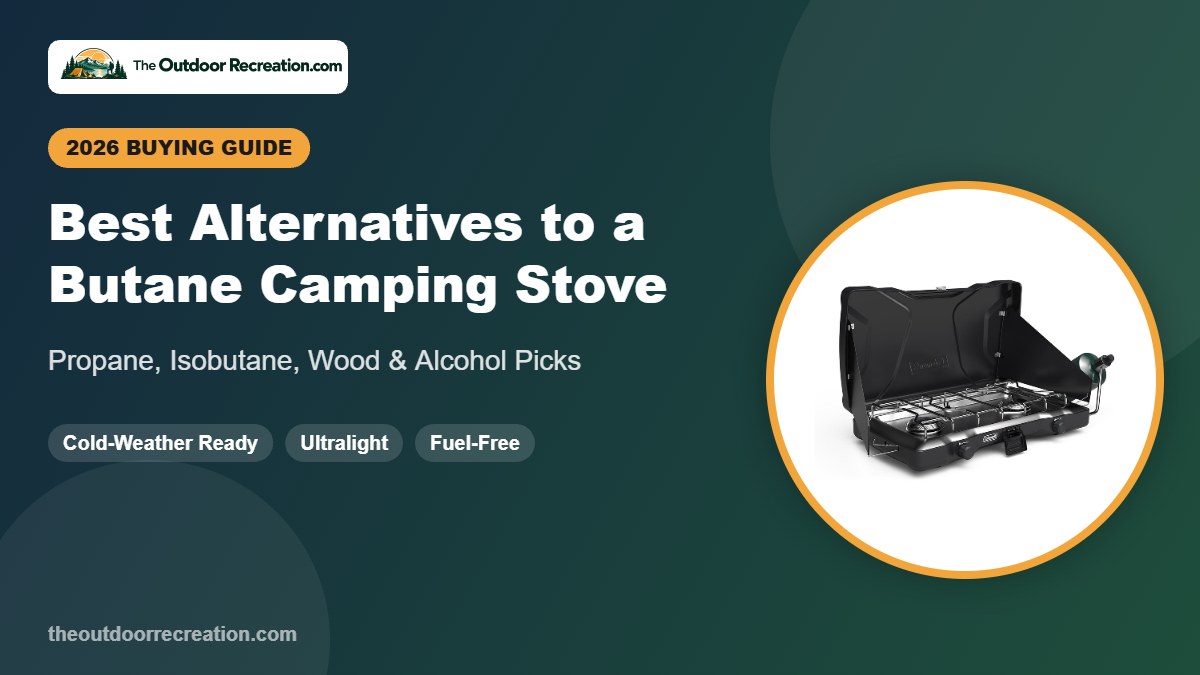
Quick Picks: Best Alternatives to a Butane Camping Stove
- Best overall alternative: Coleman Triton 2-Burner Propane Stove, with two burners and cold-weather propane power.
- Best for backpacking: MSR PocketRocket 2, at just 2.6 oz.
- Best budget ultralight: BRS-3000T, at about 25 g for under $20.
- Best budget propane 2-burner: Gospowor 2-Burner Propane Stove.
- Best fuel-free option: REDCAMP Folding Wood Burning Stove.
- Best simple and silent: REDCAMP Mini Alcohol Stove.
Butane vs. the Alternatives at a Glance
| Fuel | Cold-weather performance | Best for | Main drawback |
|---|---|---|---|
| Butane | Weak near freezing (boils at about 31°F / −0.5°C) | Mild-weather car camping, tailgating | Loses power in the cold |
| Propane | Excellent (boils at about −44°F / −42°C) | Car camping, groups, cold weather | Heavier steel cylinders |
| Isobutane-propane canister | Good (isobutane boils at about 11°F / −12°C) | Backpacking | Small cooking surface |
| Wood | Works in any temperature with dry fuel | Bushcraft, fuel-free trips | Fire restrictions, soot |
| Alcohol | Fair; slow to light in the cold | Ultralight, simple backup | Slow boil, invisible flame |
Comparison Table
| Stove | Fuel | Best for | Key spec | Price* | Rating | |
|---|---|---|---|---|---|---|
| Coleman Triton | Propane | Car camping, families, cold weather | 22,000 BTU (2 burners) | ~$120 | 4.7/5 | View |
| MSR PocketRocket 2 | Isobutane-propane | Backpacking | 2.6 oz | ~$50 | 4.8/5 | View |
| BRS-3000T | Isobutane | Budget ultralight | ~25 g | ~$17 | 4.5/5 | View |
| Gospowor 2-Burner | Propane | Budget 2-burner | 10,000 BTU combined | ~$70 | 4.5/5 | View |
| REDCAMP Wood Stove | Wood / twigs | No fuel to carry | 1.9 lb | ~$24 | 4.6/5 | View |
| REDCAMP Alcohol Stove | Denatured alcohol | Simple, silent backup | ~5 oz | ~$17 | 4.6/5 | View |
*Approximate Amazon prices at last check (October 2026). Prices change often, so check Amazon for the current price.
The 6 Best Alternatives to a Butane Camping Stove, Reviewed

1. Coleman Triton 2-Burner Propane Stove
1If you are replacing a butane stove because it struggles in cold weather or cannot keep up with group meals, a two-burner propane stove is the natural upgrade. The Coleman Triton puts out 22,000 total BTUs across two independently adjustable burners, has two wind guards and fits a 12-inch and a 10-inch pan side by side. Propane keeps working in temperatures where butane fades, and 16 oz cylinders are sold almost everywhere. With 4.7/5 from more than 3,700 Amazon ratings, it is the safest bet for car campers and families.
Pros & Cons
What we like
- 22,000 total BTUs across two burners
- Propane performs far better than butane in the cold
- Two wind guards and a removable chrome grate
- Fits a 12-inch and a 10-inch pan at once
Watch out for
- Bulkier and heavier than a single-burner butane stove
- Matches or a lighter needed (no built-in igniter on this version)
- Up to about 1 hour on high per 16 oz cylinder
Key Specs
- Fuel: 16 oz propane cylinder
- Output: 22,000 BTU total
- Burners: 2, independently adjustable
- Pan fit: 12 in + 10 in
- Burn time: up to 1 hr on high

2For hikers, the best alternative to a briefcase-style butane stove is a tiny canister stove that runs on isobutane-propane fuel. The MSR PocketRocket 2 weighs just 2.6 oz, folds to 2 x 2 x 3 inches and, according to MSR, boils a liter of water in about 3.5 minutes. The isobutane-propane blend handles cooler mornings better than straight butane, and the threaded canisters are easy to find at outdoor stores. It is a proven favorite with 4.8/5 from over 4,000 ratings.
Pros & Cons
What we like
- Only 2.6 oz; packs into a small pot
- Fast boil and true simmer control
- Isobutane-propane fuel works better in the cold than butane
- Protective case included
Watch out for
- Small pot supports are not made for big skillets
- No built-in igniter
- Needs a wind screen for best efficiency
Key Specs
- Fuel: isobutane-propane threaded canister
- Weight: 2.6 oz (4.2 oz with case)
- Packed size: 2 x 2 x 3 in
- Boil time: about 3.5 min per liter (MSR)

3The BRS-3000T is the go-to budget option for anyone who wants canister-stove convenience for under $20. The brand lists it at just 25 grams and 2,700 W, and claims about 3 minutes to boil a liter. It screws onto a standard threaded isobutane canister and nests inside a small pot with a 110 g canister. It is not as stable or wind-resistant as the MSR, but for the price it is a smart backup stove or a first step into backpacking.
Pros & Cons
What we like
- Extremely light (about 25 g) and very cheap
- Uses widely available threaded canisters
- Packs inside a small cook pot
Watch out for
- Narrow pot supports; best with small pots
- Sensitive to wind
- Fewer refinements than premium stoves
Key Specs
- Fuel: isobutane threaded canister
- Weight: about 25 g
- Output: 2,700 W
- Fuel use: about 140 g per hour (rated)

4. Gospowor 2-Burner Propane Stove
4Want two burners and propane without paying Coleman prices? This Gospowor stove adds piezo ignition, foldable side wind panels and a 304 stainless steel body for about $70. It is rated at up to 10,000 BTU combined, so it is better for simmering and everyday camp meals than fast boiling. It is a good fit if you mainly want the convenience of propane and a second burner for coffee while breakfast cooks.
Pros & Cons
What we like
- Two burners with piezo ignition
- Foldable wind panels on both sides
- Stainless steel build is easy to wipe clean
Watch out for
- 10,000 BTU combined is modest for two burners
- Newer brand with fewer reviews (4.5/5 from 560+)
Key Specs
- Fuel: propane cylinder
- Output: up to 10,000 BTU combined
- Ignition: piezo
- Material: 304 stainless steel

5A wood stove removes the fuel canister from the equation entirely. The REDCAMP folding stove burns twigs, pine cones and leaves you collect at camp, folds flat to 1.5 inches thick and weighs 1.9 pounds. The stainless steel grid doubles as a small grill. It is a fun, low-cost backup and a great option for bushcraft trips, but you will need dry fuel and must follow local fire restrictions, since many areas ban open flames during fire season.
Pros & Cons
What we like
- No fuel to buy or carry
- Folds flat (8.3 x 5.9 x 1.5 in)
- Stainless steel; doubles as a mini grill
Watch out for
- Slower and less controllable than gas
- Needs dry wood; produces soot
- Often banned during fire restrictions
Key Specs
- Fuel: twigs, leaves, small wood
- Weight: 1.9 lb
- Unfolded: 8.3 x 5.9 x 5.5 in
- Folded: 8.3 x 5.9 x 1.5 in

6Alcohol stoves are silent, have no moving parts and run on denatured alcohol that you can carry in any leak-proof bottle. REDCAMP’s brass burner comes with an aluminum stand and wind screen, weighs about 5 oz and, per the brand, burns about 50 minutes on 100 ml of alcohol. A flame regulator lets you turn the heat down or snuff it out. It is slower than gas, but it is cheap, reliable and popular with 4.6/5 from about 2,800 ratings.
Pros & Cons
What we like
- Quiet, simple and almost nothing to break
- Fuel is cheap and easy to find
- Stand and wind screen included
Watch out for
- Slower boil times than gas
- Flame is hard to see in daylight; handle with care
- Fire restrictions may apply
Key Specs
- Fuel: denatured alcohol
- Weight: about 5 oz
- Burn time: about 50 min per 100 ml (rated)
- Material: brass burner, aluminum stand
How to Choose the Right Butane Stove Alternative
Start with where and when you camp
If you drive to your campsite and cook for more than two people, a propane two-burner stove is the most practical upgrade. If you carry everything on your back, a canister stove like the MSR PocketRocket 2 saves weight and space. Wood and alcohol stoves make the most sense as lightweight backups or for trips where you want to avoid buying fuel canisters.
Think about temperature and altitude
Propane is the best choice for cold-weather camping. Isobutane-propane blends work well into the 20s °F, especially if you keep the canister warm. Straight butane is best reserved for warm, mild conditions.
Fuel availability and cost
16 oz propane cylinders are sold at most hardware stores, big-box stores and gas stations in the US. Threaded isobutane canisters are easy to find at outdoor retailers. Denatured alcohol is cheap at hardware stores, and wood is free, if it is dry and collecting it is allowed.
Check fire restrictions
During high fire danger, many public lands ban wood fires and stoves without an on/off valve. Gas stoves with a shut-off valve are usually still allowed, but always check the local ranger station or land agency before you go.
Wind and stability
Two-burner propane stoves have built-in wind guards and large grates for skillets. Small canister stoves need a separate wind screen and are best with small pots. Wood and alcohol stoves are low and stable but slower to cook.
Still prefer butane for warm-weather trips? See our picks for the best affordable butane camping stoves.
Prefer to stick with butane? Compare our best butane camping stoves and the best budget butane camping stoves.
Frequently Asked Questions
What is the best alternative to a butane camping stove?
For most campers, a propane stove such as the Coleman Triton 2-Burner is the best alternative. It works in much colder weather, uses widely available 16 oz cylinders and gives you two burners for group meals. Backpackers should look at an isobutane-propane canister stove like the MSR PocketRocket 2.
Is propane better than butane for camping?
Propane is better in cold weather and for high-output cooking, while butane burns clean and its canisters are compact. Many campers own one of each, or choose a dual-fuel stove that runs on both.
Can I use isobutane canisters on a butane stove?
Usually not. Most tabletop butane stoves take 8 oz bayonet-style butane cartridges, while backpacking stoves use threaded isobutane canisters. Always use the fuel type listed in your stove’s manual.
Are wood-burning camp stoves allowed everywhere?
No. Wood stoves are often prohibited during fire restrictions on public lands. Check current rules before your trip and always fully extinguish the stove.
Final Verdict
The Coleman Triton 2-Burner Propane Stove is the best all-around alternative to a butane camping stove: it is powerful, cold-weather friendly and easy to refuel. Backpackers should choose the MSR PocketRocket 2, or the BRS-3000T on a tight budget. For fuel-free cooking or a quiet backup, the REDCAMP wood and alcohol stoves are inexpensive and reliable.
Write Your Review
No reviews yet. Be the first to share your experience!