

Carrying a bike inside your car keeps it secure, but you need to protect both the bike and the interior. We cover this in more depth in our roundup of the best bike bag and bag combos.
These bags make it easy.
The Outdoor Recreation is reader-supported. As an Amazon Associate we earn from qualifying purchases, at no extra cost to you.
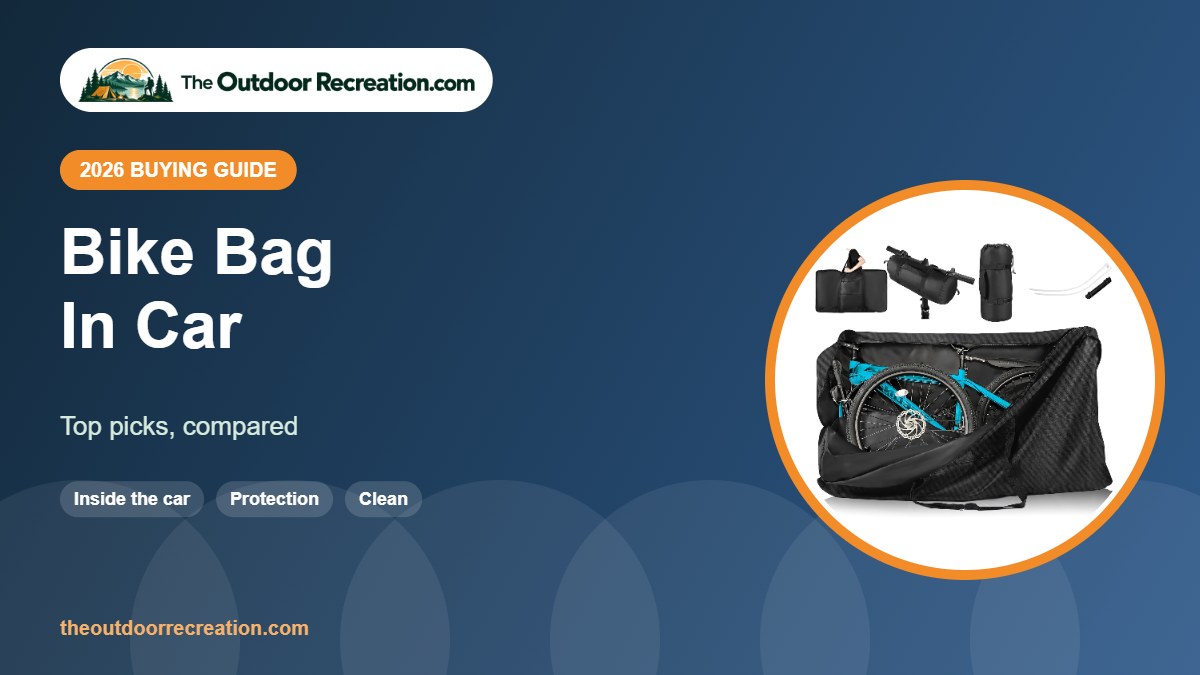
Quick Picks
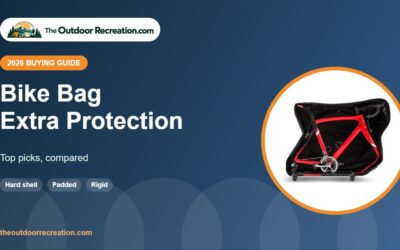
- Best full-bike bag: SRIMMIT 840D Bike Travel Bag
- Best folding bike: Rhinowalk Folding Bike Carry Bag
- Best wheel bag: Rhinowalk Padded Wheel Bag
- Best padded: CONFUTURY 900D Bike Travel Bag
- Best cover: Topcrown Waterproof Bike Cover
Comparison Table
| Product | Best for | Key spec | Standout feature | |
|---|---|---|---|---|
| SRIMMIT 840D Bike Travel Bag | Best full-bike bag | 840D fabric | 8000mm water resistance | View |
| Rhinowalk Folding Bike Carry Bag | Best folding bike | Fits 14 to 20 in bikes | Light nylon | View |
| Rhinowalk Padded Wheel Bag | Best wheel bag | 26 to 29 in wheels | 5mm padding | View |
| CONFUTURY 900D Bike Travel Bag | Best padded | 900D Oxford | Fits 26 to 29 in | View |
| Topcrown Waterproof Bike Cover | Best cover | 1 bike | 210D with UV coating | View |
Detailed Reviews

1SRIMMIT’s travel bag uses thick 840D Oxford with a triple coating rated to 8000mm water pressure.
It is a budget-friendly soft bag for flying or driving with a mountain or road bike.
Pros & Cons
What we like
- Affordable
- Tough fabric
- Water resistant
Watch out for
- Soft sides need padding
- No wheels
Key Specs
- Fabric: 840D Oxford
- Water resistance: 8000mm
- Use: air and car travel

2Rhinowalk’s carry bag fits 14 to 20-inch folding bikes and measures about 33.5 x 13 x 27 inches.
It is light, packable and handy for trains, buses and car trunks.
Pros & Cons
What we like
- Light
- Packs small
- Good for transit
Watch out for
- No padding
- Folding bikes only
Key Specs
- Fits: 14 to 20 in folding bikes
- Size: about 85 x 33 x 69 cm
- Material: nylon

3Rhinowalk’s wheel bag uses 600D Oxford with a 5mm PE padded layer and a waterproof lining.
It protects spare wheels and wheelsets in cars, vans and bike boxes.
Pros & Cons
What we like
- Padded
- Durable
- Fits common sizes
Watch out for
- Single wheel
- Check rotor clearance
Key Specs
- Fits: 26 to 29 in
- Padding: 5mm PE
- Fabric: 600D Oxford

4CONFUTURY’s travel bag uses 900D Oxford with a 210D lining, separate compartments and buckles for mountain and road bikes.
It is a tough soft case for air travel and car trips.
Pros & Cons
What we like
- Very tough fabric
- Separate compartments
- Good value
Watch out for
- Soft sides
- Heavy when packed
Key Specs
- Fabric: 900D Oxford
- Fits: 26 to 29 in
- Use: air travel

5Topcrown’s bike cover uses 210D fabric with hydrophobic, PU waterproof and anti-UV coatings.
It protects a bike stored outside or in a garage from rain, sun and dust.
Pros & Cons
What we like
- Waterproof
- UV coating
- Storage bag
Watch out for
- Not for transport
- Single bike
Key Specs
- Fabric: 210D
- Coatings: PU, UV
- Fit: 1 bike
How We Chose
We compared capacity, mounting, waterproofing, durability and ease of access across dozens of bike bags and carriers, then read verified owner feedback to find fit and wear problems that spec sheets miss. We did not receive free products, and we do not claim hands-on testing. TOR Scores combine published specs, verified owner feedback and overall value.
Carrying Bikes on a Car, Van or Jeep
Hitch racks are the most popular way to carry bikes on cars and SUVs. Hanging racks are cheaper; platform racks are more stable and easier on frames. Spare tire racks suit Jeeps and SUVs with rear spares, and vans can carry bikes inside with wheel bags and covers. Remove loose bags before driving, use a transport cover to protect bikes from road grime and rain, and make sure your plate and lights stay visible where required. You may also find our guide to the best bike bag 2026 reviews helpful.
Traveling With a Bike: Bag or Hard Case?
Soft bike bags are lighter, cheaper and easier to store, but you need to pad the frame carefully. Hard cases and premium framed bags protect better and are faster to pack, but cost more and take space at home. Before flying, check your airline’s current sports equipment rules and fees, remove pedals, protect derailleurs and rotors, and deflate tires slightly if advised.
E-bike batteries are often restricted on flights, and spare lithium batteries usually must travel in carry-on luggage; see FAA PackSafe.
How to Care for Bike Bags
Shake out grit after rides, wipe bags with mild soap and water, and let them dry fully before storing. Clean zippers with a soft brush and use zipper lubricant if they stick. Check straps, hooks and buckles for wear at the start of each season, and store bags out of strong sun to protect coatings. Related: our shortlist of the best bike bag mountain bike.
How to Choose a Bike Bag
Start with what you carry and how you ride, then check these points.
- Capacity: 1 to 3L for essentials, 6 to 15L for day trips, 20L+ panniers for commuting and touring.
- Mounting: make sure the bag fits your handlebar, frame, seatpost or rack without hitting cables, knees or heels.
- Weather protection: roll-top and welded seams are waterproof; zippers and coated fabric are water resistant.
- Access: top openings and side zips are easier on the move.
- Weight and stability: keep heavy items low and centered so the bike handles well.
- Visibility: reflective trim and light loops help in traffic.
Bike Bag Types Explained
- Handlebar bags keep snacks, a phone and a camera within reach; rolls carry bulky soft gear.
- Top tube bags sit behind the stem for phones, gels and keys.
- Frame bags fill the main triangle and keep weight low and centered.
- Saddle bags range from tiny repair pouches to large bikepacking seat packs.
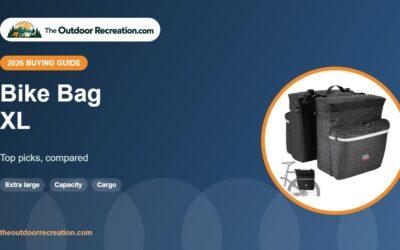
- Panniers clip to a rear rack and carry the most, ideal for commuting and touring.
- Rack trunk bags sit on top of a rack for medium loads.
- Baskets are the easiest for groceries and casual riding.
- Travel bags and cases protect the whole bike for flights and road trips.
Most riders end up with two or three types: a small saddle bag for repairs, a phone-friendly top tube or handlebar bag, and panniers or a basket for bigger loads.
Mounting, Fit and Avoiding Rattles
A good fit keeps a bag quiet and stable. Tighten straps evenly, add frame protection tape where straps rub, and keep handlebar bags clear of brake and shift cables. Panniers need heel clearance, so mount them far enough back. Quick-release systems make it easy to take bags into shops and offices. If a bag rattles, check loose buckles, hard items inside and empty space that lets contents shift. If you are comparing options, our guide to the best bike bag for road bike is worth a look.
Bike Bag Sizes and Dimensions
Bag capacity is usually listed in liters. As a rough guide, 1 to 2L holds essentials, 3 to 6L holds a jacket and snacks, 10 to 15L suits overnight bikepacking seat packs, and 20 to 30L panniers hold work clothes or groceries. Before buying a frame bag, measure the inside of your frame triangle. For saddle bags, check clearance between the saddle rails and rear tire, especially on small frames and full-suspension bikes.
Related guides: best bike bag drive, best bike bag vehicle, best bike bag van. See every pick in our Bike Bags category.
Sources and further reading: NHTSA: bicycle safety and CPSC: Micromobility Information Center (e-bike and battery safety). Product specs come from brand listings on Amazon; always follow the maker’s fit and load limits.
Frequently Asked Questions
Can I fly with a bike bag?
Yes, but check your airline’s rules and fees. Hard cases protect best; soft bags need careful padding.
How do I clean a bike bag?
Brush off dirt, wipe with mild soap and water, and dry fully before storing.
Will a bike bag fit my bike?
Check the mounting type and measurements, such as handlebar diameter, frame triangle size, saddle clearance or rack compatibility.
How do I stop bike bags being stolen?
Use quick-release bags you can take with you, and lock your bike in busy, well-lit places.
How much capacity do I need in a bike bag?
Essentials need 1 to 3L, day rides 6 to 15L, and commuting or touring 20L or more per pannier.
Final Verdict
Use a SRIMMIT travel bag for full bikes and a Rhinowalk folding bag for folders.





Write Your Review
No reviews yet. Be the first to share your experience!