

Weather changes on rides, so you need somewhere to stash a jacket.
These bags carry layers easily.
The Outdoor Recreation is reader-supported. As an Amazon Associate we earn from qualifying purchases, at no extra cost to you.
Quick Picks
- Best bungee roll: Rhinowalk Handlebar Roll Bag
- Best dry roll: Rhinowalk 12L Waterproof Handlebar Dry Bag
- Best seat pack: Rhinowalk 10L Waterproof Saddle Bag
- Best handlebar: SEAFEW 6L Handlebar Bag with Rain Cover
- Best trunk: KEMIMOTO 8L Rear Rack Bag
Comparison Table
| Product | Best for | Key spec | Standout feature | |
|---|---|---|---|---|
| Rhinowalk Handlebar Roll Bag | Best bungee roll | Front roll | External elastic cords | View |
| Rhinowalk 12L Waterproof Handlebar Dry Bag | Best dry roll | 12L | 4000mm waterproof fabric | View |
| Rhinowalk 10L Waterproof Saddle Bag | Best seat pack | 10L | Smaller seat pack | View |
| SEAFEW 6L Handlebar Bag with Rain Cover | Best handlebar | 6L | Rain cover included | View |
| KEMIMOTO 8L Rear Rack Bag | Best trunk | 8L | 3-in-1 carry | View |
Detailed Reviews

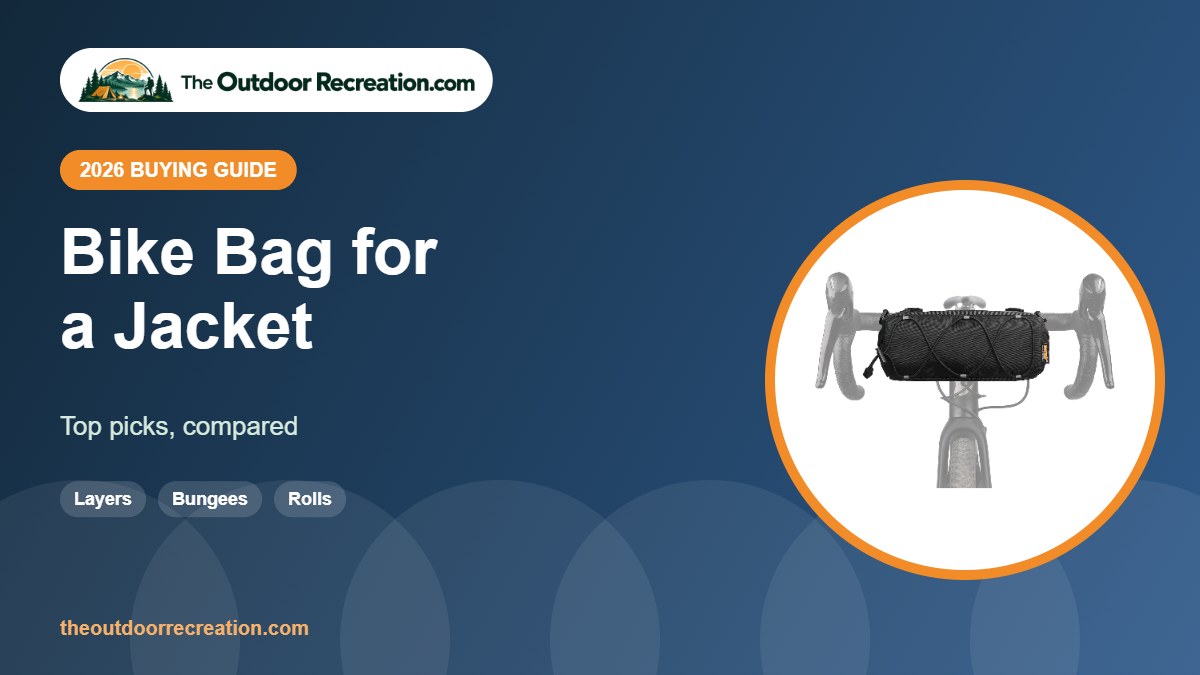
1This Rhinowalk front roll bag mounts on the handlebar or frame and adds external elastic cords for a jacket, rope or tripod.
It is a simple way to add front storage for commuting and day rides.
Pros & Cons
What we like
- Bungee cords for a jacket
- Easy mounting
- Versatile
Watch out for
- Not a dry bag
- Limited structure
Key Specs
- Style: handlebar roll
- Extras: elastic cords
- Mount: handlebar or frame

2Rhinowalk’s 12L handlebar roll is a bikepacking dry bag with 4000mm water-resistant fabric and taped seams.
Four EVA pads reduce vibration and protect cables, making it a solid front bag for gravel and touring.
Pros & Cons
What we like
- Large capacity
- Roll-top waterproofing
- EVA pads protect cables
Watch out for
- Bulky for road bikes
- Needs handlebar clearance
Key Specs
- Capacity: 12L
- Fabric: 4000mm rated
- Closure: roll top

3The 10L version of Rhinowalk’s seat pack suits smaller frames and lighter loads.
It keeps the same waterproof inner bag and anti-slip construction.
Pros & Cons
What we like
- Fits smaller bikes
- Waterproof inner
- Light
Watch out for
- Less space
- Sway on rough trails
Key Specs
- Capacity: 10L
- Inner: 3000mm waterproof
- Use: bikepacking

4SEAFEW’s 6L handlebar bag has a main compartment and two side pockets, plus a rain cover for wet days.
It is a roomy, affordable front bag for commuters and casual riders.
Pros & Cons
What we like
- 6L capacity
- Rain cover
- Side pockets
Watch out for
- Can sway when full
- Basic mounting
Key Specs
- Capacity: 6L
- Size: about 28 x 15 x 15 cm
- Extras: rain cover

5KEMIMOTO’s 8L rack bag has hand straps and a shoulder strap, so it converts to a crossbody bag or handbag off the bike.
PVC fabric resists water, making it a versatile commuter bag.
Pros & Cons
What we like
- Converts to crossbody
- Water resistant
- Compact
Watch out for
- Smaller capacity
- Needs a rack
Key Specs
- Capacity: 8L
- Fabric: PVC
- Carry: hand, shoulder, rack
How We Chose
We compared capacity, mounting, waterproofing, durability and ease of access across dozens of bike bags and carriers, then read verified owner feedback to find fit and wear problems that spec sheets miss. We did not receive free products, and we do not claim hands-on testing. TOR Scores combine published specs, verified owner feedback and overall value.
Building a Bikepacking Setup
Bikepacking spreads gear across a handlebar roll, a frame bag and a large seat pack instead of using a rack. Put heavy, dense items like food and tools in the frame bag, soft bulky items like a sleeping bag in the handlebar roll, and clothes in the seat pack. Add stem bags for snacks and a top tube bag for your phone. Follow Leave No Trace principles on overnight trips.
Bike Bag Types Explained
- Handlebar bags keep snacks, a phone and a camera within reach; rolls carry bulky soft gear.
- Top tube bags sit behind the stem for phones, gels and keys.
- Frame bags fill the main triangle and keep weight low and centered.
- Saddle bags range from tiny repair pouches to large bikepacking seat packs.
- Panniers clip to a rear rack and carry the most, ideal for commuting and touring.
- Rack trunk bags sit on top of a rack for medium loads.
- Baskets are the easiest for groceries and casual riding.
- Travel bags and cases protect the whole bike for flights and road trips.
Most riders end up with two or three types: a small saddle bag for repairs, a phone-friendly top tube or handlebar bag, and panniers or a basket for bigger loads. We cover this in more depth in our roundup of the best bike bag and bag combos.
Waterproof vs Water-Resistant Bike Bags
Truly waterproof bags use roll-top closures, welded seams and coated fabrics such as PVC or TPU. Water-resistant bags use coated fabric and zippers that shed light rain but can leak in downpours. Rain covers help, and a dry sack liner inside any bag is a cheap way to protect electronics. For daily commuting in wet climates, choose roll-top panniers or add liners. You may also find our guide to the best bike bag 2026 reviews helpful.
How to Choose a Bike Bag
Start with what you carry and how you ride, then check these points.
- Capacity: 1 to 3L for essentials, 6 to 15L for day trips, 20L+ panniers for commuting and touring.
- Mounting: make sure the bag fits your handlebar, frame, seatpost or rack without hitting cables, knees or heels.
- Weather protection: roll-top and welded seams are waterproof; zippers and coated fabric are water resistant.
- Access: top openings and side zips are easier on the move.
- Weight and stability: keep heavy items low and centered so the bike handles well.
- Visibility: reflective trim and light loops help in traffic.
Mounting, Fit and Avoiding Rattles
A good fit keeps a bag quiet and stable. Tighten straps evenly, add frame protection tape where straps rub, and keep handlebar bags clear of brake and shift cables. Panniers need heel clearance, so mount them far enough back. Quick-release systems make it easy to take bags into shops and offices. If a bag rattles, check loose buckles, hard items inside and empty space that lets contents shift. Related: our shortlist of the best bike bag mountain bike.
Bike Bag Sizes and Dimensions
Bag capacity is usually listed in liters. As a rough guide, 1 to 2L holds essentials, 3 to 6L holds a jacket and snacks, 10 to 15L suits overnight bikepacking seat packs, and 20 to 30L panniers hold work clothes or groceries. Before buying a frame bag, measure the inside of your frame triangle. For saddle bags, check clearance between the saddle rails and rear tire, especially on small frames and full-suspension bikes. If you are comparing options, our guide to the best bike bag for road bike is worth a look.
How to Care for Bike Bags
Shake out grit after rides, wipe bags with mild soap and water, and let them dry fully before storing. Clean zippers with a soft brush and use zipper lubricant if they stick. Check straps, hooks and buckles for wear at the start of each season, and store bags out of strong sun to protect coatings.
Related guides: best bike bag jackets, best bike bag handle, best bike bag seat. See every pick in our Bike Bags category.
Sources and further reading: NHTSA: bicycle safety and CPSC: Micromobility Information Center (e-bike and battery safety). Product specs come from brand listings on Amazon; always follow the maker’s fit and load limits.
Frequently Asked Questions
How much capacity do I need in a bike bag?
Essentials need 1 to 3L, day rides 6 to 15L, and commuting or touring 20L or more per pannier.
Will a bike bag fit my bike?
Check the mounting type and measurements, such as handlebar diameter, frame triangle size, saddle clearance or rack compatibility.
Are bike bags waterproof?
Roll-top bags with welded seams are waterproof; most zippered bags are water resistant. Add a dry bag liner for electronics.
How do I clean a bike bag?
Brush off dirt, wipe with mild soap and water, and dry fully before storing.
How do I stop bike bags being stolen?
Use quick-release bags you can take with you, and lock your bike in busy, well-lit places.
Final Verdict
The Rhinowalk handlebar roll with bungee cords is the easiest way to carry a jacket.





Write Your Review
No reviews yet. Be the first to share your experience!