

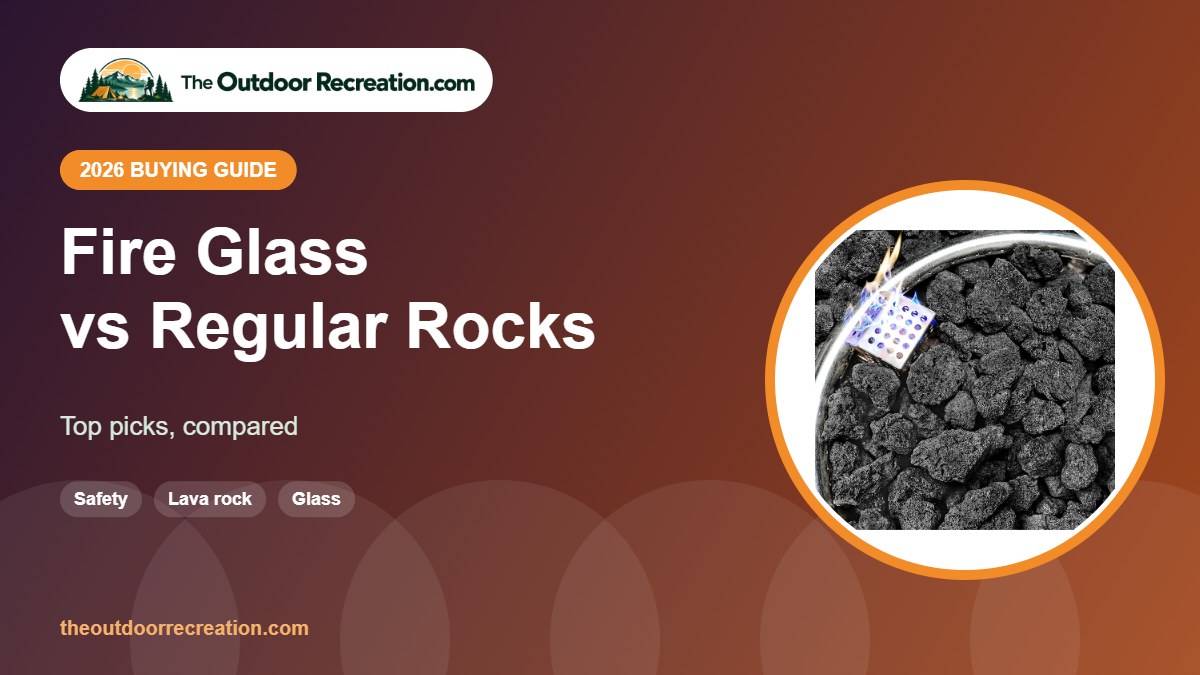
Regular river rocks can trap moisture and crack in heat.
Use fire glass or lava rock made for fire pits instead.
The Outdoor Recreation is reader-supported. As an Amazon Associate we earn from qualifying purchases, at no extra cost to you.
Quick Picks
- Best lava rock: NUPICK Black Lava Rocks, 20 lb
- Best large lava: 1-2 Inch Black Lava Rocks, 20 lb
- Best glass: 1/2-Inch Reflective Fire Glass, 20 lb
- Best blend: AZ Patio Bahama Blend Fire Glass
- Best black glass: Black Reflective Fire Glass, 20 lb
Comparison Table
| Product | Best for | Type | Standout feature | |
|---|---|---|---|---|
| NUPICK Black Lava Rocks, 20 lb | Best lava rock | Natural lava | Base layer filler | View |
| 1-2 Inch Black Lava Rocks, 20 lb | Best large lava | 1-2 in | Heat-resistant volcanic rock | View |
| 1/2-Inch Reflective Fire Glass, 20 lb | Best glass | 1/2 in reflective | Mirror finish | View |
| AZ Patio Bahama Blend Fire Glass | Best blend | Blend, 10 lb | Multi-color blend | View |
| Black Reflective Fire Glass, 20 lb | Best black glass | 1/2 in black | Black reflective | View |
Detailed Reviews

1NUPICK’s natural black lava rock is the ideal base layer under fire glass, letting you use less glass on top.
It has no additives and is reusable.
Pros & Cons
What we like
- Cheap filler
- Natural
- Reusable
Watch out for
- Duller look alone
- Dusty when new
Key Specs
- Material: natural lava rock
- Weight: 20 lb
- Use: base layer

2These 1 to 2 inch lava rocks are a classic gas fire pit filler with high heat resistance.
Use them on their own for a natural look or under a layer of fire glass.
Pros & Cons
What we like
- Classic look
- Heat resistant
- Good airflow
Watch out for
- Rinse before use
- Less sparkle
Key Specs
- Size: 1-2 in
- Weight: 20 lb
- Material: volcanic rock

3This 20-pound bag of 1/2-inch reflective fire glass is one of the best-selling fire glass products on Amazon. The mirrored surface sparkles in daylight and looks almost molten when lit.
It is an easy upgrade from lava rock for propane and natural gas fire pits.
Pros & Cons
What we like
- Very popular
- Mirror finish
- Good all-round size
Watch out for
- Shows dust
- Reflective side can dull with soot
Key Specs
- Size: 1/2 in
- Weight: 20 lb
- Finish: reflective
- Fuel: propane or natural gas

4AZ Patio’s Bahama Blend mixes blue and aqua tones for a coastal look. Like all fire glass, it gives off no ash, soot or smoke from the glass itself.
A 10-pound bag is enough to top-dress a small fire bowl over a lava rock base.
Pros & Cons
What we like
- Attractive color blend
- No ash from glass
- Trusted brand
Watch out for
- 10 lb covers less
- Non-reflective look
Key Specs
- Weight: 10 lb
- Color: Bahama blend
- Fuel: propane

5The same reflective 1/2-inch glass in black creates a dramatic, modern look and hides soot better than light colors.
Black is a favorite for contemporary fire tables.
Pros & Cons
What we like
- Hides soot
- Modern look
- Reflective sparkle
Watch out for
- Less color in daylight
- Heavier bags
Key Specs
- Size: 1/2 in
- Weight: 20 lb
- Color: black reflective
How We Chose
We compared glass size, finish, coverage, heat tolerance and compatibility with propane and natural gas burners, then read verified owner feedback on color, soot and how the glass holds up over time. We did not receive free products, and we do not claim hands-on testing. TOR Scores combine published specs, verified owner feedback and overall value. You may also find our guide to the best fire glass with fire pit helpful.
Fireplace Safety
Only use fire glass in gas fireplaces designed for media like glass or rock, and follow the manufacturer’s instructions. Never put fire glass in a wood-burning fireplace. Keep a working carbon monoxide alarm in any room with a fuel-burning appliance.
How to Choose Fire Glass
Fire glass is tempered glass made to withstand high heat in gas fire pits and fireplaces. It does not burn, melt or produce smoke, and it reflects the flames for a sparkling look. Related: our shortlist of the best fire glass with glass blends.
- Gas only. Fire glass is for propane and natural gas fire pits and fireplaces. Never use it in a wood-burning fire pit or chiminea.
- Size. 1/4-inch glass looks fine and packed; 1/2-inch is the most popular all-rounder; 3/4-inch and larger chunks let more gas through.
- Finish. Reflective glass has a mirror coating on one side for more sparkle. Standard glass has a softer, frosted look.
- Amount. Most fire pits need about 1 to 2 inches of glass over the burner. Fill the rest of the bowl with lava rock as a cheaper base layer.
- Rated for heat. Only use glass sold as fire glass. Ordinary decorative glass can shatter.
How to Install and Clean Fire Glass
- Turn off the gas and let the fire pit cool.
- Add lava rock or filler to just below the burner.
- Pour a 1 to 2 inch layer of fire glass over the burner, keeping the pilot and ignition clear.
- Light the fire pit and check the flame. If it is uneven, spread the glass more thinly.
- Rinse the glass in a colander with water every few months to remove dust and soot, and let it dry fully before use.
A little soot is normal. Heavy black soot usually means the burner is not getting enough air, so check the air mixer or have the fire pit serviced.
Choosing Fire Glass Size
Fire glass usually comes in 1/4, 1/2 and 3/4 inch pieces. Smaller 1/4 inch glass looks fine and sparkly but suits small tabletop features. 1/2 inch is the most popular all-round size for fire pits and fire tables. 3/4 inch and larger glass looks bold and suits big outdoor fire pits.
Reflective glass has a mirrored side that sparkles even when the fire is off; non-reflective glass has a more classic, gem-like look. Many owners mix reflective and plain glass for depth. If you are comparing options, our guide to the best fire glass for fire pit is worth a look.
How to Clean Fire Glass
Over time, fire glass can collect dust, leaves and a light soot film. Turn off the gas, let everything cool fully and scoop the glass into a bucket. Rinse it with water, or soak it briefly with a mild cleaner, then dry it completely before returning it to the pit.
If glass keeps turning black, the burner may be getting too little air or the wrong fuel mix, which is a problem for a qualified technician to check. Never burn wood, paper or trash on fire glass. For a closer look, see our guide to the best fire glass for propane.
BTUs, Burners and Glass Depth
Most gas fire pits recommend covering the burner with about 1 to 2 inches of glass. Too much glass can choke the flame; too little looks sparse and leaves the burner exposed. Higher-BTU burners push bigger, taller flames through the glass.
Always follow your fire pit or burner maker’s guidance on media depth and type, because some burners are designed only for lava rock or specific media.
Related guides: best fire glass vs glass, best fire glass underlayment, best fire glass. See every pick in our Fire Pits category.
Sources and further reading: NFPA: safety with heating equipment, CDC: carbon monoxide poisoning basics and Smokey Bear: campfire safety. Product details come from brand listings on Amazon. Always follow the manufacturer’s instructions and local burn rules.
Frequently Asked Questions
Can I use river rocks in a fire pit?
Avoid them; trapped moisture can make them crack. Use lava rock or fire glass.
Is fire glass safe?
Yes, tempered fire glass made for fire pits is safe in gas fire features; never use regular glass.
Can fire glass be used in a wood fire?
No. Fire glass is for gas fire pits and fireplaces; wood fires leave soot and ash on it.
How much fire glass do I need?
It depends on the pit’s area and depth; many brands provide calculators, and a base of lava rock reduces how much glass you need.
How far should a fire pit be from the house?
Often at least 10 feet, but follow the maker’s instructions and local codes.
Final Verdict
Use lava rock or fire glass, never wet river rocks.


Write Your Review
No reviews yet. Be the first to share your experience!