

Some hikers with plantar fasciitis like the support of compression socks.
These are popular choices; see a clinician for ongoing heel pain.
The Outdoor Recreation is reader-supported. As an Amazon Associate we earn from qualifying purchases, at no extra cost to you.
Quick Picks
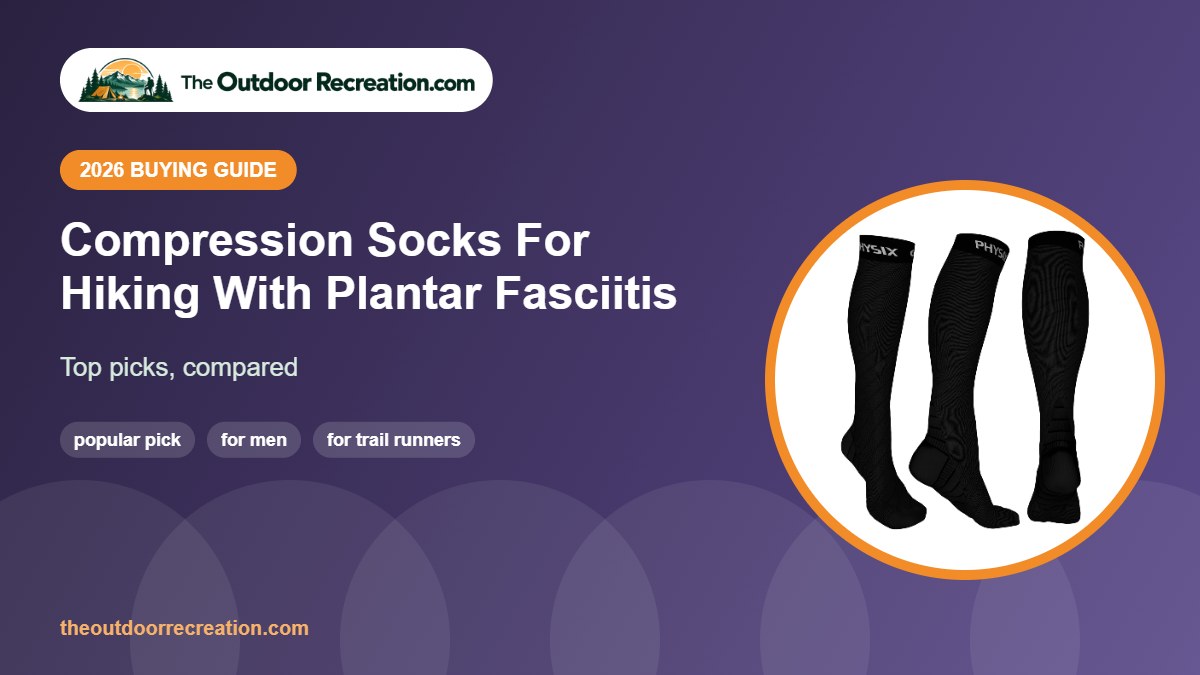
- Best popular pick: Physix Gear Sport Compression Socks
- Best for men: CEP Core Run 5.0 Tall Compression Socks (Men)
- Best for trail runners: Zensah Tech+ Compression Socks
- Best wool blend: Sockwell Women’s Circulator Compression Sock
- Best for women: CEP Core Run 5.0 Tall Compression Socks (Women)
Comparison Table
| Product | Best for | Compression | Standout feature | |
|---|---|---|---|---|
| Physix Gear Sport Compression Socks | Best popular pick | 20-30 mmHg | Huge owner base | View |
| CEP Core Run 5.0 Tall Compression Socks (Men) | Best for men | 20-30 mmHg | Breathable knit | View |
| Zensah Tech+ Compression Socks | Best for trail runners | Knee high | Moisture wicking | View |
| Sockwell Women’s Circulator Compression Sock | Best wool blend | Moderate 15-20 mmHg | Merino bamboo blend | View |
| CEP Core Run 5.0 Tall Compression Socks (Women) | Best for women | 20-30 mmHg | Targeted support | View |
Detailed Reviews

1Physix Gear Sport compression socks are one of the most popular 20 to 30 mmHg socks, used by runners, nurses and travelers.
Their firm graduated compression helps legs feel fresher on long days on your feet.
Pros & Cons
What we like
- Very popular
- Firm compression
- Many sizes
Watch out for
- Tight to put on
- Synthetic feel
Key Specs
- Compression: 20-30 mmHg
- Height: knee high
- Fit: men and women
2The men’s CEP Core Run 5.0 tall socks offer 20 to 30 mmHg graduated compression with breathable, quick-drying knit.
They suit hikers who want firm calf support on long climbs and descents.
Pros & Cons
What we like
- Firm compression
- Quick drying
- Durable
Watch out for
- Firm fit
- Pricier
Key Specs
- Compression: 20-30 mmHg
- Height: knee high
- Fit: men’s sizing

3Zensah Tech+ socks combine graduated compression with moisture-wicking fabric and a cushioned footbed.
They are made in Italy and popular with trail runners and fast hikers.
Pros & Cons
What we like
- Wicks moisture
- Cushioned foot
- Durable
Watch out for
- Firm cuff
- Pricier
Key Specs
- Height: knee high
- Fabric: wicking blend
- Made in: Italy (per listing)

4. Sockwell Women’s Circulator Compression Sock
4The Sockwell Circulator uses a merino and bamboo blend with moderate graduated compression.
It is comfortable for long walks and hikes and stays fresher than many synthetic socks.
Pros & Cons
What we like
- Soft wool blend
- Moderate compression
- Comfortable all day
Watch out for
- Not for very firm support
- Pricier
Key Specs
- Compression: moderate
- Material: merino, bamboo blend
- Fit: women’s

5. CEP Core Run 5.0 Tall Compression Socks (Women)
5CEP’s Core Run 5.0 tall socks deliver 20 to 30 mmHg graduated compression with shin and Achilles support.
They are designed for runners but work well for long hikes when you want firm, supportive compression.
Pros & Cons
What we like
- Firm compression
- Achilles and shin support
- Breathable
Watch out for
- Firm fit takes getting used to
- Pricier
Key Specs
- Compression: 20-30 mmHg
- Height: knee high
- Fit: women’s sizing
How We Chose
We compared compression level, materials, height, cushioning and sizing across dozens of compression socks, then read verified owner feedback on fit, comfort in boots and durability. This is not medical advice. We did not receive free products, and we do not claim hands-on testing. TOR Scores combine published specs, verified owner feedback and overall value. You may also find our guide to the compression socks for hiking vs. regular hiking socks helpful.
Health Notes
Compression socks are generally safe for healthy hikers, but they are not right for everyone. People with peripheral artery disease, diabetes-related nerve damage, skin conditions or other circulation problems should ask a doctor before using them. If you have leg swelling, pain or a medical condition, talk to a healthcare professional rather than relying on socks alone.
Compression Socks With Hiking Boots
Thin to medium cushioned compression socks fit best in hiking boots. If your boots feel tight, try a thinner sock or loosen the lacing over the instep. Make sure there are no wrinkles at the heel or toes, which can cause blisters on long descents. Related: our shortlist of the compression socks for hiking vs backpacking.
How to Measure and Put Them On
Measure your ankle and calf circumference in the morning, before swelling, and use the brand’s size chart. To put socks on, turn them inside out to the heel, slide your foot in, then roll the sock up your leg without bunching. The top band should sit just below the knee crease, never folded over.
How to Choose Compression Socks for Hiking
- Compression level: 15 to 20 mmHg is light to moderate; 20 to 30 mmHg is firm and common for athletes.
- Material: merino blends regulate temperature and resist odor; synthetics dry fastest.
- Height: knee-high socks give graduated calf compression; crew and ankle styles mainly support the foot.
- Cushioning: light cushioning under the forefoot and heel helps on long days in boots.
- Fit: size by calf and ankle measurement, not just shoe size.
Choose the lightest compression that feels supportive, and always try them on a short hike first. If you are comparing options, our guide to the best compression socks for hiking 2026 for women is worth a look.
What mmHg Means
Compression is measured in millimeters of mercury (mmHg). Graduated socks are tightest at the ankle and looser toward the knee. Light compression (8 to 15 mmHg) is for everyday comfort, moderate (15 to 20 mmHg) suits travel and long walks, and firm (20 to 30 mmHg) is popular with runners and hikers. Higher medical grades should only be used on a clinician’s advice.
Washing and Lifespan
Wash compression socks inside out in cool water and air dry them to protect the elastic. Avoid fabric softener and high dryer heat. Most pairs lose some compression after several months of regular use, so replace them when they feel easy to pull on or start to sag. For a closer look, see our guide to the best compression socks for hiking 2026 women love.
How Much Weight Should You Carry?
A common rule of thumb is to keep a loaded backpacking pack at or below about 20 percent of your body weight, though fitness and terrain matter. Most 65L packs are designed for loads of roughly 30 to 45 lb, and comfort drops quickly above the maker’s recommended range.
To cut weight, weigh your gear and look at the big three first: shelter, sleep system and the pack itself. Repackage food, carry only the water you need between reliable sources and leave duplicate items at home. Even a few pounds less makes long climbs and multi-day trips noticeably easier.
Related guides: best compression socks for hiking with flat feet, best compression socks for hiking boots, best compression socks for hiking. See every pick in our Outdoor Apparel category.
Sources and further reading: National Park Service: the Ten Essentials, Leave No Trace: the 7 Principles and National Park Service: camping basics. Product specs come from brand listings on Amazon; always check your airline’s current carry-on size rules before you fly.
Frequently Asked Questions
Who should not wear compression socks?
People with circulation problems, neuropathy or skin conditions should ask a doctor first.
What compression level is best for hiking?
Most hikers use 15 to 20 or 20 to 30 mmHg; start lighter if you are new to compression.
Can compression socks cause blisters?
They can if they are the wrong size or wrinkle in boots; fit them carefully.
Should I wear compression socks for hiking?
Many hikers like them for reduced leg fatigue; they are optional and not for everyone.
Do compression socks help plantar fasciitis?
Some people find them comfortable, but they are not a treatment; see a clinician.
Final Verdict
Physix Gear Sport socks are a popular supportive choice.

Write Your Review
No reviews yet. Be the first to share your experience!