

Knowing the depth helps you put your lure where the fish are.
These units make it easier.
The Outdoor Recreation is reader-supported. As an Amazon Associate we earn from qualifying purchases, at no extra cost to you.
Quick Picks
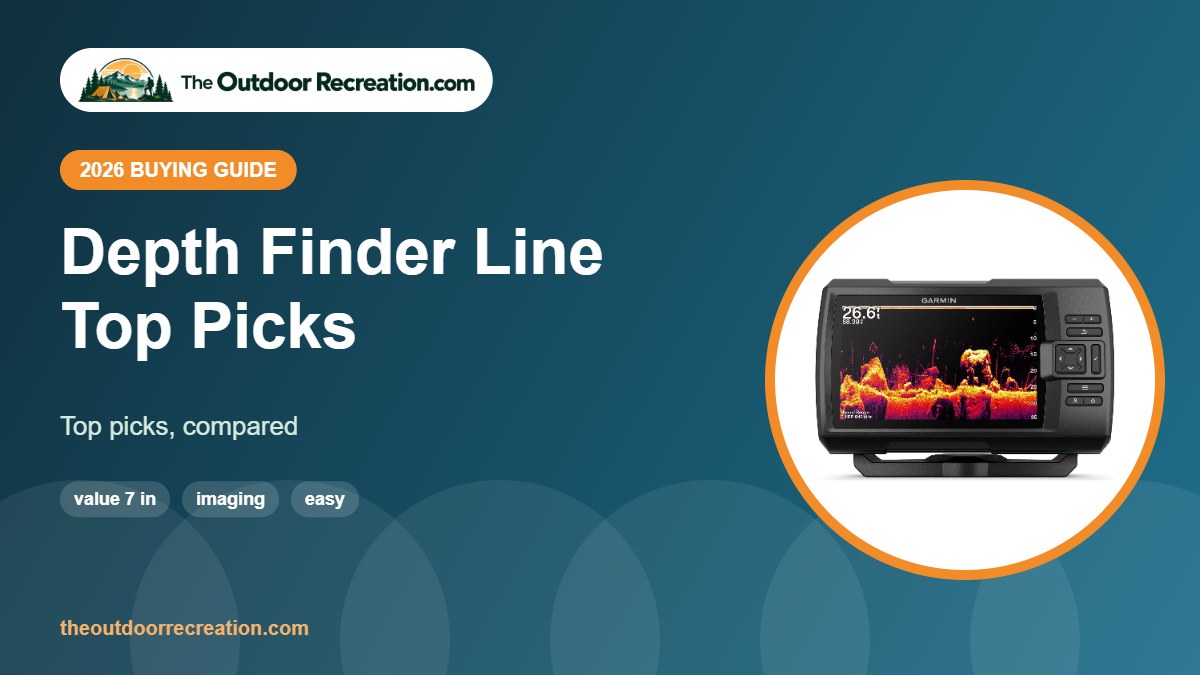
- Best value 7 in: Garmin Striker Vivid 7cv
- Best imaging: Humminbird Helix 7 G4N GPS Fish Finder
- Best easy: Lowrance HOOK Reveal 5 SplitShot
- Best compact: Garmin STRIKER Vivid 4cv
- Best braid line: KastKing SuperPower Braided Line
Comparison Table
| Product | Best for | Key spec | Standout feature | |
|---|---|---|---|---|
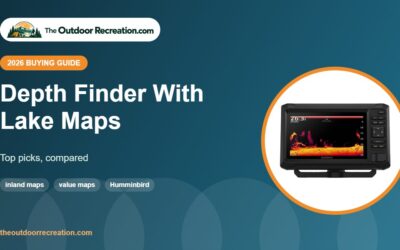
| Garmin Striker Vivid 7cv | Best value 7 in | 7 in display | ClearVü + GPS | View |
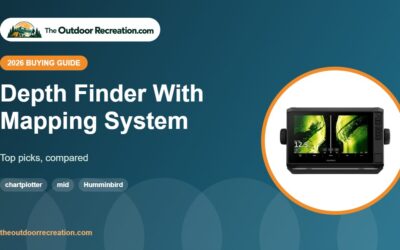
| Humminbird Helix 7 G4N GPS Fish Finder | Best imaging | 7 in display | MEGA Down Imaging, GPS | View |
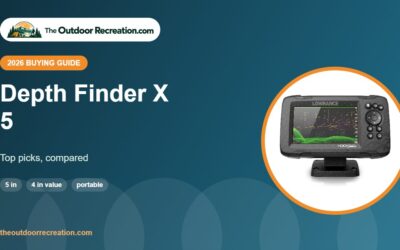
| Lowrance HOOK Reveal 5 SplitShot | Best easy | 5 in display | SplitShot transducer | View |
| Garmin STRIKER Vivid 4cv | Best compact | 4 in color screen | Vivid scanning sonar | View |
| KastKing SuperPower Braided Line | Best braid line | Strong knots | No waxy coating | View |
Detailed Reviews

1The Garmin Striker Vivid 7cv adds a 7 inch screen, vivid color palettes, CHIRP and ClearVü sonar and built-in GPS for waypoints.
Its Quickdraw contours feature lets you make your own maps.
Pros & Cons
What we like
- Big screen for money
- Built-in GPS
- Make your own maps
Watch out for
- No preloaded charts
- Not touchscreen
Key Specs
- Screen: 7 in
- Sonar: CHIRP + ClearVü
- Extras: GPS, Quickdraw

2The Humminbird Helix 7 G4N combines dual-spectrum CHIRP sonar, MEGA Down Imaging and built-in GPS on a 7 inch screen.
It is a strong mid-range choice for anglers who want sharp imaging and mapping.
Pros & Cons
What we like
- Sharp imaging
- Built-in GPS
- Networking-ready
Watch out for
- Learning curve
- Larger than kayak units
Key Specs
- Screen: 7 in
- Sonar: CHIRP + MEGA DI
- Extras: GPS, mapping

3The Lowrance HOOK Reveal 5 SplitShot pairs a 5 inch screen with a SplitShot transducer for CHIRP and DownScan imaging, plus preloaded maps.
Autotuning sonar makes it simple for beginners.
Pros & Cons
What we like
- Easy to use
- Preloaded maps
- Good value
Watch out for
- Smaller screen
- No side imaging on this version
Key Specs
- Screen: 5 in
- Transducer: SplitShot
- Extras: preloaded maps

4The STRIKER Vivid 4cv is Garmin’s compact entry into color CHIRP sonar with ClearVü scanning, sized for small boats, jon boats and kayaks.
Its simple menus and built-in GPS for marking waypoints make it a favorite first depth finder.
Pros & Cons
What we like
- Easy to learn
- ClearVü scanning
- Waypoint GPS
Watch out for
- Small screen
- No preloaded maps
Key Specs
- Screen: 4 in color
- Sonar: CHIRP + ClearVü
- Transducer: GT20-TM included

5KastKing SuperPower is one of the most popular braided lines, known for strong knot strength and a supple feel that casts smoothly through the guides.
Braid is the best choice for tethering a castable sonar because it has almost no stretch and resists abrasion.
Pros & Cons
What we like
- Strong knot strength
- Casts smoothly
- Huge owner base
Watch out for
- Can dig into itself if spooled loose
- Visible in clear water
Key Specs
- Type: braided line
- Use: casting, sonar tether
- Feature: abrasion resistant
How We Chose
We compared screen size, sonar type, GPS and charts, transducer options and power needs across dozens of depth finders and accessories, then read verified owner feedback on readability, installation and reliability. We did not receive free products, and we do not claim hands-on testing. TOR Scores combine published specs, verified owner feedback and overall value. We cover this in more depth in our roundup of the best castable fish finder line.
Reading Depth and Bottom on the Screen
The depth number in the corner is the most important reading. The bottom shows as a thick band: a hard bottom such as rock returns a brighter, thicker line, while mud and weeds return a softer, thinner line. Fish usually appear as arches when the boat is moving and lines when you sit still.
Turn sensitivity up until you see a little clutter, then back it off. Use zoom and split views to focus on the bottom few feet where many fish feed. You may also find our guide to the best depth finder on a budget helpful.
How to Choose a Depth Finder
- Screen size: 4 to 5 inches suits kayaks and small boats; 7 to 9 inches is easier to read on larger boats.
- Sonar type: traditional CHIRP for depth and fish arches, down imaging for detail under the boat, side imaging for scanning wide areas.
- GPS and maps: built-in GPS marks waypoints; chartplotter combos add lake or coastal charts.
- Transducer mount: transom, trolling motor, through-hull or portable clamp.
- Power: most units run on 12V; kayaks and portable kits need a small battery.
Match the unit to your boat and water first, then add features you will actually use.
Trolling Motor and Transducer Mounting Options
Where the transducer sits decides how clean your sonar picture is. Most boats use a transom mount, which bolts to the back of the hull below the waterline. It is simple and cheap, but it can lose the picture at high speed if it sits in turbulent water. In-hull or shoot-through mounts read through a solid fiberglass hull, which avoids drilling below the waterline but can reduce sensitivity.
Trolling motor mounts clamp the transducer to the motor’s lower unit, so the sonar points wherever you steer. That is popular with bass anglers who fish from the front deck and want the screen and the beam to follow the boat’s position. Use the clamp kit recommended by your fish finder maker, route the cable along the motor shaft with ties, and leave enough slack for the motor to turn and stow. Related: our shortlist of the best depth finder you can buy.
On kayaks, scupper-hole mounts and arm mounts keep the transducer below the hull without drilling. Whatever you choose, keep the transducer face clean, aim it straight down and test at slow speed before adjusting the angle.
Depth Finder vs Fish Finder
A depth finder, or depth sounder, uses sonar to measure how deep the water is under your boat. A fish finder uses the same sonar but also shows fish arches, bait, structure and bottom hardness on a screen. Today almost every fish finder doubles as a depth finder, so most boaters buy one unit that does both.
Basic depth sounders and handheld units are cheapest and simplest. Fish finders with CHIRP, down imaging or side imaging cost more but show far more detail, and chartplotter combos add GPS maps for navigation. If you are comparing options, our guide to the best depth finder camera options is worth a look.
Depth Finder Installation Basics
Most small-boat depth finders use a transom-mount transducer. Mount it where water flows smoothly, away from the propeller wash, strakes and rivets, with the face level with or slightly below the hull bottom. Run the cable to the console, secure it with clips, and connect power to a fused 12V source.
Kayaks and canoes often use scupper or arm mounts, while rental boats and jon boats can use a clamp-on portable bracket. Always follow the manufacturer’s instructions; a poorly placed transducer is the most common cause of bad readings at speed.
Related guides: best depth finder lines, best depth finder trolling, best depth finder. See every pick in our Fish Finders category.
Sources and further reading: NOAA Fisheries: recreational fishing resources and Leave No Trace: the 7 Principles. Product specs come from brand listings on Amazon. Always check local fishing regulations before you fish.
Frequently Asked Questions
What is the difference between a depth finder and a fish finder?
A depth finder measures water depth; a fish finder also shows fish, structure and bottom detail. Most fish finders work as depth finders.
Do I need GPS on a depth finder?
Not for depth alone, but GPS lets you mark spots and navigate back to them.
Can I install a depth finder myself?
Many small-boat units are DIY friendly; follow the transducer placement guidance carefully.
Will a depth finder work in shallow water?
Yes, though readings can be less stable in very shallow, weedy water.
Do depth finders need an app?
Most console units work without an app; castable sonars need a phone app.
Final Verdict
The Garmin Striker Vivid 7cv shows fish and depth clearly for setting lines.
Write Your Review
No reviews yet. Be the first to share your experience!