

Anglers use tape for measuring fish, securing mounts and repairing gear.
These tools and sonars help.
The Outdoor Recreation is reader-supported. As an Amazon Associate we earn from qualifying purchases, at no extra cost to you.
Quick Picks
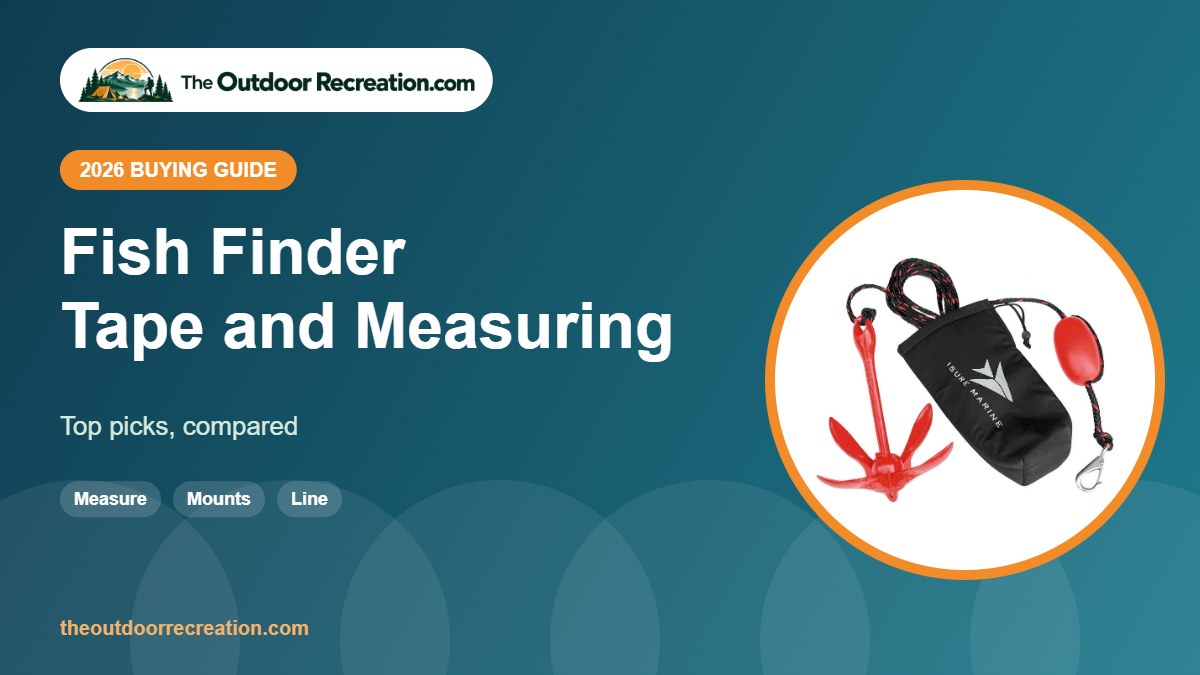
- Best pick board: ISURE MARINE Kayak Anchor Kit
- Best secure mount: Fish Finder Track Mount with Transducer Arm
- Best picks: Frabill Telescoping Lure Retriever
- Best line: KastKing SuperPower Braided Line
- Best sonar: Garmin Striker Cast
Comparison Table
| Product | Best for | Key spec | Standout feature | |
|---|---|---|---|---|
| ISURE MARINE Kayak Anchor Kit | Best pick board | Folding grapnel | Buoy and rope | View |
| Fish Finder Track Mount with Transducer Arm | Best secure mount | Display + transducer mount | 360-degree adjust | View |
| Frabill Telescoping Lure Retriever | Best picks | Extends to 15 ft | Telescoping pole | View |
| KastKing SuperPower Braided Line | Best line | Strong knots | No waxy coating | View |
| Garmin Striker Cast | Best sonar | Streams up to 200 ft | 2-D and flasher modes | View |
Detailed Reviews

1The ISURE MARINE kit includes a folding grapnel anchor, rope and buoy for kayaks and small boats.
It is a compact way to hold position over a spot shown on your sonar.
Pros & Cons
What we like
- Compact
- Corrosion resistant
- Easy storage
Watch out for
- Light anchor in strong current
- Basic rope
Key Specs
- Type: folding grapnel
- Includes: rope, buoy
- Use: kayak

2. Fish Finder Track Mount with Transducer Arm
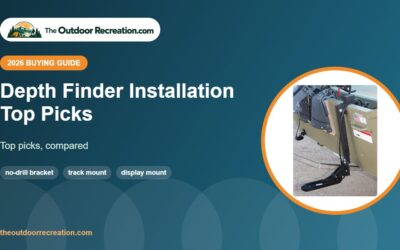
2This track mount holds a fish finder display and a transducer arm together on one setup for kayaks and SUPs.
Ball sockets let you angle the screen and arm, keeping the deck tidy for kayak anglers who mount sonar.
Pros & Cons
What we like
- Two mounts in one
- Fully adjustable
- Clean deck setup
Watch out for
- Needs a gear track
- Check fit for your unit
Key Specs
- Fits: kayak and SUP tracks
- Adjust: 360-degree ball sockets
- Holds: display and transducer

3The Frabill lure retriever extends to 15 feet to free snagged lures, jigs and even a castable sonar caught on brush.
It collapses for storage and can save expensive gear.
Pros & Cons
What we like
- Saves snagged gear
- 15 ft reach
- Collapses small
Watch out for
- Limited to 15 ft
- Takes practice
Key Specs
- Reach: 15 ft
- Type: telescoping
- Brand: Frabill

4KastKing SuperPower is one of the most popular braided lines, known for strong knot strength and a supple feel that casts smoothly through the guides.
Braid is the best choice for tethering a castable sonar because it has almost no stretch and resists abrasion.
Pros & Cons
What we like
- Strong knot strength
- Casts smoothly
- Huge owner base
Watch out for
- Can dig into itself if spooled loose
- Visible in clear water
Key Specs
- Type: braided line
- Use: casting, sonar tether
- Feature: abrasion resistant

5The Garmin Striker Cast is a rugged castable sonar that streams 2-D sonar and an ice-fishing flasher view to your phone or tablet through the free STRIKER Cast app.
Setup takes minutes: download the app, pair the sonar and cast. It suits shore, dock, kayak and ice anglers who want Garmin sonar without mounting a transducer.
Pros & Cons
What we like
- Trusted Garmin sonar
- Fast phone pairing
- Works from shore, dock or ice
Watch out for
- No built-in GPS on this version
- Uses your phone screen
Key Specs
- Display: your phone or tablet
- Modes: 2-D sonar, flasher
- Wireless range: up to 200 ft
How We Chose
We compared sonar range, depth, connection type, mapping, battery life and ease of use across dozens of castable and portable fish finders and their accessories, then read verified owner feedback to find reliability issues that spec sheets miss. We did not receive free products, and we do not claim hands-on testing. TOR Scores combine published specs, verified owner feedback and overall value. Related: our shortlist of the best castable fish finder ( ).
Care and Maintenance
Rinse the sonar with fresh water after each trip, especially in saltwater, and dry it before charging. Check the tow point and charging contacts for corrosion, store it in a padded case and replace worn line before it breaks. Keep firmware and the app updated for the best performance.
Using Sonar From a Kayak
On a kayak, you can cast the sonar, tow it behind on a short tether or mount it with a bracket. A track mount or suction mount keeps it steady, and a phone mount keeps the screen in view. Keep paddles and lines clear of the tether, and anchor over structure once you find fish. If you are comparing options, our guide to the best castable fish finder you can buy is worth a look.
Water Safety
Wear a life jacket on boats and kayaks, tell someone your plan and check the weather before you go. On ice, check thickness and local guidance. Always follow local fishing regulations and licensing rules, and practice catch and release where required.
What Is a Castable Fish Finder?
A castable fish finder is a small floating sonar that you tie to your line, cast out and reel back. It sends sonar readings to your phone, tablet or a handheld screen, showing depth, bottom shape, weeds and fish. Because it needs no mounted transducer, it works from shore, docks, kayaks, rental boats and the ice. For a closer look, see our guide to the best castable fish finder camera ( ).
How to Choose a Castable Fish Finder
- Connection: Wi-Fi models usually reach farther than Bluetooth; radio models send data to their own handheld screen.
- GPS mapping: built-in GPS lets you map the bottom as you reel in.
- Depth range: most read from about 135 to 260 feet; check the listed maximum.
- Display: phone apps show more detail; handheld screens avoid draining your phone.
- Battery: look for several hours of run time and easy charging.
- Ice mode: a flasher view helps ice anglers watch fish react to a jig.
How to Read Your Fish Finder Screen
The bottom appears as a solid line or band; a hard bottom shows as a thick, bright return and soft mud as a thinner one. Weeds look like vertical lines rising from the bottom. Fish usually appear as arches or icons. Water temperature and depth help you decide where fish are likely to hold during the season.
Setup Tips for Better Readings
Charge the sonar fully, update the app and pair it before you leave home. Turn on Wi-Fi or Bluetooth on your phone, keep the phone within range and use a phone mount if you fish from a kayak. Start in a simple 2-D sonar mode, then switch to mapping or ice modes once you are comfortable. We cover this in more depth in our roundup of the best castable fish finder reviews.
How to Cast and Tether a Sonar
Tie the sonar to strong braided line with a reliable knot, such as a Palomar or improved clinch, and use a snap or swivel on the tow point. Use a rod rated for the sonar’s weight and make smooth, side-arm casts rather than hard overhead snaps. Reel in slowly and steadily so the sonar stays level and the readings stay clean.
Batteries and Charging
Most castable sonars use built-in rechargeable batteries that last several hours. Bring a power bank for long days and keep your phone charged too, since it is your screen. Mounted fish finders run from 12V batteries; lithium LiFePO4 batteries are lighter and last longer than sealed lead-acid batteries.
Related guides: best castable fish finder parts, best castable fish finder mounting, best castable fish finder accessories. See every pick in our Fish Finders category.
Sources and further reading: NOAA Fisheries: recreational fishing resources and Leave No Trace: the 7 Principles. Product specs come from brand listings on Amazon. Always check local fishing regulations before you fish.
Frequently Asked Questions
Are fish finders legal everywhere?
Generally yes for recreational fishing, but some tournaments and waters have rules; check local regulations.
How does a castable fish finder work?
It floats on the surface and sends sonar pulses down, then streams depth, bottom and fish readings to your phone or a handheld screen.
Can I use it in saltwater?
Many can, but rinse it in fresh water after every trip to prevent corrosion.
What line should I use to cast a sonar?
Use strong braided line, often 30 to 50 lb test, and a rod rated for the sonar’s weight.
How long does the battery last?
Usually several hours per charge; carry a power bank for long trips.
Final Verdict
Use a measuring board for legal sizes and a proper mount instead of tape on your sonar.

Write Your Review
No reviews yet. Be the first to share your experience!