

Most castable fish finders use sealed, built-in rechargeable batteries, so you will not swap batteries in the puck. What you can control is how you charge it, how you keep your phone alive while streaming sonar, and, if you also use a portable unit, which 12V battery you carry.
We grouped the best power options by setup and picked units and accessories based on specs and owner feedback.
The Outdoor Recreation is reader-supported. As an Amazon Associate we earn from qualifying purchases, at no extra cost to you.
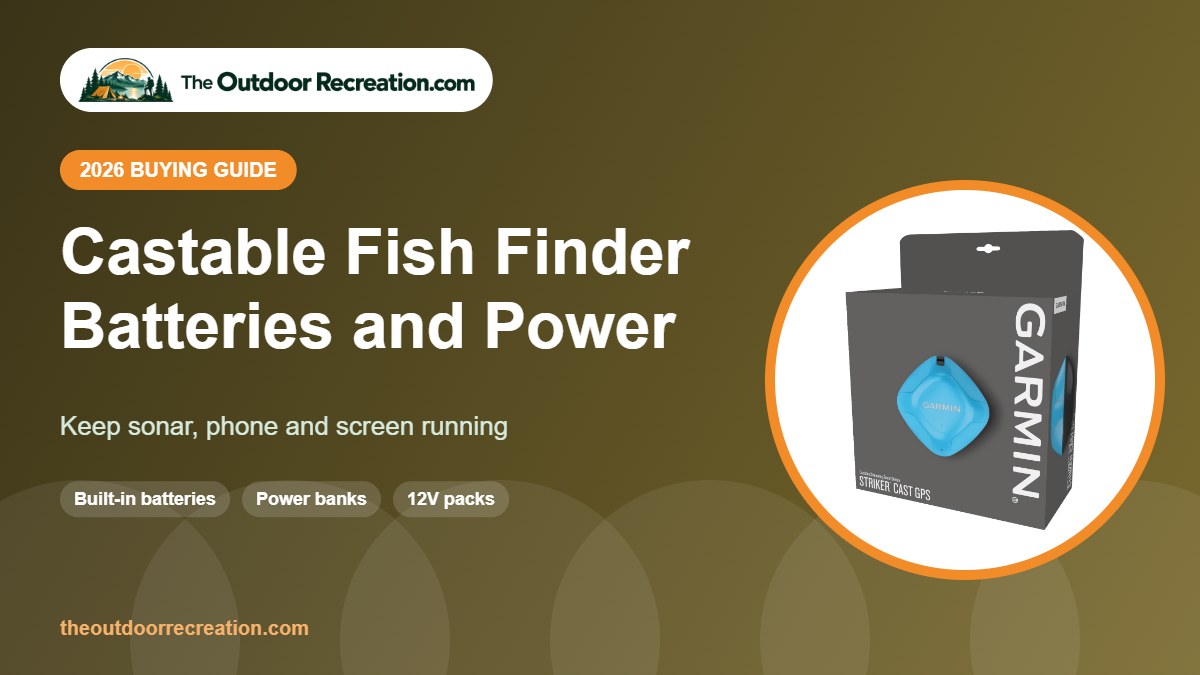
Best Castable Fish Finder Power Picks at a Glance
- Best Rechargeable Castable Unit: Garmin Striker Cast GPS
- Best Rechargeable Kit With Display: Portable Rechargeable Wireless Sonar Fish Finder
- Best Power Bank for Phone and Puck: 48000mAh Solar Power Bank with 4 Cables
- Best 12V Battery for Portable Units: ExpertPower 12V 7Ah SLA Battery
- Best Lightweight 12V Pack: 12V 10000mAh Lithium Battery Pack with Charger
- Best 12V Battery Charger: NOCO GENIUS1 Smart Charger
- Best Portable Unit That Uses 12V: Garmin Striker 4 with Portable Kit
Power Option Comparison
| Product | Best for | Power role | Key spec | |
|---|---|---|---|---|
| Garmin Striker Cast GPS | Best Rechargeable Castable Unit | Built-in rechargeable | Long-range sonar | View |
| Portable Rechargeable Wireless Sonar Fish Finder | Best Rechargeable Kit With Display | Rechargeable sensor + screen | No phone drain | View |
| 48000mAh Solar Power Bank with 4 Cables | Best Power Bank for Phone and Puck | Power bank | 48000mAh + solar | View |
| ExpertPower 12V 7Ah SLA Battery | Best 12V Battery for Portable Units | 12V SLA | 7Ah | View |
| 12V 10000mAh Lithium Battery Pack with Charger | Best Lightweight 12V Pack | 12V lithium | 10000mAh | View |
| NOCO GENIUS1 Smart Charger | Best 12V Battery Charger | Smart charger | 6V/12V | View |
| Garmin Striker 4 with Portable Kit | Best Portable Unit That Uses 12V | Portable kit | CHIRP sonar | View |
The 7 Best Castable Fish Finder Battery and Power Picks

1The Striker Cast GPS streams traditional 2-D and ice-flasher sonar to the free Striker Cast app from up to 200 ft away. Its built-in GPS lets you build your own maps with 1 ft contours using Quickdraw Contours as you reel it in.
Pros & Cons
What we like
- Built-in GPS mapping
- Trusted Garmin sonar
- Works with Apple and Android
Watch out for
- Needs your phone screen
- Costs more than the non-GPS version
Key Specs
- Sonar: 2-D and ice flasher
- Wireless range: up to 200 ft
- Extra: GPS with Quickdraw Contours
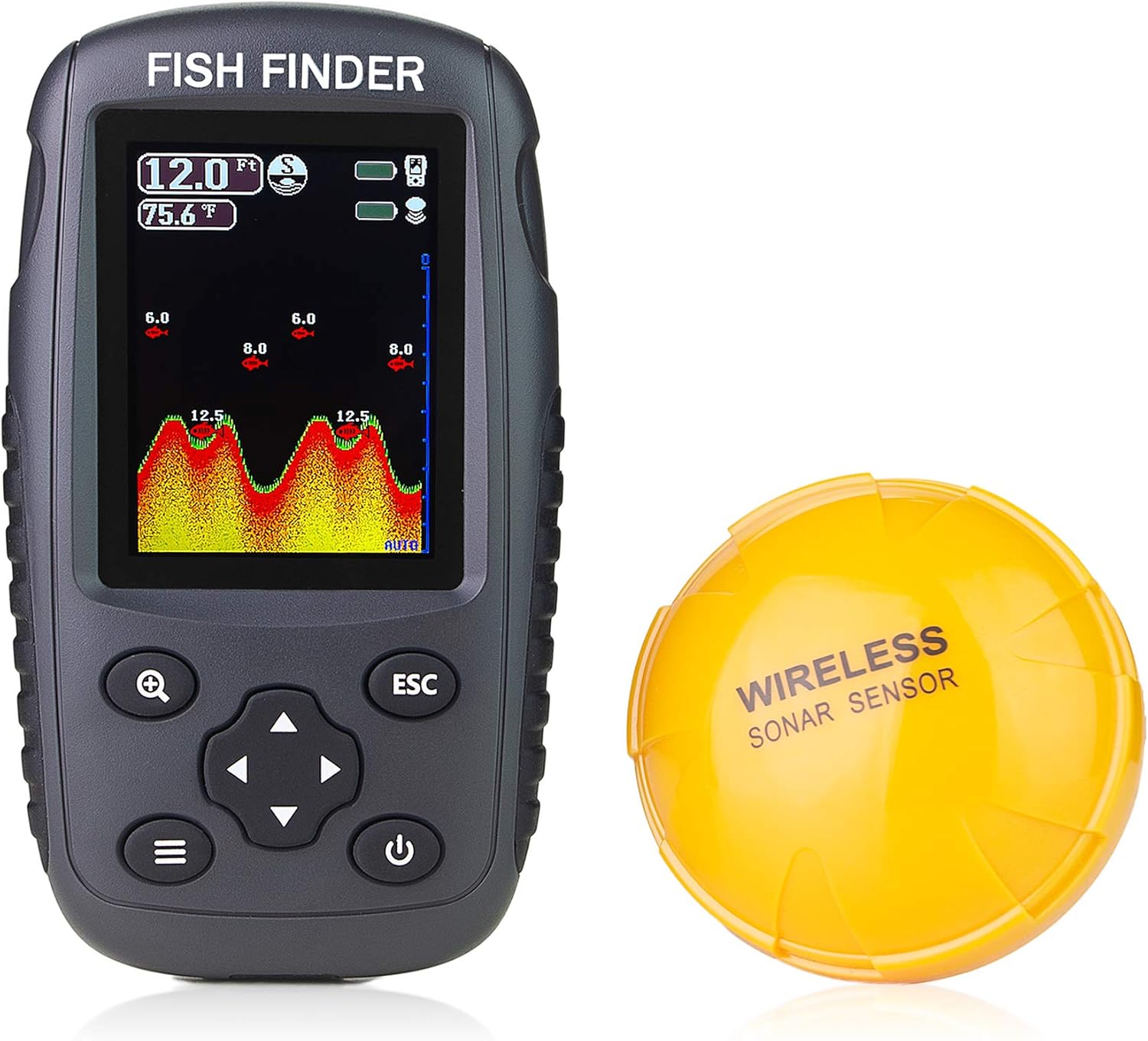
2. Portable Rechargeable Wireless Sonar Fish Finder
2This kit pairs a castable wireless sonar probe with its own color display, so you do not need a phone. It shows depth, water temperature, fish size and fish depth, and has more than 1,100 owner reviews.
Pros & Cons
What we like
- Own display, no phone needed
- Rechargeable
- Shows temperature and fish size
Watch out for
- Basic display
- Less detail than Garmin
Key Specs
- Display: dedicated color screen
- Readings: depth, temperature, fish size

3. 48000mAh Solar Power Bank with 4 Cables
3Castable finders and phones both need charge. This large power bank has built-in cables, wireless charging and solar panels for top-ups on long days.
Pros & Cons
What we like
- Huge capacity
- Built-in cables
- Solar top-up
Watch out for
- Heavy
- Solar charging is slow
Key Specs
- Capacity: 48000mAh

4. ExpertPower 12V 7Ah SLA Battery
4Portable fish finders like the Striker 4 kit run on a 12V battery. This 12V 7Ah sealed lead-acid battery is a common choice.
Pros & Cons
What we like
- Common size
- Maintenance-free
- Widely used
Watch out for
- Heavy
- Not for castable units
Key Specs
- Voltage: 12V
- Capacity: 7Ah

5. 12V 10000mAh Lithium Battery Pack with Charger
5A lighter 12V lithium pack with charger for small 12V devices, an option for powering portable fish finders where compatible.
Pros & Cons
What we like
- Light vs SLA
- Charger included
- 800+ cycles claimed
Watch out for
- Check compatibility
- Fewer reviews
Key Specs
- Voltage: 12V
- Capacity: 10000mAh

6NOCO’s GENIUS1 charges and maintains 6V and 12V lead-acid and lithium batteries, with more than 64,000 owner reviews.
Pros & Cons
What we like
- Very popular
- Thermal sensor
- Maintains batteries
Watch out for
- Slow 1A output
- For 12V batteries, not castable units
Key Specs
- Output: 1A
- Batteries: 6V/12V

7. Garmin Striker 4 with Portable Kit
7Not castable, but the Striker 4 portable kit is the classic alternative: a dedicated screen, CHIRP sonar, built-in flasher and waypoint map in a carry case.
Pros & Cons
What we like
- Dedicated screen
- CHIRP sonar
- Portable case
Watch out for
- Not castable
- Needs a battery
Key Specs
- Sonar: CHIRP
- Extra: waypoint map, flasher
How We Chose
We compared power options by capacity, convenience, compatibility and owner feedback. Weighting: usefulness for castable or portable setups (40%), reliability (25%), owner feedback (20%) and value (15%). We did not receive free products, and we do not claim hands-on testing. TOR Scores combine published specs, verified owner feedback and overall value.
How Castable Fish Finders Are Powered
Castable pucks are sealed for waterproofing, so their batteries are built in and charged through a cable or contacts. Battery life varies by model and settings; check the brand’s listing for official figures and charge fully before each trip.
The Hidden Drain: Your Phone
Streaming sonar with the screen at full brightness drains phones quickly. A power bank with built-in cables keeps you fishing all day.
Portable 12V Fish Finders
Units like the Garmin Striker 4 portable kit run on a 12V battery. A 12V 7Ah SLA battery is common; lithium packs are lighter. A smart charger like the NOCO GENIUS1 keeps them healthy.
Battery Care Tips
- Charge castable pucks after every trip and before storage.
- Do not leave lithium batteries fully drained for long periods.
- Store batteries in a cool, dry place.
- Keep charging contacts clean and dry, especially after saltwater.
- Use only compatible chargers.
Cold Weather
Batteries lose capacity in cold weather. For ice fishing, keep your phone and spare power bank inside a jacket pocket.
Related: castable fish finder battery life, castable fish finder accessories and best castable fish finder.
Fishing Responsibly With Electronics
Fish finders make it easier to locate fish, which makes good habits more important. Follow your state’s size and bag limits, handle fish you release with wet hands and minimal air time, and avoid disturbing spawning beds. Pack out line scraps and packaging, and never leave a lost puck tangle in the water if you can safely retrieve it. NOAA Fisheries offers recreational fishing resources for anglers who want to learn more.
Common Castable Fish Finder Mistakes
- Using an ultralight rod: it struggles to cast the puck and can break.
- Snapping the cast: lob-cast smoothly to protect the attachment point.
- Retrieving too fast: slow retrieves give clearer readings.
- Casting beyond range: know your device’s real-world wireless limit.
- Skipping a rinse: salt and grit wear down contacts and seals.
Sources and further reading: NOAA Fisheries: recreational fishing resources and Leave No Trace: the 7 Principles. Product specs come from brand listings on Amazon. Always check local fishing regulations before you fish.
Frequently Asked Questions
Can I replace the battery in a castable fish finder?
Most castable pucks have sealed built-in batteries that are not user-replaceable.
What battery does a portable fish finder use?
Many portable units use a 12V battery, often a 12V 7Ah SLA.
How do I keep my phone charged while using castable sonar?
Carry a power bank with built-in cables.
Do fish finder batteries work in the cold?
They lose capacity in cold weather, so keep spares warm.
Final Verdict
For castable fish finders, the best battery strategy is a fully charged rechargeable unit like the Garmin Striker Cast GPS plus a large power bank for your phone. For portable 12V units, use the ExpertPower 12V 7Ah battery with the NOCO GENIUS1 charger.





Write Your Review
No reviews yet. Be the first to share your experience!