

Travel backpacking needs carry comfort and easy access.
These packs do both.
The Outdoor Recreation is reader-supported. As an Amazon Associate we earn from qualifying purchases, at no extra cost to you.
Quick Picks
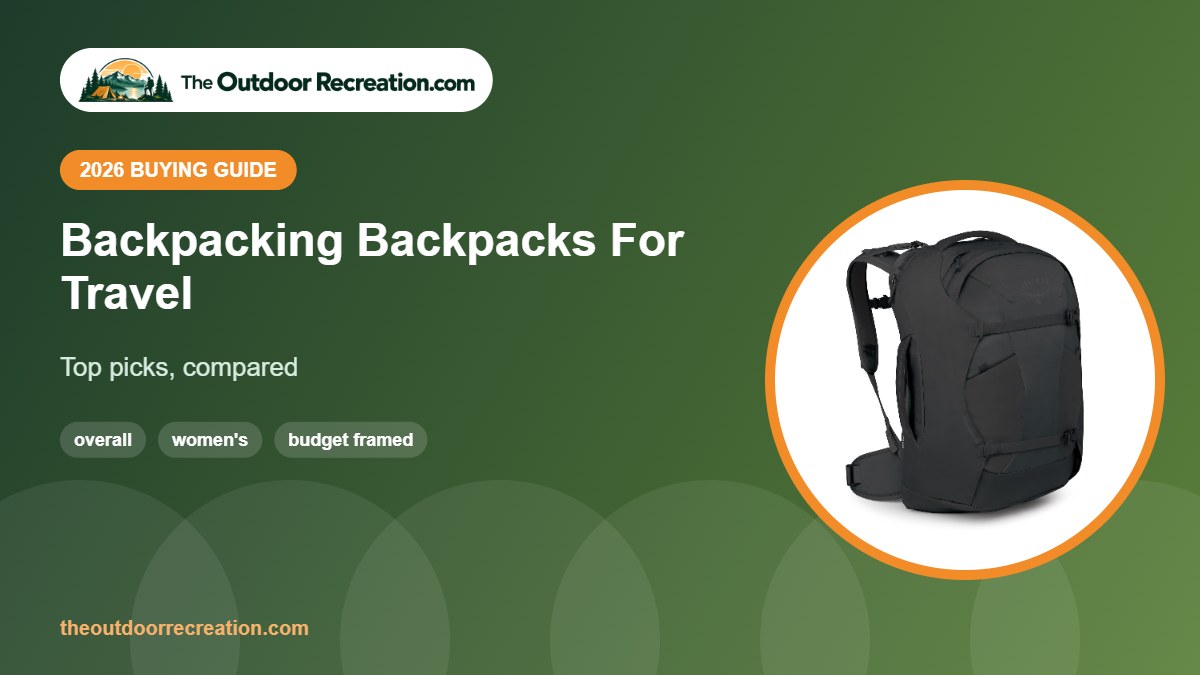
- Best overall: Osprey Farpoint 40 Men’s
- Best women’s: Osprey Fairview 40 Women’s
- Best budget framed: Kelty Coyote 65
- Best premium: Peak Design Travel Backpack 45L
- Top pick: tomtoc Navigator-T66 40L
Comparison Table
| Product | Best for | Capacity | Standout feature | |
|---|---|---|---|---|
| Osprey Farpoint 40 Men’s | Best overall | 40L | Carry-on ready, load-lifting frame | View |
| Osprey Fairview 40 Women’s | Best women’s | 40L | Women’s-specific harness | View |
| Kelty Coyote 65 | Best budget framed | 65 L | Adjustable torso | View |
| Peak Design Travel Backpack 45L | Best premium | 35-45L expandable | One-bag travel | View |
| tomtoc Navigator-T66 40L | Top pick | 38-40L | Separate laptop compartment, PFAS-free | View |
Detailed Reviews

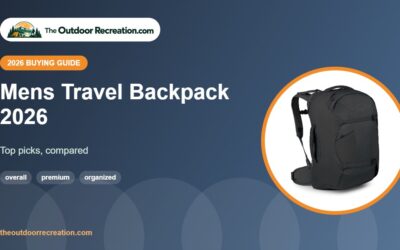
1The Farpoint 40 is one of the most recommended one-bag travel packs for good reason. It meets most carry-on size limits, opens wide like a suitcase, and has a real load-lifting frame with a men’s-specific harness.
WingJacket compression straps cinch the pack down when it is not full, a direct-zip 3-1-1 pocket keeps liquids ready for the security line, and front and bottle pockets handle quick-grab items. It is not cheap, but it carries better than most travel backpacks because it borrows its suspension from Osprey’s hiking packs.
Pros & Cons
What we like
- Suitcase-style opening
- Real frame and hip belt
- 3-1-1 liquids pocket for security
Watch out for
- Premium pricing
- Hip belt adds bulk in the overhead bin
Key Specs
- Capacity: 40 liters
- Fit: men’s-specific
- Frame: load-lifting
- Compression: WingJacket
- Carry-on: meets most limits (check your airline)

2The Fairview 40 is the women’s version of the Farpoint 40, with the same carry-on-friendly shape and suitcase-style opening but a harness and hip belt shaped for a women’s torso, shoulders and hips.
That fit is the whole point. Straps that curve around the chest and a hip belt angled for wider hips put weight where it belongs, which matters on long walks between stations or across old-town cobbles. It also gets WingJacket compression, a 3-1-1 liquids pocket and quick-access front pockets.
Pros & Cons
What we like
- Women’s-specific straps and hip belt
- Opens fully like a suitcase
- Carry-on friendly size
Watch out for
- Premium pricing
- Fewer internal organizer pockets than tech bags
Key Specs
- Capacity: 40 liters
- Fit: women’s-specific
- Frame: load-lifting
- Compression: WingJacket
- Liquids: direct-zip 3-1-1 pocket

3The Kelty Coyote 65 is a long-running value backpacking pack with an adjustable torso and front-panel access.
It is a reliable budget pick for beginners and Scouts.
Pros & Cons
What we like
- Good value
- Adjustable torso
- Front access
Watch out for
- Heavier
- Basic hip belt
Key Specs
- Capacity: 65 L
- Feature: adjustable torso
- Access: front panel

4Peak Design’s Travel Backpack expands from 35 to 45 liters with weatherproof protection and rear and top access. Add Peak Design camera cubes for gear.
It is our pick for photographers who travel with one bag.
Pros & Cons
What we like
- Expandable
- Weatherproof
- Excellent organization
Watch out for
- Camera cube sold separately
- Premium price
Key Specs
- Capacity: 35-45L
- Access: rear, top

5The tomtoc Navigator-T66 is a structured, carry-on travel backpack with a separate laptop compartment and lots of internal organization. tomtoc lists it at 20.47 x 12.99 x 9 inches, with usable capacity of about 38 to 40 liters depending on how you pack.
It is built for flights and cities, not trails: think airline cabin bag with good straps rather than a hiking pack. The fabric is PFAS-free, and the stiff sides hold their shape so packing cubes slide in and out easily.
Pros & Cons
What we like
- Dedicated laptop compartment
- Structured shape suits packing cubes
- PFAS-free materials
Watch out for
- Not built for hiking
- Heavier than soft travel packs
Key Specs
- Capacity: about 38-40 liters
- Size: 20.47 x 12.99 x 9 in (brand listing)
- Laptop: separate compartment
- Materials: PFAS-free
How We Chose
We compared capacity, weight, suspension, torso fit, access and features across dozens of backpacking packs, then read verified owner feedback to find fit and durability problems that spec sheets miss. We did not receive free products, and we do not claim hands-on testing. TOR Scores combine published specs, verified owner feedback and overall value. We cover this in more depth in our roundup of the best backpacking backpacks.
Backpacking Packs for Travel
For international backpacking trips, many travelers choose a 40 to 55 L pack that can go carry-on or a larger pack plus a small daypack. Look for lockable zips, front-panel access and a stowable harness for checked flights. Airline size limits vary, so check your carriers before you fly. You may also find our guide to the best backpacking backpacks 2026 helpful.
How to Choose a 40L Travel Backpack
A 40L travel backpack is the classic one-bag size. It holds a week or more of clothes and usually still fits within carry-on limits, so you skip checked-bag fees and baggage-claim waits. For a different angle, see our picks for the best 40L backpack with wheels.
- Carry-on size. Many US airlines allow carry-on bags around 22 x 14 x 9 inches, but international and budget carriers are often stricter. Always check your airline before you fly.
- Clamshell opening. A zip that opens the bag like a suitcase makes packing and finding items much easier than a top-loader.
- Compression. Straps that cinch a half-full bag keep it inside size limits and stop contents from shifting.
- Laptop sleeve. A separate sleeve speeds up security screening and protects your device.
- Harness. Padded straps, a sternum strap and a hip belt make a big difference when you walk from the station to your hotel.
- Security. Lockable zippers and hidden pockets help in crowded places.
Packing cubes turn a 40L bag into a tidy, easy-to-unpack system. Roll clothes rather than fold them, and wear your bulkiest shoes and jacket on travel days.
Travel Backpack Accessories Worth Packing
- Packing cubes: keep clothes compressed and organized in clamshell packs.
- TSA-approved locks: deter casual theft while letting security open your bag.
- Luggage scale: avoid overweight fees on budget airlines.
- Rain cover or liner: protects gear on long walks between stations.
- Small daypack or sling: carries essentials when your main pack stays at the hostel.
- Travel pillow and eye mask: make overnight buses and flights easier.
Buy accessories that solve a problem you actually have. A good set of cubes and a lock suit almost everyone; the rest depends on how and where you travel. Related: our shortlist of the best backpacking backpacks of 2026.
How to Choose a Backpacking Backpack
- Capacity: 40 to 50 L for light overnights, 50 to 65 L for most multi-day trips, 65 L and up for long or winter trips.
- Fit: torso length matters more than height; adjustable torsos help.
- Weight: ultralight packs save pounds but carry less weight comfortably.
- Suspension: heavy loads need a supportive frame and padded hip belt.
- Access: top, front and sleeping-bag zips make camp easier.
Measure your torso and pick the capacity that matches your gear, then choose the lightest pack that carries your load comfortably. If you are comparing options, our guide to the best backpacking backpacks for hiking is worth a look.
Backpack Fit by Body Type
Short-torso and petite hikers should look for XS or SL fits and women’s-specific harnesses, which use narrower shoulder straps and shaped hip belts. Tall hikers need packs with long or adjustable torso ranges so the hip belt sits on the hip bones. Always try a loaded pack and walk for several minutes before deciding.
Related guides: best travel backpack 2026, best mens travel backpack 2026, best backpacking backpack for travel. See every pick in our Backpacks category.
Sources and further reading: National Park Service: the Ten Essentials, Leave No Trace: the 7 Principles and National Park Service: camping basics. Product specs come from brand listings on Amazon; always check your airline’s current carry-on size rules before you fly.
Frequently Asked Questions
What size backpack do I need for backpacking?
Most multi-day trips need 50 to 65 L; ultralight hikers can go smaller.
How do I measure my torso?
Measure from the bony bump at the base of your neck to the top of your hip bones.
How heavy should a loaded backpacking pack be?
A common guideline is about 20 percent of body weight or less.
Is an ultralight pack right for beginners?
Only if your gear is light; heavier loads need a supportive frame.
Final Verdict
The Osprey Farpoint 40 is our top travel pick.
Write Your Review
No reviews yet. Be the first to share your experience!