

A good hiking backpack makes every mile easier.
These are our top picks.
The Outdoor Recreation is reader-supported. As an Amazon Associate we earn from qualifying purchases, at no extra cost to you.
Quick Picks
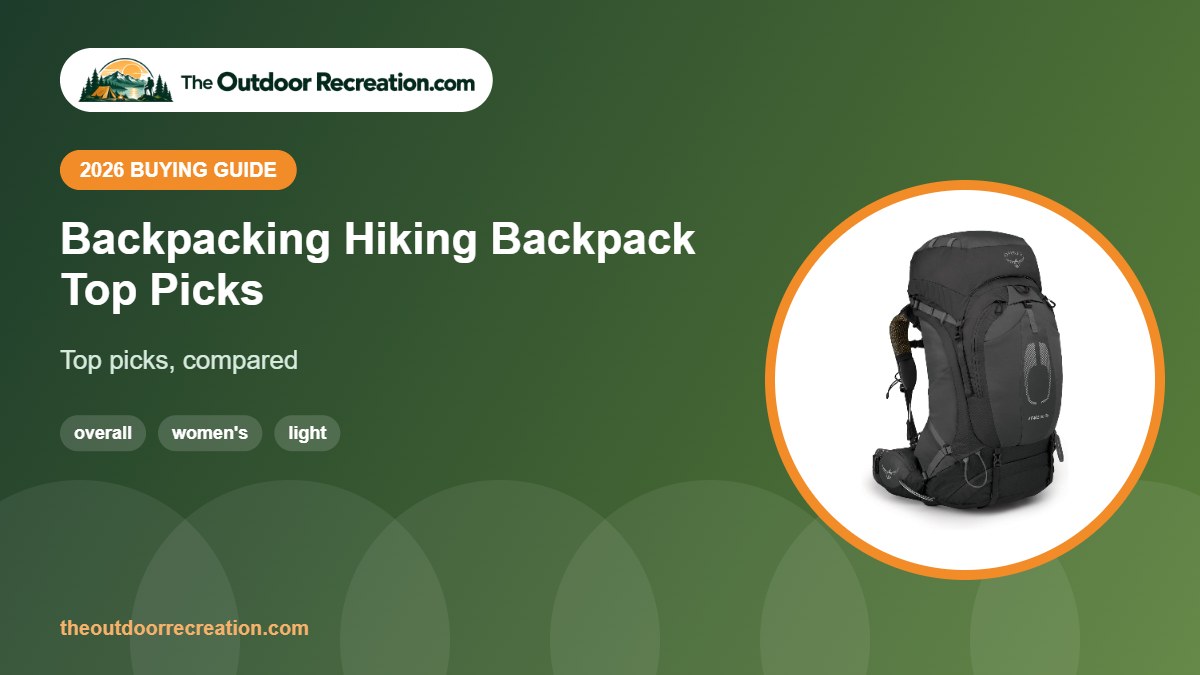
- Best overall: Osprey Atmos AG 65 Men’s
- Best women’s: Osprey Aura AG 65 Women’s
- Best light: Osprey Exos 58
- Best value: Kelty Coyote 65
- Best day pack: Arc’teryx Mantis 26
Comparison Table
| Product | Best for | Capacity | Standout feature | |
|---|---|---|---|---|
| Osprey Atmos AG 65 Men’s | Best overall | 65L | Anti-Gravity suspension | View |
| Osprey Aura AG 65 Women’s | Best women’s | 65L | Women’s Anti-Gravity fit | View |
| Osprey Exos 58 | Best light | 58 L | Ultralight frame | View |
| Kelty Coyote 65 | Best value | 65 L | Adjustable torso | View |
| Arc’teryx Mantis 26 | Best day pack | 26 L | Versatile daypack | View |
Detailed Reviews

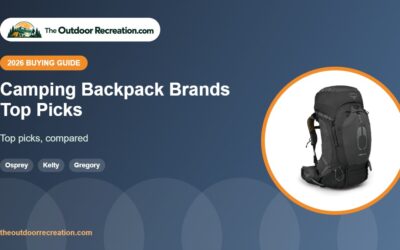
1The Osprey Atmos AG 65 is one of the most comfortable 65L backpacking packs, thanks to its Anti-Gravity suspended mesh back that wraps the body and spreads load.
It has an adjustable harness and hip belt, a top lid, stretch side pockets and a sleeping bag compartment for multi-day trips.
Pros & Cons
What we like
- Excellent ventilation
- Adjustable fit
- Carries heavy loads well
Watch out for
- Heavier than ultralight packs
- Premium price
Key Specs
- Capacity: 65L
- Suspension: Anti-Gravity mesh
- Fit: adjustable torso and hip belt

2The Osprey Aura AG 65 is the women’s version of the Atmos, with a women’s-specific harness, hip belt and Anti-Gravity mesh back.
It is a favorite for multi-day hikes because it carries 30 to 40 lb loads comfortably and keeps your back cool.
Pros & Cons
What we like
- Women’s-specific fit
- Ventilated back
- Great for long trips
Watch out for
- Heavy for a 65L pack
- Premium price
Key Specs
- Capacity: 65L
- Fit: women’s harness and hip belt
- Back: Anti-Gravity mesh

3The Osprey Exos 58 is a men’s ultralight backpacking pack with a ventilated suspended-mesh back and a light frame.
It suits hikers carrying moderate loads who want to cut weight.
Pros & Cons
What we like
- Light for its size
- Ventilated back
- Osprey quality
Watch out for
- Less padding
- Not for very heavy loads
Key Specs
- Capacity: 58 L
- Type: ultralight framed
- Fit: men’s

4The Kelty Coyote 65 is a long-running value backpacking pack with an adjustable torso and front-panel access.
It is a reliable budget pick for beginners and Scouts.
Pros & Cons
What we like
- Good value
- Adjustable torso
- Front access
Watch out for
- Heavier
- Basic hip belt
Key Specs
- Capacity: 65 L
- Feature: adjustable torso
- Access: front panel

5The Arc’teryx Mantis 26 is a versatile daypack that pairs well with a big pack as a summit or town bag.
It shows Arc’teryx build quality at a smaller size.
Pros & Cons
What we like
- Arc’teryx quality
- Versatile
- Comfortable
Watch out for
- Daypack only
- Pricier
Key Specs
- Capacity: 26 L
- Type: daypack
- Use: day hikes, travel
How We Chose
We compared capacity, weight, suspension, torso fit, access and features across dozens of backpacking packs, then read verified owner feedback to find fit and durability problems that spec sheets miss. We did not receive free products, and we do not claim hands-on testing. TOR Scores combine published specs, verified owner feedback and overall value. We cover this in more depth in our roundup of the best camera backpack for hiking.
How to Choose a Backpacking Backpack
- Capacity: 40 to 50 L for light overnights, 50 to 65 L for most multi-day trips, 65 L and up for long or winter trips.
- Fit: torso length matters more than height; adjustable torsos help.
- Weight: ultralight packs save pounds but carry less weight comfortably.
- Suspension: heavy loads need a supportive frame and padded hip belt.
- Access: top, front and sleeping-bag zips make camp easier.
Measure your torso and pick the capacity that matches your gear, then choose the lightest pack that carries your load comfortably.
Backpack Fit by Body Type
Short-torso and petite hikers should look for XS or SL fits and women’s-specific harnesses, which use narrower shoulder straps and shaped hip belts. Tall hikers need packs with long or adjustable torso ranges so the hip belt sits on the hip bones. Always try a loaded pack and walk for several minutes before deciding. You may also find our guide to the best 40L backpack hiking picks helpful.
The Essential Backpacking Gear List
A good backpacking kit starts with the Ten Essentials: navigation, a headlamp, sun protection, first aid, a knife or repair kit, fire, shelter, extra food, extra water and extra clothes. The National Park Service Ten Essentials list is a good starting point for any trip.
- Big three: backpack, shelter and sleep system make up most of your weight.
- Kitchen: a small stove, fuel, pot, lighter and spoon.
- Water: bottles or a bladder and a filter or purifier.
- Clothing: moisture-wicking layers, an insulating jacket and a rain shell.
- Footwear: boots or shoes that are broken in, plus spare socks.
- Extras: trekking poles, a pack liner and a small trowel for waste.
Weigh your gear, cut what you do not use and test everything on a short overnight before a big trip.
Budget vs Premium Backpacking Packs
Budget packs from brands like TETON and Kelty are heavier and simpler but carry well when adjusted properly, making them good first packs. Premium packs from Osprey, Gregory, Deuter and Granite Gear add better suspension, lighter fabrics, more adjustment and longer warranties. If you backpack often, the upgrade usually pays off in comfort.
Backpacking Packs for Travel
For international backpacking trips, many travelers choose a 40 to 55 L pack that can go carry-on or a larger pack plus a small daypack. Look for lockable zips, front-panel access and a stowable harness for checked flights. Airline size limits vary, so check your carriers before you fly. Related: our shortlist of the best 40L backpack for hiking.
How to Load a 65L Backpack
Packing order matters more with a big pack than a small one. Put your sleeping bag and camp clothes in the bottom compartment, because you will not need them until night. Place the heaviest items, such as food, water and a bear canister, in the middle of the pack and close to your back, roughly between your shoulder blades. This keeps the center of gravity over your hips so the pack does not pull you backward.
Use the lid and hip belt pockets for snacks, a map, sunscreen and a headlamp. Strap a wet tent fly or foam pad outside only when it will not snag on brush. Once packed, tighten the compression straps so the load cannot shift on steep or rocky ground. If you are comparing options, our guide to the best 40L backpacking backpack is worth a look.
Adjusting the Hip Belt and Load Lifters
On a 65L pack, the hip belt should carry most of the weight. Loosen every strap, put the pack on and center the belt padding over the top of your hip bones before tightening it firmly. Next, snug the shoulder straps so they wrap your shoulders without lifting the belt. Then pull the load lifters, the small straps above your shoulders, until they sit at roughly a 45-degree angle.
Finally, clip the sternum strap about an inch below your collarbones. Recheck the fit after the first hour of walking, because loads settle. If your shoulders ache, the belt is usually too low or too loose; if your hips ache, try a different belt size or a pack with more padding.
Related guides: best backpacking backpacks hiking, best backpacking pack size, best backpacking backpacks. See every pick in our Backpacks category.
Sources and further reading: National Park Service: the Ten Essentials, Leave No Trace: the 7 Principles and National Park Service: camping basics. Product specs come from brand listings on Amazon; always check your airline’s current carry-on size rules before you fly.
Frequently Asked Questions
What size backpack do I need for backpacking?
Most multi-day trips need 50 to 65 L; ultralight hikers can go smaller.
How do I measure my torso?
Measure from the bony bump at the base of your neck to the top of your hip bones.
How heavy should a loaded backpacking pack be?
A common guideline is about 20 percent of body weight or less.
Is an ultralight pack right for beginners?
Only if your gear is light; heavier loads need a supportive frame.
Final Verdict
The Osprey Atmos AG 65 carries heavy loads comfortably.
Write Your Review
No reviews yet. Be the first to share your experience!