

The Outdoor Recreation is reader-supported. As an Amazon Associate we earn from qualifying purchases, at no extra cost to you. You may also find our guide to the best drone for beginners with camera helpful.
Introduction
The best drone with camera for beginners is one that makes your first flights calm, not stressful. It should hover steadily, return home on its own, and record smooth video while you are still learning the sticks. The five drones in this guide do exactly that, each in a slightly different way.
We chose models with GPS, return-to-home, and simple apps, so you can focus on flying and framing rather than fighting the controls. They are light, portable, and forgiving, which means you can practise often, and regular practice is what turns a nervous first flight into confident, smooth footage. Related: our shortlist of the best drone for beginners.
Quick Picks
- Best overall beginner pick: DJI Mini 2 SE
- Best for simple 4K: DJI Mini 4K
- Best for hands-free video: DJI Neo
- Best for safe learning: DJI Flip
- Best for light 4K travel: Potensic Atom SE
Comparison Table
| Product | Best for | Key attribute | Standout feature | View |
|---|---|---|---|---|
| DJI Mini 2 SE | first-time pilots on a tight budget | 2.7K video in a 246-gram body | The simplest way into the DJI Mini range | View |
| DJI Mini 4K | beginners who want real 4K without complexity | 4K video with 3-axis gimbal | True 4K in the entry-level Mini | View |
| DJI Neo | vloggers and casual flyers who want hands-free shots | 4K video with palm takeoff | Takes off from your palm and follows you | View |
| DJI Flip | beginners who want a safe, foldable camera drone | 4K/60fps video | Foldable design with forward sensing | View |
| Potensic Atom SE | beginners who want a light 4K drone | 4K video in a foldable body | Light, foldable, and beginner friendly | View |
Detailed Reviews

DJI Mini 2 SE
TOR Score: 8.2/10
Best for: first-time pilots on a tight budget.
The Mini 2 SE keeps things simple: it is light, quiet, and easy to learn, with a camera that is good enough for holiday clips and social posts. It handles wind better than most toy drones and returns home on its own when the battery runs low. It is a calm, forgiving first drone.
What we like
- Very light and portable
- Easy to learn and fly
- Stable in light wind for its size
Watch out for
- Camera tops out at 2.7K
- No obstacle sensing
Key Specs
- Weight: 246 grams
- Camera: 2.7K video
- Flight time: up to 31 minutes
- Transmission: up to 10 km
DJI Mini 4K
TOR Score: 8.4/10
Best for: beginners who want real 4K without complexity.
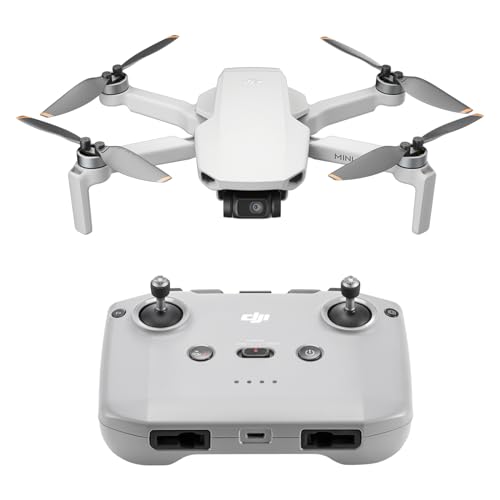
The Mini 4K gives beginners the headline feature they usually ask for first: real 4K video on a steady 3-axis gimbal. Footage looks smooth and clean, and the drone itself is light, quiet, and quick to set up. It is a straightforward pick for travel clips and family videos.
What we like
- Smooth 4K footage
- Light and easy to pack
- Simple app and controls
Watch out for
- No obstacle sensing
- Limited pro camera controls
Key Specs
- Weight: 246 grams
- Camera: 4K/30fps
- Flight time: up to 31 minutes
- Gimbal: 3-axis mechanical

DJI Neo
TOR Score: 8.3/10
Best for: vloggers and casual flyers who want hands-free shots.
The Neo is the most casual drone here. It can take off from your palm, follow you on a walk or a run, and land back in your hand, all without a controller in sight. The camera is good for social clips, and the whole package weighs about as much as a phone. It is fun first, and it knows it.
What we like
- Tiny, light, and very easy to use
- Great for follow-me and selfie video
- Can fly with or without a controller
Watch out for
- Short flight time
- Struggles in strong wind
Key Specs
- Weight: 135 grams
- Camera: 4K/30fps
- Flight time: up to 18 minutes
- Tracking: AI subject tracking

DJI Flip
TOR Score: 8.5/10
Best for: beginners who want a safe, foldable camera drone.
The Flip is a friendly, foldable drone that feels made for first-time camera pilots. It records smooth 4K video, folds down small, and uses forward sensing to help avoid obstacles. It is a good middle ground between a tiny selfie drone and a full Mini Pro.
What we like
- Compact and easy to carry
- Smooth 4K video
- Helpful forward obstacle sensing
Watch out for
- Shorter flight time than the Mini 3
- Fewer pro modes than the Mini 4 Pro
Key Specs
- Weight: 249 grams
- Camera: 4K/60fps
- Flight time: up to 31 minutes
- Design: foldable with propeller guards option

Potensic Atom SE
TOR Score: 8.2/10
Best for: beginners who want a light 4K drone.
The Atom SE is a light, foldable drone with a steady 4K camera and simple controls. It is easy to launch, easy to land, and forgiving when you are still learning stick control. For casual travel video and practice flights, it covers the basics well without fuss.
What we like
- Light and portable
- Simple, friendly controls
- Steady video for its class
Watch out for
- No obstacle avoidance
- Camera struggles a little in low light
Key Specs
- Weight: 249 grams
- Camera: 4K/30fps
- Flight time: up to 31 minutes
- Range: up to 4 km
How We Chose
We compared ease of use, stability, GPS features, camera quality, flight time, and weight. We favored drones that are forgiving in the air, simple to set up, and easy to carry, and we left out models that need a lot of setup or prior experience to fly safely.
How to Choose
- Start in a wide open space with no people, roads, or trees nearby.
- Learn hover, slow turns, and landing before you try tracking or video modes.
- Use return-to-home and GPS features, and understand what they do before you need them.
- Fly in calm, bright conditions for your first ten flights.
- Keep the drone in sight and land early, with battery to spare.
Your First Ten Flights: A Simple Plan
Flight one is just takeoff, hover, and landing. Flight two adds slow turns and gentle forward flight. By flight five, try a slow, straight video pass. By flight ten, try a simple orbit around a tree or a bench. Small steps build muscle memory, and muscle memory is what makes flying feel easy. If you are comparing options, our guide to the best drone with camera is worth a look.
Keep a short note after each flight: what went well, what felt hard, and one thing to practise next time. That simple habit helps more than buying extra gear early on.
Common Beginner Mistakes to Avoid
The most common mistakes are flying too far too soon, flying in wind, and ignoring a low battery warning. Others include forgetting to check local rules, flying over people, and trying advanced shots before the basics feel natural. Avoid those, and your first month of flying will be far more enjoyable. For a closer look, see our guide to the best camera for hiking for beginners.
Frequently Asked Questions
Do I need experience to fly these drones?
No. These models are chosen for beginners, with GPS, stable hovering, and return-to-home. A few calm practice sessions in an open space are enough to get started.
What if I crash my first drone?
Light drones with propeller guards and low speeds are more forgiving, and spare propellers are inexpensive. Fly low and slow at first, away from hard surfaces and water, to reduce the risk.
How long will I fly on one battery?
Most models here fly for around half an hour or less per battery in calm conditions, with the Neo shorter. Carry a spare battery if you want a longer practice session.
Can I take good video as a beginner?
Yes. A stabilized camera does much of the work, so even simple, slow flights can look smooth. Good light and gentle movements matter more than advanced settings.
Should I buy a more expensive drone to start?
Not usually. Start with a forgiving camera drone, learn the basics, and upgrade later when you know what features you actually want. Your first drone teaches you what your second drone should be.
Final Verdict
The DJI Mini 2 SE is the simplest beginner pick, while the Mini 4K is the easiest route to smooth 4K video. The Neo is the most fun hands-free option, the Flip is a safe, foldable learner, and the Potensic Atom SE is a light, friendly alternative. Pick the one that feels least intimidating, practise in open space, and build your skills one calm flight at a time.
How to Choose a Drone
- Weight: drones under 250 g are easier to travel with, but rules still apply.
- Camera: larger sensors and 3-axis gimbals give smoother, sharper footage.
- Safety features: obstacle sensing and return-to-home help beginners.
- Flight time and range: spare batteries matter more than spec-sheet range.
- Controller: screen controllers are convenient; phone controllers are cheaper.
For most beginners, a sub-250 g drone with GPS and return-to-home is the best start.
Related guides: Outdoor Gear & Tech
Sources and further reading: FAA: Recreational Flyers & Community-Based Organizations and FAA: Unmanned Aircraft Systems. Product details come from brand listings on Amazon. Always check local rules, airspace and park regulations before you fly.

Write Your Review
No reviews yet. Be the first to share your experience!