

The Outdoor Recreation is reader-supported. As an Amazon Associate we earn from qualifying purchases, at no extra cost to you. You may also find our guide to the best drone for photography helpful.
The best drone for photography 2026 is not just the newest model. It is the drone whose camera, flight time and handling still make sense this year, whether you are upgrading from an older drone or buying your first serious aerial camera.
In 2026, the photography market has settled into a clear pattern: light drones now shoot like pro drones did a few years ago, dual and triple cameras are common at the top, and flight time keeps getting longer. The five picks below reflect that, from a triple-camera pro to a light Mini that fits in a jacket pocket. Related: our shortlist of the best drone for aerial photography.
We do not list prices because they change often, so check the current price before you buy.
Quick Picks
- Best Photographers who want the best in 2026: DJI Mavic 3 Pro
- Best Travel photographers who want pro quality light: DJI Mini 4 Pro
- Best lightweight camera drone in 2026: DJI Mini 3 Pro
- Best Photographers who want long flights for less: DJI Mini 3
- Best Photographers starting out in 2026: DJI Mini 4K
Comparison Table
| Product | Best for | Key attribute | Standout feature | View |
|---|---|---|---|---|
| DJI Mavic 3 Pro | Photographers who want the best in 2026 | Triple camera, Hasselblad wide-angle | Three focal lengths in one flight | View |
| DJI Mini 4 Pro | Travel photographers who want pro quality light | 48MP camera, 4K/60fps HDR | Omnidirectional obstacle sensing | View |
| DJI Mini 3 Pro | best lightweight camera drone in 2026. | – | – | View |
| DJI Mini 3 | Photographers who want long flights for less | 4K HDR camera, up to 38 minutes | True vertical shooting | View |
| DJI Mini 4K | Photographers starting out in 2026 | 4K camera on a 3-axis gimbal | True 4K at an entry-level position | View |
Detailed Reviews

DJI Mavic 3 Pro
TOR Score: 9.0/10
Best for: Photographers who want the best in 2026
The DJI Mavic 3 Pro has a triple camera: hasselblad wide, medium telephoto and telephoto. Three focal lengths in one flight means wide, medium and telephoto shots without landing, which is a real advantage on a paid shoot. It is a large, heavy, professional-priced drone, and it needs registration and, for paid work, a Part 107 certificate.
What we like:
- Triple-camera system with Hasselblad wide-angle
- Up to 43 minutes of flight time
- Pro-level image quality
Watch out for:
- Heavy and expensive
- Overkill for casual flying
Key Specs:
- Cameras: triple, Hasselblad wide-angle plus two telephotos
- Weight: 958 g
- Flight time: up to 43 minutes

DJI Mini 4 Pro
TOR Score: 8.8/10
Best for: Travel photographers who want pro quality light
The DJI Mini 4 Pro has a 48mp camera with 4k/60fps hdr video. It packs serious camera quality and obstacle sensing into a drone that stays under the 249 g registration threshold for recreational use in the US. Its small size means it is more affected by strong wind than heavier drones.
What we like:
- Sharp 4K/60fps HDR video and 48MP stills
- Omnidirectional obstacle sensing
- Under 249 g, so recreational registration is simpler
Watch out for:
- Wind performance is limited on gusty days
- Extra batteries and accessories add up
Key Specs:
- Camera: 48MP, 4K/60fps HDR
- Weight: under 249 g
- Flight time: up to 34 minutes

DJI Mini 3 Pro
TOR Score: 8.5/10
Best for: best lightweight camera drone in 2026.
The Mini 3 Pro remains a strong value, with a 48MP camera, 4K/60 video, and tri-directional sensing in a sub-250-gram frame. It gives up the newer omnidirectional sensing of its successor, but the image quality still holds up well.
What we like:
- Lightweight sub-249-gram design
- Strong 4K/60 camera
- Good value now that it is established
Watch out for:
- No sideways obstacle sensing
- Shorter feature list than the Mini 4 Pro
Key Specs: 48MP 1/1.3-inch sensor; 4K/60 video; up to 34 minutes of flight time; tri-directional sensing.

DJI Mini 3
TOR Score: 8.4/10
Best for: Photographers who want long flights for less
The DJI Mini 3 has a 4k hdr camera on a 3-axis gimbal. It is a calm, forgiving flyer with a genuinely good camera for its size, and the long battery life means fewer rushed shots. It lacks the obstacle sensing of the Mini 4 Pro.
What we like:
- Clean 4K HDR footage
- Up to 38 minutes of flight time
- True vertical shooting
Watch out for:
- No omnidirectional obstacle sensing
- No 4K/60fps recording
Key Specs:
- Camera: 4K HDR, 3-axis gimbal
- Weight: under 249 g
- Flight time: up to 38 minutes
DJI Mini 4K
TOR Score: 8.2/10
Best for: Photographers starting out in 2026
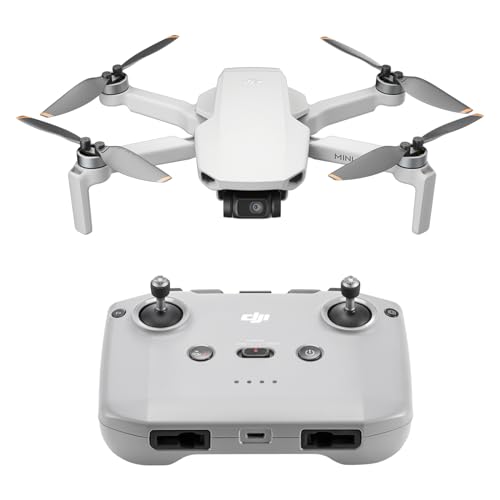
The DJI Mini 4K has a 4k camera on a 3-axis gimbal. It is the straightforward pick for a beginner who wants real 4K footage without learning a pro feature set first. It has no obstacle sensing and a shorter feature list than the Mini 4 Pro.
What we like:
- True 4K stabilized video
- Under 249 g
- Easy, beginner-friendly setup
Watch out for:
- No obstacle sensing
- No 4K/60fps recording
Key Specs:
- Camera: 4K, 3-axis gimbal
- Weight: under 249 g
- Flight time: up to 31 minutes
How We Chose
We compared photography drones available in 2026 on sensor size, stills resolution, lens options, flight time, obstacle sensing and weight. We favored models with strong cameras that are still easy to buy and support this year, and we left out drones that have been replaced by clearly better successors. If you are comparing options, our guide to the best drone for real estate photography is worth a look.
How to Choose
- Current support: buy a drone that is still supported with parts, batteries and app updates in 2026.
- Sensor: a larger sensor still matters most for prints and low light, so do not trade it away for a smaller body.
- Lens choice: two or three focal lengths give you more compositions per flight than a single wide lens.
- Flight time: longer batteries matter more in 2026, as shoots get longer and locations get further apart.
- Weight: a sub-250 g drone remains the easiest travel companion, especially for trips with strict baggage rules.
What Changed for Photography Drones in 2026
The biggest change is that light drones now carry cameras that used to need a heavy airframe. A sub-250 g drone can shoot 48MP stills and 4K/60fps HDR video, which means travel photographers no longer have to choose between image quality and packing light.
Planning a Photography Trip with a Drone in 2026
Check the rules for every location before you travel, because national parks, coastal areas and cities often have different drone rules. Charge all batteries the night before, pack spares in a fireproof bag, and bring a lens cloth for the camera. For a closer look, see our guide to the best drone 2026.
Frequently Asked Questions
What is the best photography drone in 2026?
For image quality, the DJI Mavic 3 Pro remains the strongest pick, while the DJI Mini 4 Pro is the best light travel option and the DJI Mini 3 Pro is the best all-rounder.
Is a 2026 drone worth upgrading to?
If your current drone lacks a large sensor, a telephoto lens or long flight time, an upgrade can make a visible difference. If it already shoots well, good light matters more than a new model.
Do photography drones need registration in 2026?
Drones over 250 g must be registered for recreational use in the US, and paid work needs a Part 107 certificate. Sub-250 g drones are simpler for recreational use.
Can I fly a photography drone in a national park?
Generally no. US national parks ban drone takeoffs and landings, so check the rules for each park before you travel.
How many batteries should I carry for a photo shoot?
Two or three batteries is a good minimum for a photo outing, because waiting for light and repositioning for compositions uses more flight time than you expect.
Final Verdict
In 2026, the DJI Mavic 3 Pro is still the best drone for photography 2026 for image quality, while the DJI Mini 4 Pro is the pick most photographers will actually carry everywhere. The DJI Mini 3 Pro sits between them as the balanced choice for longer shoots.
How to Choose a Drone
- Weight: drones under 250 g are easier to travel with, but rules still apply.
- Camera: larger sensors and 3-axis gimbals give smoother, sharper footage.
- Safety features: obstacle sensing and return-to-home help beginners.
- Flight time and range: spare batteries matter more than spec-sheet range.
- Controller: screen controllers are convenient; phone controllers are cheaper.
For most beginners, a sub-250 g drone with GPS and return-to-home is the best start.
Related guides: see more in our Outdoor Gear & Tech section.
Sources: manufacturer specifications and product pages from DJI, Autel, Parrot, Holy Stone, Potensic, DEERC, Snaptain and Ruko, plus FAA guidance on recreational and commercial drone use. We received no free products for this guide and we do not claim hands-on testing of every model.
Sources and further reading: FAA: Recreational Flyers & Community-Based Organizations and FAA: Unmanned Aircraft Systems. Product details come from brand listings on Amazon. Always check local rules, airspace and park regulations before you fly.



Write Your Review
No reviews yet. Be the first to share your experience!