

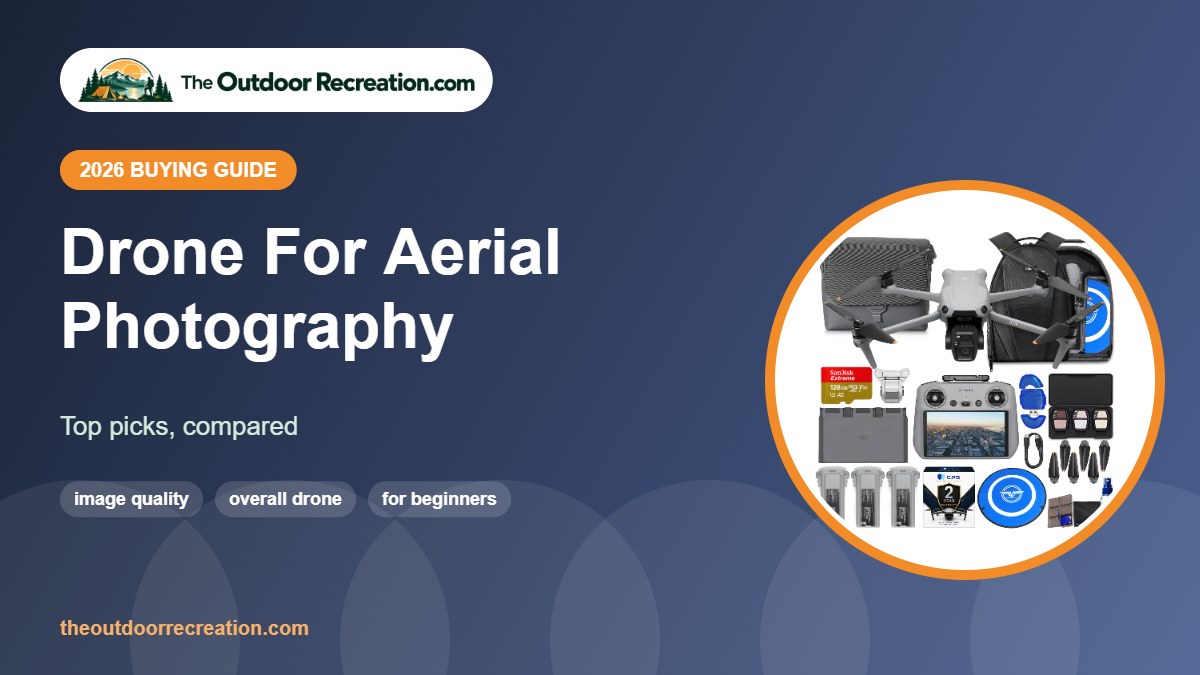
Aerial photography rewards bigger sensors and stable flight.
These take the best photos.
The Outdoor Recreation is reader-supported. As an Amazon Associate we earn from qualifying purchases, at no extra cost to you.
Quick Picks
- Best image quality: DJI Air 3S Fly More Combo
- Best overall drone: DJI Mini 4 Pro Fly More Combo
- Best for beginners: DJI Mini 4K Fly More Combo
- Best budget GPS drone: Holy Stone HS360S GPS Drone
- Top pick: Insta360 X5
Comparison Table
| Product | Best for | Key spec | Standout feature | |
|---|---|---|---|---|
| DJI Air 3S Fly More Combo | Best image quality | Dual cameras | 1 in main sensor | View |
| DJI Mini 4 Pro Fly More Combo | Best overall drone | Under 249 g | Obstacle sensing | View |
| DJI Mini 4K Fly More Combo | Best for beginners | Under 249 g | Easy to fly | View |
| Holy Stone HS360S GPS Drone | Best budget GPS drone | 249 g | GPS return home | View |
| Insta360 X5 | Top pick | 8K30 360° | Dual 1/1.28″ sensors | View |
Detailed Reviews

1The DJI Air 3S has a 1-inch main camera and a medium tele camera for serious aerial photography.
It is larger and heavier than Mini models, so registration rules apply.
Pros & Cons
What we like
- 1 in sensor
- Dual cameras
- Long flight time
Watch out for
- Heavier
- Registration required
Key Specs
- Cameras: wide + tele
- Sensor: 1 in main
- Video: 4K HDR

2The DJI Mini 4 Pro is a sub-249 g drone with omnidirectional obstacle sensing, 4K video and long-range transmission.
The Fly More Combo adds extra batteries and the DJI RC 2 screen controller.
Pros & Cons
What we like
- Light and capable
- Obstacle sensing
- Great video
Watch out for
- Pricey
- Rules still apply
Key Specs
- Weight: under 249 g
- Video: 4K
- Extras: RC 2, batteries

3The DJI Mini 4K is a simple, affordable sub-249 g drone with a 3-axis gimbal and 4K camera.
It is the easiest way into aerial photography from a major brand.
Pros & Cons
What we like
- Affordable
- Easy to fly
- 3-axis gimbal
Watch out for
- No obstacle sensing
- Basic features
Key Specs
- Weight: under 249 g
- Video: 4K
- Gimbal: 3-axis

4The Holy Stone HS360S is a foldable 249 g GPS drone with a 4K camera and return-to-home.
It is a lower-cost option for beginners.
Pros & Cons
What we like
- Affordable
- GPS return home
- Foldable
Watch out for
- Weaker camera than DJI
- Less wind resistance
Key Specs
- Weight: 249 g
- GPS: yes
- Camera: 4K

5The Insta360 X5 is the flagship 360 camera most riders and travelers start with. Dual 1/1.28-inch sensors record 8K30 360-degree video, and a triple AI chip design improves low-light footage.
It is waterproof, has replaceable lenses and supports the invisible selfie stick effect and AI reframing in the Insta360 app.
Pros & Cons
What we like
- Excellent 360 image quality
- Replaceable lenses
- Mature editing app
Watch out for
- Large files to manage
- Lenses need guards
Key Specs
- Video: 8K30 360°
- Sensors: dual 1/1.28 in
- Waterproof: yes
- Lenses: replaceable
How We Chose
We compared weight class, camera sensor, gimbal, safety features, flight time and controller options across popular drones, then read verified owner feedback on reliability and ease of flying. We did not receive free products, and we do not claim hands-on testing. TOR Scores combine published specs, verified owner feedback and overall value. You may also find our guide to the best camera for hiking photography helpful.
How to Choose a Drone
- Weight: drones under 250 g are easier to travel with, but rules still apply.
- Camera: larger sensors and 3-axis gimbals give smoother, sharper footage.
- Safety features: obstacle sensing and return-to-home help beginners.
- Flight time and range: spare batteries matter more than spec-sheet range.
- Controller: screen controllers are convenient; phone controllers are cheaper.
For most beginners, a sub-250 g drone with GPS and return-to-home is the best start.
Sensor Size and Image Quality
Bigger sensors capture more light, giving cleaner images at dawn, dusk and in forests. Phones and rugged compacts use small sensors; premium compacts like the RX100 and G7 X use 1-inch sensors; mirrorless cameras like the a6400 and R50 use larger APS-C sensors. Bigger sensors usually mean bigger cameras and lenses, so balance quality with what you are willing to carry.
Drone Rules and Safety
In the United States, recreational pilots must follow FAA rules, which include passing the free TRUST safety test, flying within visual line of sight and staying below 400 feet in uncontrolled airspace. Drones over 250 g must be registered. Never fly over crowds or near airports without authorization, and remember that launching drones is prohibited in most national parks. Check local rules before every flight. Related: our shortlist of the best drone for beginners.
Batteries and Flight Planning
Real flight time is usually shorter than the listed maximum, especially in wind and cold. Land with at least 20 to 30 percent battery remaining, carry spares in a fireproof bag and let batteries cool before charging. Plan shots before takeoff so you spend battery time flying, not deciding.
Photography in National Parks
National parks are made for photography, but follow park rules: stay on trails, keep a safe distance from wildlife and never feed animals. Launching drones is prohibited in most national parks, so plan to use a ground camera with a good zoom instead. Early morning and evening light give the best results and fewer crowds.
Batteries and Storage on Long Trips
Cold, video and long zoom use drain batteries quickly. Carry at least one spare, charge from a power bank on multi-day trips and turn off Wi-Fi and Bluetooth when you do not need them. Bring a second memory card in case one fails, and back up photos when you get back to town. If you are comparing options, our guide to the best camera backpack for wildlife photography is worth a look.
Where You Can and Cannot Fly
Before every flight, check airspace with an FAA-approved app, since controlled airspace near airports needs authorization. Many state and local parks have their own drone rules, and launching from most national parks is prohibited. Avoid flying over people, roads and private property without permission, and keep well away from wildlife, which can be stressed or injured by drones.
Tips for Better Aerial Photos
Fly in the soft light of early morning or late evening, keep the horizon level and move the drone slowly for smooth video. Use photo modes like panoramas and automatic exposure bracketing for landscapes, and shoot in the drone’s flat color profile if you plan to edit. Keep an eye on wind speed, since gusts can blur shots and drain batteries quickly.
What to Buy With Your First Drone
Plan on spare batteries, since one battery rarely lasts long enough for a full session. A charging hub, a hard case, spare propellers and a fast microSD card are the other essentials. Fly More combos bundle many of these items and often cost less than buying them separately. ND filters are useful later if you want smoother, more cinematic video on bright days.
Related guides: best drone 2026, best drone brands, best camera for hiking. See every pick in our Outdoor Gear & Tech category.
Sources and further reading: National Park Service: the Ten Essentials, Leave No Trace: the 7 Principles and National Park Service: camping basics. Product specs come from brand listings on Amazon; always check your airline’s current carry-on size rules before you fly.
Frequently Asked Questions
Do I need to register a drone?
In the U.S., drones over 250 g must be registered with the FAA; all recreational pilots must pass the free TRUST test.
What is the best drone for beginners?
A sub-250 g GPS drone with return-to-home, like the DJI Mini 4K.
How long do drone batteries last?
Often 20 to 40 minutes depending on model, wind and temperature.
Can I fly a drone in national parks?
Launching drones is prohibited in most national parks.
Can I fly a drone while hiking?
Only where allowed; check local rules and stay away from wildlife and people.
Final Verdict
The DJI Air 3S takes the best aerial photos.

Write Your Review
No reviews yet. Be the first to share your experience!