

Most ski tourers prefer 20 to 30L packs, but longer tours and hut trips can call for more. You may also find our guide to the best 40L camping backpack helpful.
These are the best touring packs and how to choose size.
The Outdoor Recreation is reader-supported. As an Amazon Associate we earn from qualifying purchases, at no extra cost to you.
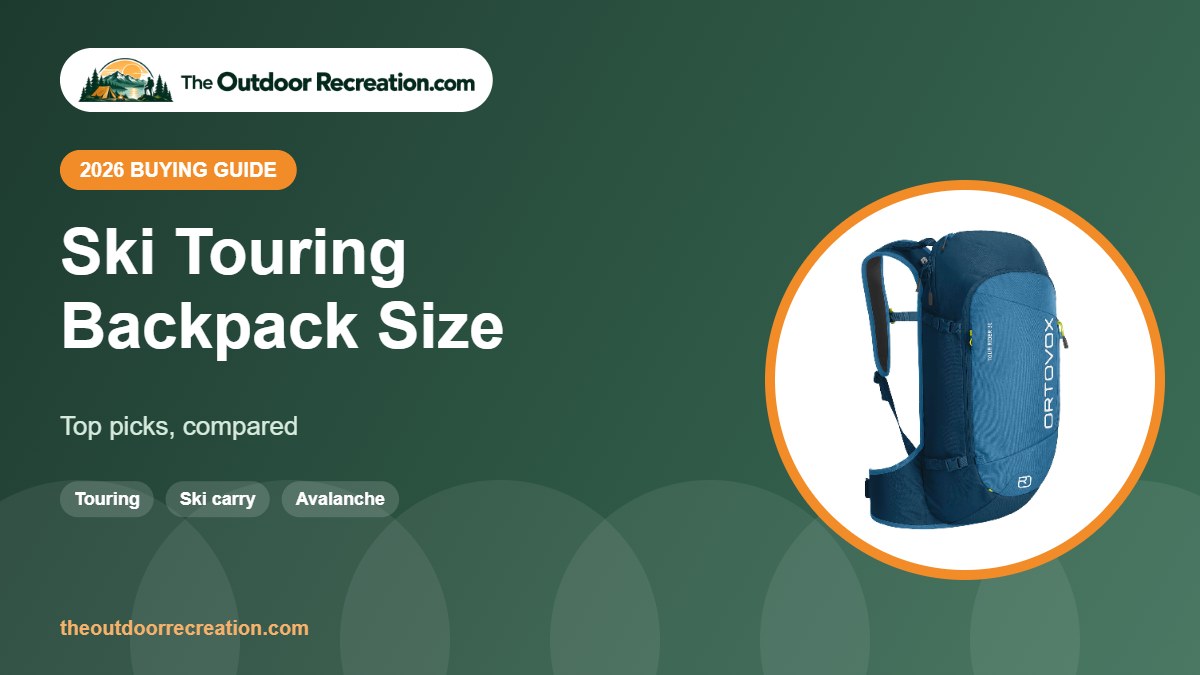
Quick Picks
- Best freeride touring: Ortovox Tour Rider 30L Ski Touring Backpack
- Best day touring: Deuter Updays 26L Ski Touring Backpack
- Best compact: Osprey Kamber 20L Backcountry Ski Pack
- Best budget: Osprey Talon Pro 40
- Best alpine 38L: Osprey Mutant 38
Comparison Table
| Product | Best for | Capacity | Standout feature | |
|---|---|---|---|---|
| Ortovox Tour Rider 30L Ski Touring Backpack | Best freeride touring | 30L | Freeride and alpine | View |
| Deuter Updays 26L Ski Touring Backpack | Best day touring | 26L | Ski and board carry | View |
| Osprey Kamber 20L Backcountry Ski Pack | Best compact | 20L | Avalanche tool pocket | View |
| Osprey Talon Pro 40 | Best budget | 40L | NanoFly UHMWPE ripstop | View |
| Osprey Mutant 38 | Best alpine 38L | 38L | Dual ToolLocks, rope carry | View |
Detailed Reviews

1. Ortovox Tour Rider 30L Ski Touring Backpack
1The Ortovox Tour Rider 30 is a freeride and alpine ski touring pack with ski carry and quick access to safety gear.
It suits longer tours where you carry extra layers and food.
Pros & Cons
What we like
- Touring focused
- Safety gear access
- Quality brand
Watch out for
- Premium cost
- 30L, not 40L
Key Specs
- Capacity: 30L
- Use: ski touring, freeride
- Carry: skis

2The Deuter Updays 26 is a ski touring and freeride pack with ski and snowboard carry and a dedicated avalanche gear pocket.
It is smaller than 40L, which most ski tourers prefer for day tours.
Pros & Cons
What we like
- Ski carry
- Avalanche gear pocket
- Trusted brand
Watch out for
- Smaller than 40L
- Not for overnight trips
Key Specs
- Capacity: 26L
- Carry: skis, snowboard
- Use: day ski touring

3The Osprey Kamber 20 is a compact backcountry ski and snowboard pack with an avalanche tool pocket and ski carry.
It is light and stable for short tours and lift-access side-country.
Pros & Cons
What we like
- Light and stable
- Avalanche pocket
- Osprey quality
Watch out for
- Small capacity
- Not for overnights
Key Specs
- Capacity: 20L
- Carry: skis, snowboard
- Pocket: avalanche tools

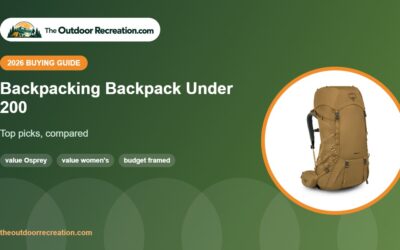
4The Talon Pro 40 is Osprey’s light, fast multi-sport pack. NanoFly fabric with a triple-grid UHMWPE ripstop gives it strength well beyond its weight, and the stretch pockets are tougher than standard mesh.
It is versatile enough for long day hikes, scrambles, fastpacking and alpine approaches. It has a men’s fit and a hip belt.
Pros & Cons
What we like
- Very strong for its weight
- Durable stretch pockets
- Versatile multi-sport design
Watch out for
- Premium pricing
- Men’s fit only in this listing
Key Specs
- Capacity: 40 liters
- Fabric: NanoFly with UHMWPE ripstop
- Fit: men’s, with hip belt
- Use: hiking, scrambling, fastpacking

5The Mutant 38 is Osprey’s alpine climbing pack. It has dual ToolLocks for ice axes, a rope carry, a snow-shedding back panel, glove-friendly buckles and a reinforced A-frame ski carry.
Strip off the removable top lid and other parts for summit pushes. Osprey lists it at 26.8 x 11.8 x 10.2 inches and 2.69 pounds. It is the pack we would choose for mountaineering routes where you carry tools and a rope rather than a big camp.
Pros & Cons
What we like
- Ice tool and rope carry
- Strippable for summit days
- Snow-shedding back panel
Watch out for
- Minimal organization by design
- 38L limits overnight gear
Key Specs
- Capacity: 38 liters
- Weight: 2.69 lb (brand listing)
- Size: 26.8 x 11.8 x 10.2 in
- Ice tools: dual ToolLocks
- Ski carry: A-frame
How We Chose
We compared capacity, fit range, weight, carry system, materials, pockets and carry-on dimensions across dozens of backpacks, then read verified owner feedback to find comfort and durability problems that spec sheets miss. We did not receive free products, and we do not claim hands-on testing. TOR Scores combine published specs, verified owner feedback and overall value.
Ski Touring Pack Size: Why Most Riders Choose 20 to 30L
Most ski tourers use 20 to 30L packs for day tours because smaller packs ride closer to the back when skiing. A 40L pack makes sense for hut trips or long tours with extra layers. Whatever the size, look for ski or board carry, a separate pocket for avalanche shovel and probe, and a stable fit. Take an avalanche course and carry rescue gear in avalanche terrain. Related: our shortlist of the best 40L camera backpack.
What Makes a Good Alpine or Mountaineering Pack
Alpine and mountaineering packs are built for steep, snowy and technical ground. They are narrow, light and simple, and they carry tools on the outside.
- Ice tool attachment. Secure ToolLocks or loops for one or two ice axes.
- Rope carry. A strap under the lid or across the top holds a coiled rope.
- Strippable parts. Removable lids, frame sheets and hip belts cut weight for summit pushes.
- Snow-shedding back panel. Smooth fabric stops snow from sticking and melting into your layers.
- Glove-friendly buckles. Large buckles and pulls work with thick gloves.
- Narrow profile. A slim pack lets your arms move freely when climbing.
For glacier travel, add crevasse rescue gear and get proper training. A pack does not replace skills, partners and a sound plan. If you are comparing options, our guide to the best 40L backpack travel picks is worth a look.
How to Fit a 40L Backpack
Fit matters more than brand. A 40-liter pack with the wrong torso length will hurt even if it is made from the best fabric. Measure your torso from the bony bump at the base of your neck (the C7 vertebra) down to the top of your hip bones. That number, usually between 15 and 21 inches, tells you which size or adjustment range to choose.
Load the pack with about 15 pounds before you adjust it. Then follow this order:
- Hip belt first. Center the padding on your hip bones and tighten until it carries most of the weight.
- Shoulder straps second. Pull them snug so they wrap your shoulders without lifting the hip belt.
- Load lifters third. On framed packs, angle them about 45 degrees to pull the top of the pack toward you.
- Sternum strap last. Clip it about an inch below your collarbones, just tight enough to stop the straps from sliding outward.
If the shoulder straps leave a gap above your shoulders or the hip belt sits on your waist instead of your hips, the torso length is wrong. Packs with adjustable back panels, like the Osprey Kestrel and Kyte, solve that without exchanges. For a closer look, see our guide to the best 40L backpack for travel.
What Fits in a 40L Pack
A 40-liter pack is enough for a fast overnight in summer, a hut trip, or a week of travel if you pack light. A typical summer overnight load looks like this:
- Ultralight one-person tent or hammock (2 to 4 liters packed)
- Compressible sleeping bag rated for the season (5 to 8 liters)
- Inflatable sleeping pad (1 to 2 liters)
- Stove, fuel and small pot (2 liters)
- Food for one to two days (3 to 5 liters)
- Rain jacket, warm layer and spare socks (5 liters)
- Water: 2 to 3 liters in bottles or a bladder
- Ten Essentials: navigation, headlamp, sun protection, first aid, knife, fire, emergency shelter
If your sleeping bag is bulky synthetic, or you hike in shoulder season with heavier layers, step up to a pack with an extension collar or roll-top, like the Naturehike Rock 40+5 or Haimont 40+15. For travel, 40 liters holds about five to seven days of clothes with packing cubes.
Related guides: best 40l mountaineering backpack, best 40l climbing backpack, best 40l alpine backpack. Browse every pick in our Backpacks category.
Sources and further reading: National Park Service: the Ten Essentials, Leave No Trace: the 7 Principles and National Park Service: camping basics. Product specs come from brand listings on Amazon; always check your airline’s current carry-on size rules before you fly.
Frequently Asked Questions
Do I need a 40L ski touring pack?
Usually not for day tours; 40L suits hut trips and long multi-day tours.
Do I need a frame?
For loads above about 20 lb, a frame and hip belt make carrying much more comfortable.
How do I size a backpack?
Measure your torso from the base of your neck to the top of your hip bones and match it to the pack’s size range.
How much should a 40L pack weigh?
Frameless packs can be about 1 to 2 lb; framed hiking and travel packs often weigh 2.5 to 4 lb.
Are 40L backpacks waterproof?
Most are water resistant; use a rain cover or liner, or choose a roll-top waterproof pack.
Final Verdict
For day tours, the Deuter Updays 26; for longer tours, the Ortovox Tour Rider 30 or a 38L alpine pack.
Write Your Review
No reviews yet. Be the first to share your experience!