

Natural gas patio heaters are powerful and never run out of fuel, but they need a gas line. Electric heaters need only an outlet or circuit.
We compare them and pick the best electric heaters for homes weighing the two.
The Outdoor Recreation is reader-supported. As an Amazon Associate we earn from qualifying purchases, at no extra cost to you.
Quick Picks
- Best natural-gas alternative: Dr. Infrared 4500W Patio Heater
- Best 240V: Dr. Infrared DR-239 3000W
- Best plug-in: Dr. Infrared Portable Patio Heater
- Best smart: Wall-Mounted Wi-Fi Patio Heater with Light
- Best overhead: Hanging Wi-Fi Ceiling Patio Heater
- Best versatile: Briza Infrared Patio Heater
Comparison Table
| Product | Best for | Type | Standout feature | |
|---|---|---|---|---|
| Dr. Infrared 4500W Patio Heater | Best natural-gas alternative | 4500W | Commercial-grade output | View |
| Dr. Infrared DR-239 3000W | Best 240V | 3000W, 240V | Wall or ceiling mount | View |
| Dr. Infrared Portable Patio Heater | Best plug-in | 1500W, IP55 | Indoor/outdoor, portable | View |
| Wall-Mounted Wi-Fi Patio Heater with Light | Best smart | 1500W | Wi-Fi app + light | View |
| Hanging Wi-Fi Ceiling Patio Heater | Best overhead | 1500W | 9 levels, Wi-Fi | View |
| Briza Infrared Patio Heater | Best versatile | 1500W | Tripod stand + wall/ceiling | View |
Detailed Reviews

1Dr. Infrared’s 4,500-watt model is built for large patios, restaurants and workshops. It mounts on a wall or ceiling and is rated IPX2.
It is the most powerful heater in our lineup. It needs a dedicated high-voltage circuit and professional installation, and the IPX2 rating means it should go under a roof.
Pros & Cons
What we like
- Very powerful
- Good for large covered spaces
- Wall/ceiling mount
Watch out for
- Needs professional wiring
- Lower water rating (IPX2)
Key Specs
- Power: 4500W
- Rating: IPX2
- Mount: wall/ceiling

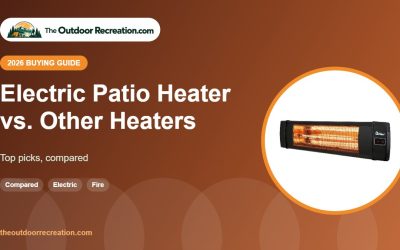
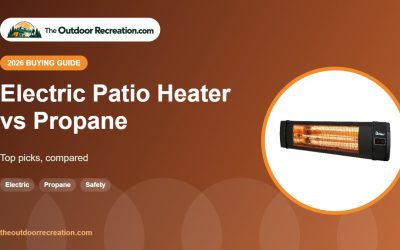
2The DR-239 delivers 3,000 watts (about 10,260 BTU) of carbon infrared heat. It runs on 220 to 240 volts and mounts on a wall or ceiling, with an IP55 weather rating.
Because it needs a 240V circuit, plan on an electrician. In return you get noticeably stronger heat than any plug-in model.
Pros & Cons
What we like
- Twice the power of plug-in models
- IP55 rated
- Wall or ceiling mount
Watch out for
- Needs 240V wiring
- Fixed installation
Key Specs
- Power: 3000W (10,260 BTU)
- Voltage: 220-240V
- Rating: IP55
- Mount: wall/ceiling

3Dr. Infrared’s portable heater is one of the most reviewed electric patio heaters on Amazon. It is IP55 rated for indoor and outdoor use and gives clean, instant infrared heat.
It moves easily between the patio, garage and workshop, and runs on a standard outlet. It is our go-to recommendation for a first electric patio heater.
Pros & Cons
What we like
- Huge owner base
- IP55 rated
- Portable
Watch out for
- Covers a small area
- Basic styling
Key Specs
- Power: 1500W (120V)
- Rating: IP55
- Use: patio, garage, deck

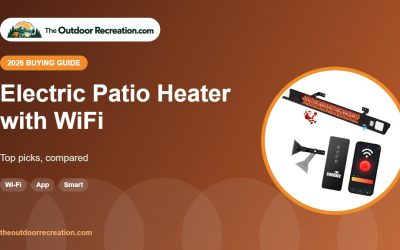
4This wall-mounted heater adds Wi-Fi app control and a built-in light. It runs at 1,500 watts.
Being able to warm the patio from your phone before you step outside is the reason to choose it.
Pros & Cons
What we like
- App control
- Built-in light
- Quick install
Watch out for
- Newer brand
- App quality varies
Key Specs
- Power: 1500W
- Control: Wi-Fi app, remote
- Extras: light

5This hanging ceiling heater uses carbon fiber tubes with nine heat levels, a 24-hour timer and Wi-Fi control.
Hanging the heater over a table keeps the floor clear and spreads warmth over the whole seating area.
Pros & Cons
What we like
- Ceiling hanging
- Wi-Fi control
- 9 levels
Watch out for
- Needs a sturdy ceiling
- Newer brand
Key Specs
- Power: 1500W
- Mount: hanging ceiling
- Control: Wi-Fi, timer
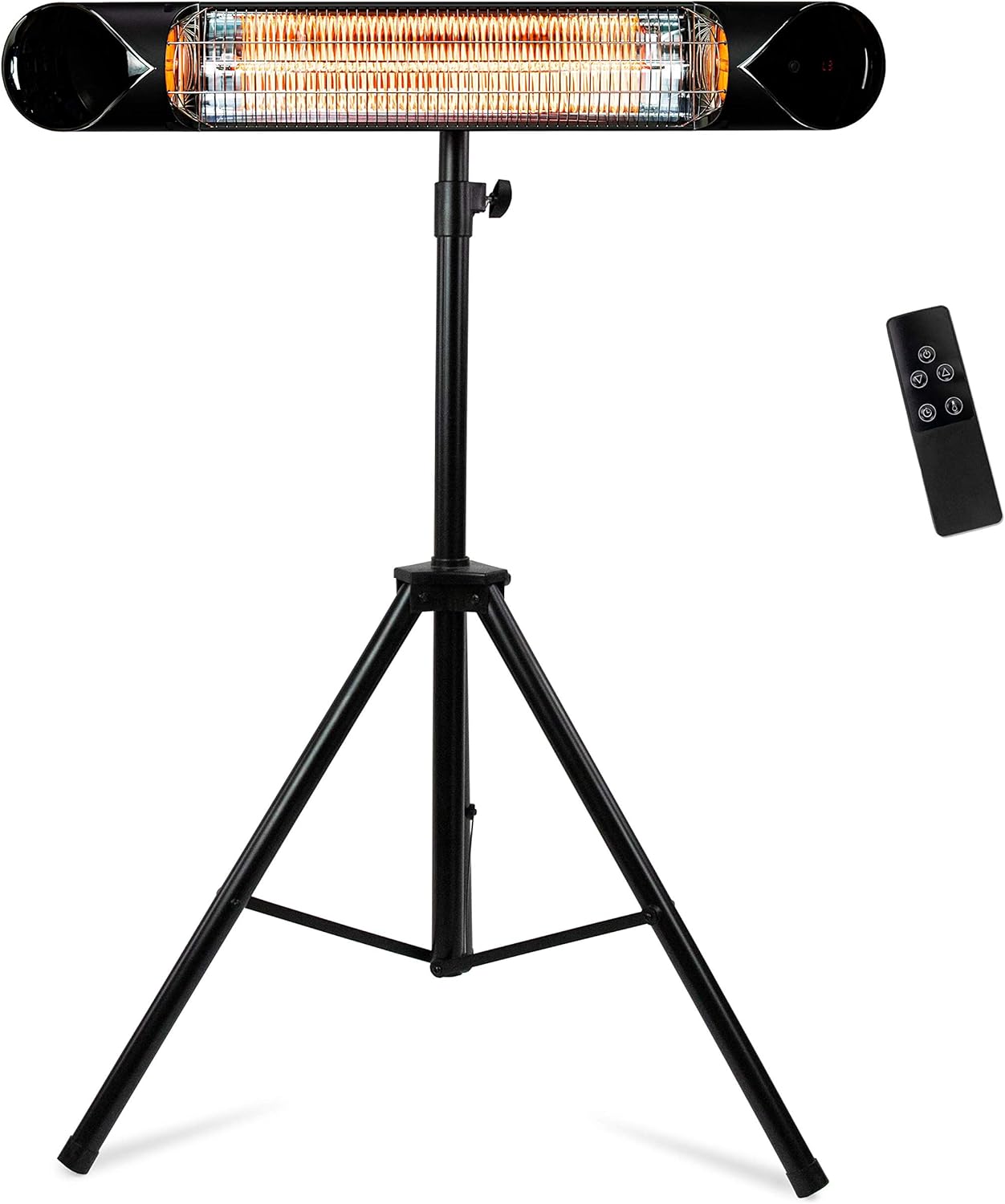
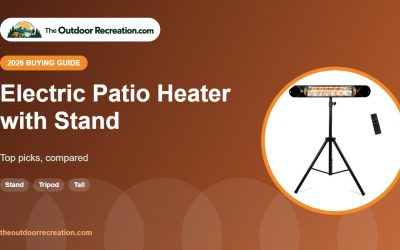
6Briza’s heater comes with hardware for walls or ceilings and an adjustable tripod stand. A remote controls power, timer and heat levels.
It has built-in safety features and a large owner base, which makes it a reliable all-round pick.
Pros & Cons
What we like
- Tripod and mounting kit
- Remote
- Large owner base
Watch out for
- Tripod takes floor space
- Modest range
Key Specs
- Power: 1500W
- Mount: tripod, wall, ceiling
- Control: remote, timer
How We Chose
We compared materials, sizes, safety features and accessories across dozens of listings, then read verified owner feedback to find durability and usability problems that spec sheets miss. We did not receive free products, and we do not claim hands-on testing. TOR Scores combine published specs, verified owner feedback and overall value.
Electric vs Gas Patio Heaters
- Electric: no fuel tanks, no emissions at the point of use, instant heat and low maintenance. Best for covered patios and small, sheltered spaces. Range is limited, and higher-wattage models may need wiring.
- Propane: powerful and portable with no outlet needed, but tanks must be refilled and they must only be used in open, well-ventilated outdoor spaces because they produce carbon monoxide.
- Natural gas: endless fuel supply once plumbed in, lower running cost in many areas, but installation is permanent and needs a professional.
For a covered or semi-enclosed patio, electric is usually the safest choice. For large, open areas, gas heaters put out more heat.
Where to Place a Patio Heater
Infrared heat travels in a straight line, so aim the heater at people, not at the open sky.
- Mount wall and ceiling heaters 7 to 9 feet above the floor, or at the height the manufacturer recommends.
- Keep at least 3 feet of clearance from anything that can burn, such as curtains, cushions and umbrellas. NFPA uses this 3-foot rule for space heaters.
- Use weather-rated outdoor outlets with GFCI protection.
- Avoid long extension cords. If you must use one, choose a heavy-duty outdoor cord rated for the heater’s wattage.
- Windbreaks such as screens or plants make a big difference to how warm you feel.
Installation Costs
A natural gas heater needs a licensed plumber to run a gas line and a permit in many areas. A 240V electric heater needs an electrician to add a circuit. A 1,500 watt plug-in needs only an outdoor GFCI outlet. Get quotes for both before deciding.
Related guides: best electric patio heater vs gas, best electric patio heater vs propane, best electric patio heater, best electric patio heater for winter. See every pick in our Patio Heaters category.
How Much Heat Do You Need?
Infrared heaters warm the people and objects they face, so think about seating zones rather than square footage. As a rough guide, one 1,500 watt heater comfortably warms one or two people sitting within a few feet, or a small table on a sheltered balcony. A 3,000 watt heater covers a larger table or lounge area, and 4,500 watt units suit big covered patios and restaurant seating. On wide patios, two smaller heaters aimed at different seating areas often work better than one large one.
Wind is the biggest factor. A heater that feels toasty on a still night may barely register on a breezy one. Screens, glass panels, outdoor curtains (kept well clear of the heater) and planters all help hold warmth near your seats.
Sources and further reading: NFPA: safety with heating equipment and CDC: carbon monoxide poisoning basics. Product details come from brand listings on Amazon. Follow the manufacturer’s installation and electrical instructions.
Frequently Asked Questions
Can a 1500W patio heater run on a normal outlet?
Yes. Most 1,500 watt patio heaters plug into a standard 120V outlet. Use an outdoor GFCI outlet and avoid running other big loads on the same circuit.
Can electric patio heaters get wet?
Heaters with IP55 or IP65 ratings are designed to handle splashes and rain, but protect plugs and cords, and do not use them in standing water.
How far does an electric patio heater reach?
Most 1,500 watt models warm a seating area roughly 6 to 10 feet in front of the heater. Higher-wattage, hardwired models cover more.
Are electric patio heaters expensive to run?
A 1,500 watt heater uses 1.5 kWh per hour on high. Multiply that by your electricity rate to estimate the running cost.
Are electric patio heaters safe under a covered patio?
Electric heaters are well suited to covered patios because they do not burn fuel. Follow the clearance distances in the manual and keep them away from fabric.
Final Verdict
If you are weighing natural gas, a hardwired electric heater like the Dr. Infrared 4500W or DR-239 gives similar convenience with simpler installation and no combustion.
Write Your Review
No reviews yet. Be the first to share your experience!