

Wood fire pits give crackle and heat; gas fire pits give instant, clean flames.
Here is how they compare.
The Outdoor Recreation is reader-supported. As an Amazon Associate we earn from qualifying purchases, at no extra cost to you.
Quick Picks
- Best wood smokeless: Solo Stove Bonfire
- Best gas table: 50,000 BTU Rectangular Propane Fire Pit Table
- Best gas tabletop: 28-Inch Tabletop Propane Fire Pit (40,000 BTU)
- Best wood kit: Sunnydaze Rectangular Wood Burning Fire Pit
- Best portable gas: Outland Living Portable Propane Fire Pit 19-inch
Comparison Table
| Product | Best for | Type | Standout feature | |
|---|---|---|---|---|
| Solo Stove Bonfire | Best wood smokeless | 19.5 in | Smokeless 360 airflow | View |
| 50,000 BTU Rectangular Propane Fire Pit Table | Best gas table | Rectangular table | 50,000 BTU | View |
| 28-Inch Tabletop Propane Fire Pit (40,000 BTU) | Best gas tabletop | 40,000 BTU | Tabletop | View |
| Sunnydaze Rectangular Wood Burning Fire Pit | Best wood kit | Large rectangular | Spark screen, cover, poker | View |
| Outland Living Portable Propane Fire Pit 19-inch | Best portable gas | 58,000 BTU | Camping friendly | View |
Detailed Reviews

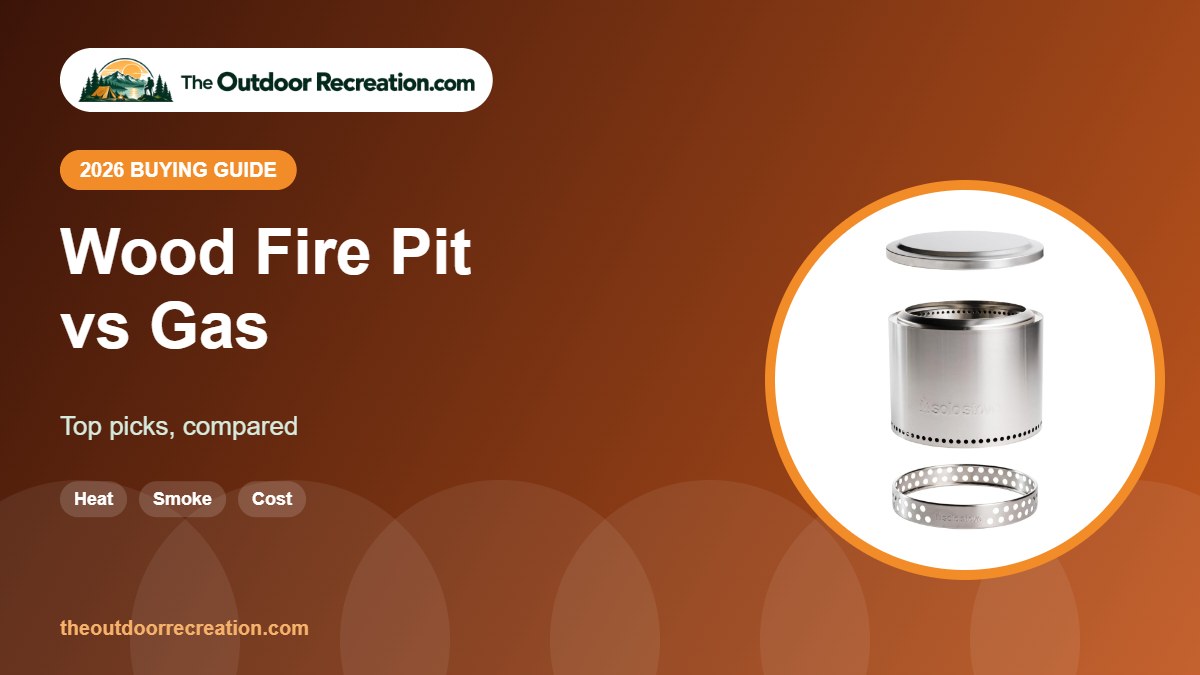
1The Solo Stove Bonfire is a stainless steel smokeless fire pit with a removable ash pan and 360-degree airflow that burns wood cleanly.
It is the most popular backyard smokeless fire pit and is portable enough for camping trips by car.
Pros & Cons
What we like
- Low smoke
- Removable ash pan
- Huge owner base
Watch out for
- Premium price
- Gets very hot, needs a stand on decks
Key Specs
- Diameter: about 19.5 in
- Material: stainless steel
- Fuel: wood

2. 50,000 BTU Rectangular Propane Fire Pit Table
2This rectangular propane fire pit table gives a long linear flame with a table edge for drinks and plates.
It suits patio seating areas and outdoor living rooms.
Pros & Cons
What we like
- Table space
- Rectangular look
- Good heat
Watch out for
- Heavy
- Hidden tank space varies
Key Specs
- Shape: rectangular
- Output: about 50,000 BTU
- Fuel: propane

3. 28-Inch Tabletop Propane Fire Pit (40,000 BTU)
3This 28-inch tabletop propane fire pit puts out about 40,000 BTU with glass or stone media and a lid.
It gives instant, low-smoke flames on patios and decks where wood fires are not allowed.
Pros & Cons
What we like
- No smoke or sparks
- Instant on/off
- Good heat
Watch out for
- Needs propane tank
- Check deck rules
Key Specs
- Size: 28 in
- Output: about 40,000 BTU
- Fuel: propane

4This Sunnydaze rectangular fire pit includes a spark screen, cover and poker, giving a complete backyard setup in one box.
Its large fire bowl suits gatherings and cooking with a grate.
Pros & Cons
What we like
- Complete kit
- Spark screen and cover
- Large fire
Watch out for
- Steel needs care to avoid rust
- Heavier
Key Specs
- Shape: rectangular
- Includes: spark screen, cover, poker
- Fuel: wood
5. Outland Living Portable Propane Fire Pit 19-inch
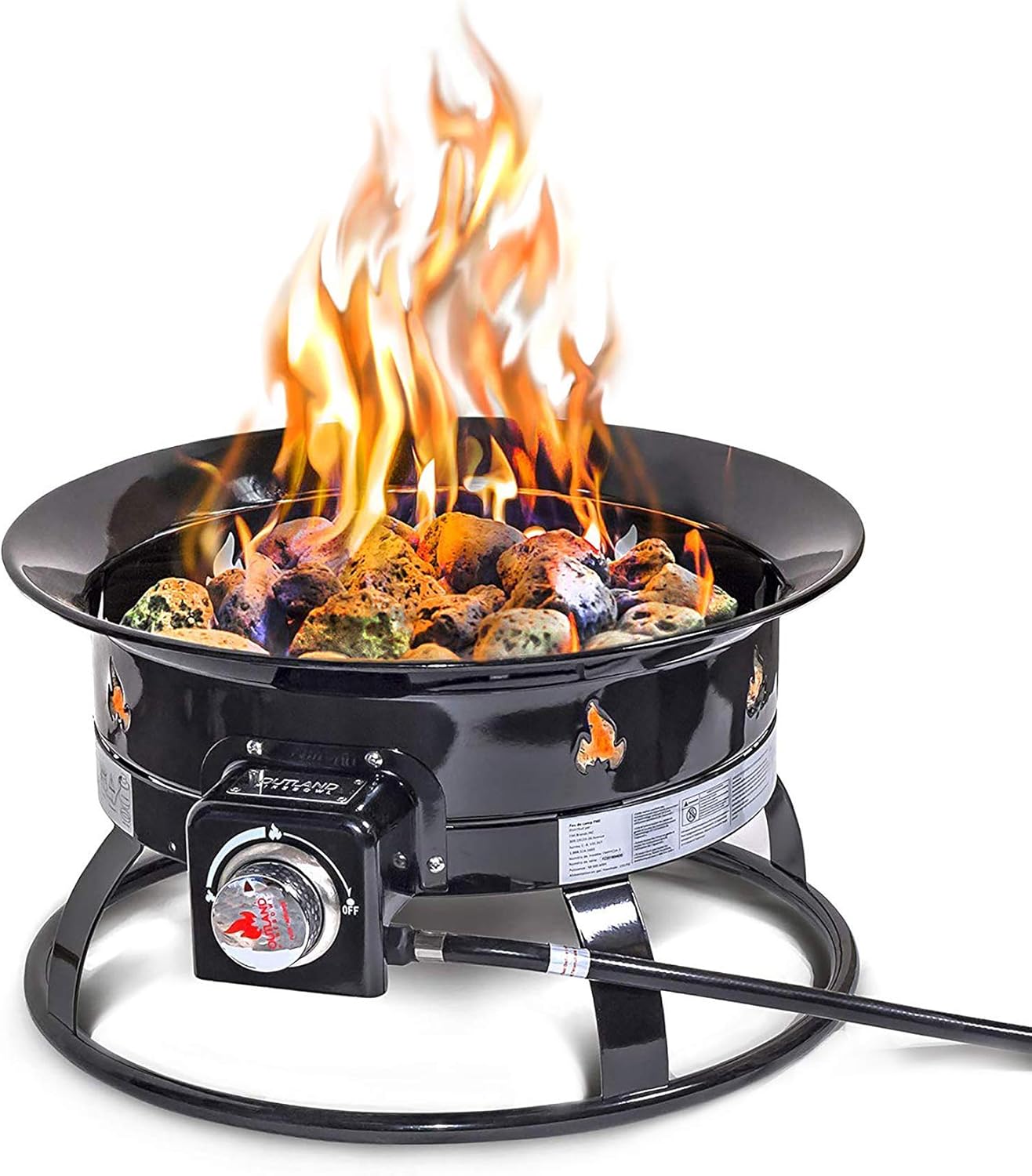
5The Outland Living 19-inch portable propane fire pit is a camping favorite, giving a real flame with no smoke or wood.
It works in many campgrounds during wood-burn bans, though rules vary.
Pros & Cons
What we like
- Huge owner base
- No wood needed
- Portable
Watch out for
- Needs propane
- Not a cooking grill
Key Specs
- Size: 19 in
- Output: 58,000 BTU
- Fuel: propane
How We Chose
We compared fuel type, heat output, smoke, size, weight, safety features and included accessories across dozens of fire pits and add-ons, then read verified owner feedback on durability, rust and real-world performance. We did not receive free products, and we do not claim hands-on testing. TOR Scores combine published specs, verified owner feedback and overall value. We cover this in more depth in our roundup of the best fire pit vs. chiminea and others.
Wood vs Propane Fire Pits
Wood fire pits give real crackle, more radiant heat and the option to cook, but they create smoke, sparks and ash. Propane fire pits light with a button, make no smoke and work in many places with wood-burning limits, but cost more to run and are less suited to cooking.
How to Choose a Fire Pit
- Fuel: wood gives crackle and cooking; propane is instant and smoke-free.
- Smoke: double-wall smokeless pits reduce smoke from wood.
- Size: 15 to 20 inches for small patios and camping, 27 inches or more for groups.
- Cooking: add a grate or choose a grill combo.
- Safety: spark screens, stands and mats protect decks and lawns.
Fire Pit Safety Basics
Place fire pits at least 10 feet from buildings, fences and overhanging branches, or follow the maker’s clearance rules. Never use a fire pit under a covered patio unless it is rated for that use. Keep water or an extinguisher nearby, supervise children and pets, and put the fire out completely before leaving. Check local burn bans and HOA rules.
Wood, Propane or Natural Gas?
- Wood: crackle, more radiant heat and campfire cooking; needs wood storage and cleanup.
- Propane: instant on and off, no sparks, portable; tanks need refilling.
- Natural gas: no tanks to swap, but needs a gas line installed by a professional.
If you love cooking and campfire ambiance, choose wood. If you want convenience on a patio or deck, propane or natural gas is easier. You may also find our guide to the best fire glass with gas helpful.
Fire Pit Size and Clearance
Most backyard fire pits measure about 19 to 36 inches across. A 19 to 24 inch pit suits two to four people; 27 to 36 inches suits bigger groups. Leave several feet of open seating space around it and keep it well away from the house, fences, overhanging branches and anything flammable.
Many makers and local codes recommend at least 10 feet from structures, so check your rules before choosing a spot.
Choosing Firewood
Burn seasoned hardwood such as oak, maple or hickory for hotter, cleaner fires with less smoke. Seasoned wood is dry, lighter and often has cracked ends. Wet or green wood smokes heavily, pops and leaves more soot.
Never burn treated lumber, painted wood, trash or plastics. Buy or gather firewood locally where required, because moving firewood can spread invasive pests. Related: our shortlist of the best fire pit for camping.
How Smokeless Fire Pits Work
Smokeless fire pits use double walls and air holes to pull in air at the bottom and feed preheated air back into the top of the fire. This secondary combustion burns off much of the smoke once the fire is hot.
They still smoke when you light them or add wet wood, so start with dry kindling and add logs a few at a time.
Fire Pit Care and Rust Prevention
Empty ash once it is completely cold, because wet ash holds moisture against steel and speeds up rust. Cover the pit or store it under shelter between uses, and touch up chipped paint on painted steel pits with high-heat paint. If you are comparing options, our guide to the best fire pit chairs is worth a look.
Stainless steel resists rust best but can still discolor with heat, which is normal. Cast iron lasts well when kept dry and lightly oiled.
Check Local Fire Rules
Many cities, counties and parks restrict open burning during dry or windy weather. Check local rules and any burn bans before each fire, and follow campground regulations when camping.
Keep water or an extinguisher nearby, never leave a fire unattended and put it out completely before you leave or go to bed. Smokey Bear’s campfire guidance in our sources is a good checklist.
Related guides: best fire pit vs propane, best fire pit vs wood, best chiminea vs fire pit. See every pick in our Fire Pits category.
Sources and further reading: NFPA: safety with heating equipment, CDC: carbon monoxide poisoning basics and Smokey Bear: campfire safety. Product details come from brand listings on Amazon. Always follow the manufacturer’s instructions and local burn rules.
Frequently Asked Questions
How far should a fire pit be from the house?
Often at least 10 feet, but follow the maker’s instructions and local codes.
Can I put a fire pit on a deck?
Only with care: use a stand, heat-resistant mat and spark screen, or choose propane, and check local rules.
Are smokeless fire pits really smokeless?
They greatly reduce smoke once the fire is hot, but some smoke still occurs when lighting and adding wood.
Is a propane fire pit warm?
Yes for close seating, though wood fires usually give more radiant heat.
Can you cook on a fire pit?
Yes with a grate or cast iron; wait for hot coals and keep tools long-handled.
Final Verdict
Choose the Solo Stove Bonfire for wood or a propane fire table for convenience.


Write Your Review
No reviews yet. Be the first to share your experience!