

Poles save your knees on long descents.
These are our favorite trekking poles.
The Outdoor Recreation is reader-supported. As an Amazon Associate we earn from qualifying purchases, at no extra cost to you.
Quick Picks
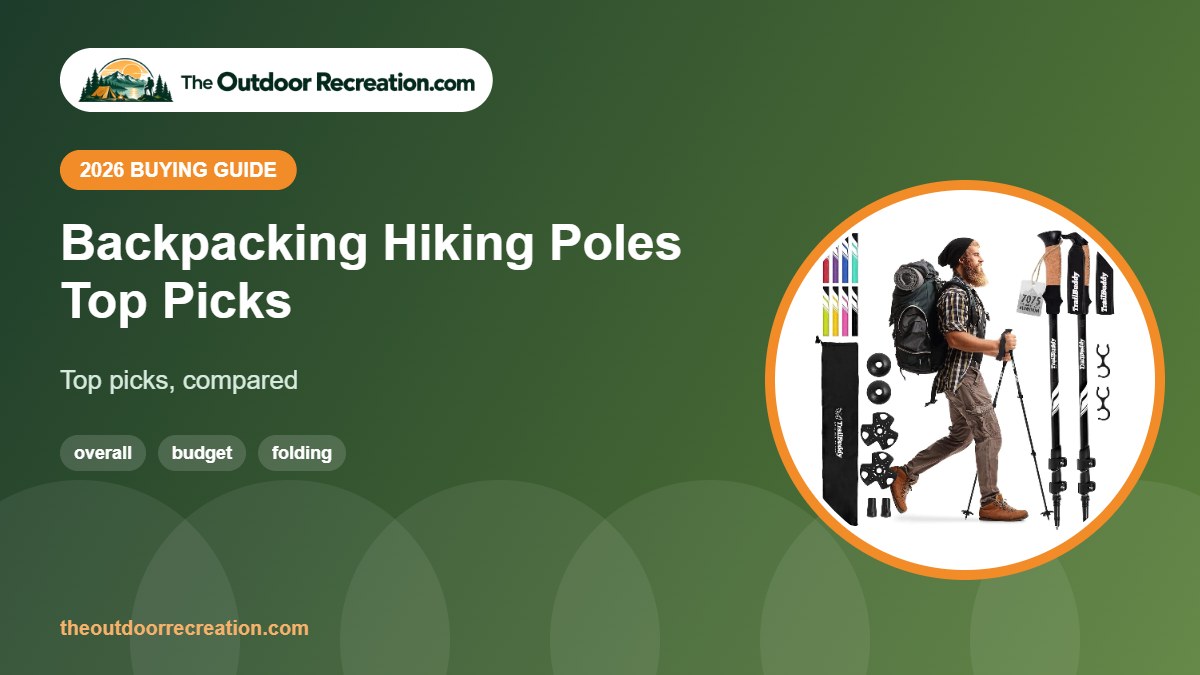
- Best overall: TrailBuddy Trekking Poles
- Best budget: Cascade Mountain Tech Aluminum Trekking Poles
- Best folding: Foldable Lightweight Hiking Poles
- Pair with boots: Merrell Moab 3 Mid Waterproof (Men’s)
- Pack with pole loops: Osprey Rook 65
Comparison Table
| Product | Best for | Type | Standout feature | |
|---|---|---|---|---|
| TrailBuddy Trekking Poles | Best overall | 7075 aluminum | Lever locks, cork grips | View |
| Cascade Mountain Tech Aluminum Trekking Poles | Best budget | Aircraft-grade aluminum | Extended down grip | View |
| Foldable Lightweight Hiking Poles | Best folding | Folding design | Packs small | View |
| Merrell Moab 3 Mid Waterproof (Men’s) | Pair with boots | Mid cut | Waterproof membrane | View |
| Osprey Rook 65 | Pack with pole loops | 65 L | Adjustable torso | View |
Detailed Reviews

1TrailBuddy trekking poles use 7075 aluminum with lever locks and cork grips, and they have an enormous number of owner reviews.
They are a great first pair for hikers and backpackers.
Pros & Cons
What we like
- Excellent value
- Easy lever locks
- Cork grips
Watch out for
- Heavier than carbon
- Not folding
Key Specs
- Material: 7075 aluminum
- Locks: lever
- Grips: cork

2Cascade Mountain Tech trekking poles are affordable aluminum poles with quick locks and an extended grip for descents.
They are popular with beginners and casual hikers.
Pros & Cons
What we like
- Affordable
- Quick locks
- Extended grip
Watch out for
- Heavier than premium poles
- Basic tips
Key Specs
- Material: aluminum
- Grip: extended
- Use: hiking, walking

3These foldable hiking poles collapse into short sections that fit inside a pack or suitcase.
They suit travelers and hikers who want poles only for part of a trip.
Pros & Cons
What we like
- Pack small
- Lightweight
- Adjustable
Watch out for
- Less stiff than fixed poles
- Check length range
Key Specs
- Design: folding
- Use: travel, hiking
- Adjustable: yes

4The Merrell Moab 3 Mid Waterproof is one of the most popular hiking boots, known for comfort out of the box and a grippy outsole.
It suits day hikes and lighter backpacking trips.
Pros & Cons
What we like
- Comfortable from day one
- Waterproof
- Wide sizes available
Watch out for
- Runs warm in summer
- Not for heavy loads
Key Specs
- Cut: mid
- Waterproof: yes
- Use: day hikes, light backpacking

5The Osprey Rook 65 is an affordable men’s backpacking pack with an adjustable torso, sleeping bag compartment and included rain cover.
It is one of the best entry points into Osprey’s backpacking range.
Pros & Cons
What we like
- Adjustable torso
- Rain cover
- Good value
Watch out for
- Heavier than ultralight packs
- Simpler hip belt
Key Specs
- Capacity: 65 L
- Feature: adjustable torso
- Extras: rain cover
How We Chose
We compared weight, durability, fit and features across dozens of backpacking packs, footwear, poles and accessories, then read verified owner feedback on real trail use. We did not receive free products, and we do not claim hands-on testing. TOR Scores combine published specs, verified owner feedback and overall value. We cover this in more depth in our roundup of the best backpacking hiking backpack.
Do You Need Trekking Poles?
Trekking poles take some load off your knees on descents, help balance on stream crossings and loose rock, and give your arms something to do on long climbs. Many backpackers also use them to pitch trekking-pole tents, which saves weight.
Look for adjustable or folding poles so you can shorten them for climbs and lengthen them for descents. Aluminum is tough and affordable; carbon fiber is lighter but can snap under sideways force. Cork grips manage sweat well, foam is light and soft, and rubber suits cold weather. Flick locks are easier to adjust than twist locks. You may also find our guide to the best camera for hiking and backpacking helpful.
Set the length so your elbow bends at about 90 degrees on flat ground, use the wrist straps correctly and add rubber tips on pavement or rock. Pack them away on scrambles where you need your hands.
The Essential Backpacking Gear List
A good backpacking kit starts with the Ten Essentials: navigation, a headlamp, sun protection, first aid, a knife or repair kit, fire, shelter, extra food, extra water and extra clothes. The National Park Service Ten Essentials list is a good starting point for any trip.
- Big three: backpack, shelter and sleep system make up most of your weight.
- Kitchen: a small stove, fuel, pot, lighter and spoon.
- Water: bottles or a bladder and a filter or purifier.
- Clothing: moisture-wicking layers, an insulating jacket and a rain shell.
- Footwear: boots or shoes that are broken in, plus spare socks.
- Extras: trekking poles, a pack liner and a small trowel for waste.
Weigh your gear, cut what you do not use and test everything on a short overnight before a big trip.
How to Choose Hiking Boots
- Cut: mid and high boots support ankles under a heavy pack; low shoes are lighter for day hikes on good trails.
- Waterproofing: membranes keep feet dry in wet weather but run warmer in summer.
- Sole: deep lugs grip mud and loose rock; stiffer soles protect feet on rough ground.
- Fit: try boots in the afternoon with the socks you will hike in, and leave a thumb’s width in front of your toes.
- Break-in: wear new boots on short walks before a long trip.
Comfort beats brand. A boot that fits your foot shape will serve you better than a famous name that pinches. If you carry heavy loads on rough trails, choose more support; if you hike fast on smooth paths, choose lighter shoes. Related: our shortlist of the camera for hiking vs backpacking.
Hiking Shoes vs Boots vs Trail Runners
Hiking shoes are low-cut versions of boots: they keep a protective sole and toe cap but drop the ankle collar, so they feel lighter and need less break-in. Trail runners go further, trading some protection for speed and comfort. Boots give the most support and protection, especially with a heavy pack.
Many backpackers now hike in trail runners or hiking shoes because a pound on your feet feels like several on your back. Others prefer boots for rocky, wet or snowy terrain and for weak ankles. There is no single right answer; it depends on your trail, load and history of injuries.
Whatever you choose, match your socks to your shoes, replace footwear when the tread wears smooth and carry blister care. The National Park Service Ten Essentials list covers what else to carry on every hike.
Backpacking in National Parks: Permits and Planning
Popular parks such as Yosemite and Zion require wilderness permits for overnight trips, and many routes use lotteries or advance reservations. Check the official park website well before your trip, since permit seasons and quotas change. If you are comparing options, our guide to the best backpacking hiking gear is worth a look.
Many parks also have food storage rules. Yosemite requires bear-resistant food canisters in most wilderness areas, and rangers will explain proper storage when you pick up your permit. Zion has canyon routes that need flash flood awareness, so check the forecast and the park’s guidance before entering narrow canyons.
Follow Leave No Trace principles, camp only in designated or permitted sites and pack out all trash. See the official Yosemite wilderness permits page and Zion wilderness permits page for current details.
How to Choose a Backpacking Backpack
- Capacity: 40 to 50 L for light overnights, 50 to 65 L for most multi-day trips, 65 L and up for long or winter trips.
- Fit: torso length matters more than height; adjustable torsos help.
- Weight: ultralight packs save pounds but carry less weight comfortably.
- Suspension: heavy loads need a supportive frame and padded hip belt.
- Access: top, front and sleeping-bag zips make camp easier.
Measure your torso and pick the capacity that matches your gear, then choose the lightest pack that carries your load comfortably.
Related guides: best backpacking hiking boots, best backpacking hiking shoes, best backpacking backpacks. See every pick in our Hiking & Backpacking category.
Sources and further reading: National Park Service: the Ten Essentials, Leave No Trace: the 7 Principles and National Park Service: camping basics. Product specs come from brand listings on Amazon; always check your airline’s current carry-on size rules before you fly.
Frequently Asked Questions
Are trekking poles worth it?
Many hikers find they reduce knee strain on descents and improve balance.
Aluminum or carbon trekking poles?
Aluminum is tougher and cheaper; carbon is lighter but can snap.
How long should trekking poles be?
Set them so your elbow bends about 90 degrees on flat ground.
Final Verdict
The TrailBuddy Trekking Poles are the best value for most hikers.
Write Your Review
No reviews yet. Be the first to share your experience!