

Base layer underwear is the piece most people overlook. Cotton boxers hold sweat and chafe on long days, while merino and technical fabrics stay comfortable.
We picked the best men’s base layer underwear, from boxer briefs to long johns.
The Outdoor Recreation is reader-supported. As an Amazon Associate we earn from qualifying purchases, at no extra cost to you.
Quick Picks
- Best boxer briefs: MERIWOOL Merino Boxer Briefs
- Best 100% merino boxers: Merino.tech Merino Boxer Briefs
- Best long johns: Carhartt Force Merino Blend Base Layer Pant
- Best merino set: Merino.tech Men’s Merino Base Layer Set
- Best fleece long johns: Fleece Hunting Base Layer Set
- Best value: romision Men’s Thermal Underwear Set
Comparison Table
| Product | Best for | Type | Standout feature | |
|---|---|---|---|---|
| MERIWOOL Merino Boxer Briefs | Best boxer briefs | 160 g/m² merino blend | 82% merino, fitted | View |
| Merino.tech Merino Boxer Briefs | Best 100% merino boxers | 100% merino | Soft 17.5-micron wool | View |
| Carhartt Force Merino Blend Base Layer Pant | Best long johns | Synthetic-merino blend | Flatlock seams | View |
| Merino.tech Men’s Merino Base Layer Set | Best merino set | 100% merino set | Top, bottoms and socks | View |
| Fleece Hunting Base Layer Set | Best fleece long johns | 90% poly/10% spandex | Fleece-backed, wicking | View |
| romision Men’s Thermal Underwear Set | Best value | Brushed synthetic | Lightly brushed, stretchy | View |
Detailed Reviews

1MERIWOOL’s boxer briefs are 82 percent 17.5-micron merino with 14 percent polyamide and 4 percent elastane for durability and stretch, at 160 g/m².
Merino underwear is a game changer on multi-day trips: it resists odor, manages sweat and stays comfortable from cold mornings to warm afternoons.
Pros & Cons
What we like
- Odor-resistant merino
- Polyamide adds durability
- Fitted, no ride-up
Watch out for
- Pricier than synthetic
- Gentle wash recommended
Key Specs
- Material: 82% merino, 14% polyamide, 4% elastane
- Weight: 160 g/m²
- Fit: fitted

2Merino.tech’s boxer briefs are 100 percent superfine 17.5-micron merino, built for everyday wear without the rubbing and overheating of cotton.
They keep you cool in summer and warm in winter, and they are a comfortable base for hiking, travel and skiing.
Pros & Cons
What we like
- 100% merino
- Breathable year-round
- No itch
Watch out for
- Less durable than blends
- Higher price per pair
Key Specs
- Material: 100% merino, 17.5 micron
- Use: everyday, hiking, travel

3. Carhartt Force Merino Blend Base Layer Pant
3Carhartt’s Force midweight pant blends synthetic fibers with merino wool for wicking, odor resistance and temperature regulation.
Strategically placed flatlock seams reduce chafing under work pants and hunting bibs. It is a durable base layer bottom for long days outside.
Pros & Cons
What we like
- Merino blend comfort
- Flatlock seams
- FastDry wicking
Watch out for
- Bottoms only
- Workwear sizing
Key Specs
- Material: synthetic-merino blend
- Seams: flatlock
- Tech: Force, FastDry

4Merino.tech’s men’s set bundles a 100 percent superfine merino top and long johns with a pair of merino hiking socks. It comes in lightweight, midweight and heavyweight.
It is the simplest way to get a complete merino system for skiing, backpacking or hunting, and the 17.5-micron wool is soft enough to wear all day.
Pros & Cons
What we like
- Complete top-and-bottom set
- Merino socks included
- Three weights
Watch out for
- Pricier than synthetic sets
- Gentle washing needed
Key Specs
- Material: 100% merino, 17.5 micron
- Includes: top, long johns, socks
- Weights: light, mid, heavy

5This hugely popular men’s thermal set is made from 90 percent polyester and 10 percent spandex with a cozy fleece backing, designed to resist pilling and shrinkage.
The brand highlights breathable, moisture-wicking fabric, and it is a favorite for hunting, ice fishing and outdoor work in extreme cold.
Pros & Cons
What we like
- Very warm fleece backing
- Stretchy fit
- Resists pilling and shrinking
Watch out for
- Synthetic odor on long trips
- Warm for hard hikes
Key Specs
- Fabric: 90% polyester, 10% spandex
- Interior: fleece
- Includes: top and bottom
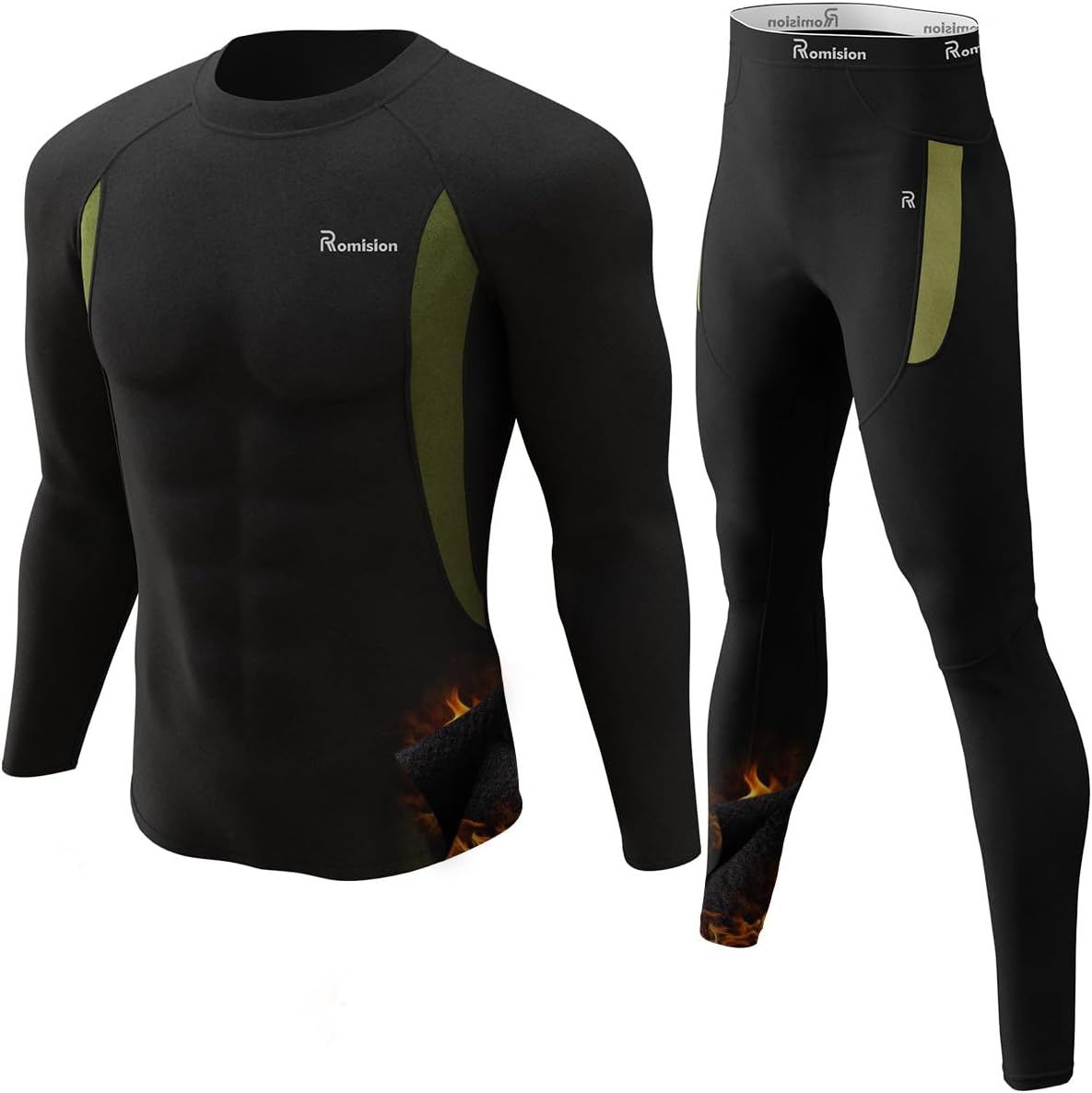
6romision’s thermal set uses lightly brushed fabric that feels soft and cozy, either on its own or under other layers.
It is a popular value pick for hunting, outdoor work and cold commutes, with enough stretch for movement.
Pros & Cons
What we like
- Soft brushed fabric
- Good stretch
- Value set
Watch out for
- Not merino
- Moderate breathability
Key Specs
- Fabric: brushed synthetic
- Includes: top and bottom
- Use: hunting, work, commuting
How We Chose
We compared fabrics, fit, coverage and features across more than 50 listings, then read verified owner feedback to find comfort and durability issues that spec sheets miss. We did not receive free products, and we do not claim hands-on testing. TOR Scores combine published specs, verified owner feedback and overall value.
Merino vs Synthetic vs Fleece-Lined Base Layers
- Merino wool is soft, warm when damp and naturally odor resistant, so you can wear it for days. It costs more and is less durable than synthetics.
- Synthetic (polyester, polypropylene) wicks quickly and dries fast. It is tough and affordable, but holds odor.
- Fleece-lined thermals have a brushed inside face that traps heat. They are warm and cheap for low-output cold such as standing, watching sports or hunting from a stand, but less good for hard exercise.
- Cotton is the one to avoid. It soaks up sweat and stays wet, which chills you quickly.
How to Wash Base Layers
Wash merino on a cool, gentle cycle with wool-safe detergent and dry flat. Synthetic base layers can go in a normal cool wash, but skip fabric softener, which coats fibers and slows wicking. Fleece-lined thermals last longer if you turn them inside out and avoid high dryer heat.
Related guides: best base layer for men, best base layer 2026 men, best base layer for backpacking, best base layer material. See every pick in our Base Layers category.
Common Base Layer Mistakes
- Wearing cotton. It soaks up sweat and stays wet, which chills you as soon as you stop moving.
- Going too heavy. A heavyweight layer on an uphill hike soaks through fast. Choose a lighter base layer and add a mid layer at rest.
- Loose fit. Fabric that does not touch your skin cannot wick sweat away.
- Ignoring the bottoms. Legs get cold too, especially on lifts and in stands. A matching bottom layer makes a big difference.
- Overdrying. High dryer heat shrinks merino and damages elastic. Air dry or use low heat.
How Layering Works
The three-layer system is simple: a base layer moves moisture, a mid layer (fleece, wool or a light puffy) traps heat, and a shell blocks wind and rain. You add and remove mid layers and shells as conditions change, while the base layer usually stays on all day.
Start activities slightly cool. If you start warm, you will sweat within minutes, and that sweat will chill you at the next stop.
How to Choose a Base Layer
A base layer sits next to your skin. Its job is to move sweat away so you stay dry, because wet skin loses heat far faster than dry skin. Warmth comes second; that is mostly the job of the layers on top.
- Material. Merino wool is warm when damp and resists odor. Synthetic polyester and polypropylene dry fastest and cost less. Blends try to give you both.
- Weight. Lightweight (around 150 g/m² for merino) suits high-output activity. Midweight (about 200 to 250 g/m²) is the all-round choice. Heavyweight is for low activity in serious cold.
- Fit. Snug, not tight. Fabric has to touch your skin to wick sweat.
- Seams. Flatlock seams lie flat under pack straps and harnesses.
- Features. Quarter zips vent heat, thumb loops keep sleeves down, and hoods add warmth without a hat.
Sources and further reading: CDC: preventing hypothermia and frostbite, CDC: winter weather safety and National Park Service: the Ten Essentials. Product details come from brand listings on Amazon.
Frequently Asked Questions
Is merino or synthetic better for a base layer?
Merino stays warm when damp and resists odor, so it is great for multi-day trips. Synthetic layers dry faster, cost less and are more durable. Both work well; choose by activity and budget.
Why should I avoid cotton base layers?
Cotton absorbs sweat and stays wet, which pulls heat from your body. In cold weather, that can lead to chilling or worse.
How tight should a base layer be?
Snug enough to touch your skin everywhere so it can wick sweat, but not so tight it restricts movement or circulation.
How do I wash a merino base layer?
Use a cool, gentle cycle with wool-safe detergent, skip fabric softener and dry flat. Avoid high dryer heat.
Can I sleep in a base layer?
Yes. A clean, dry base layer is a good sleep layer in a tent and helps keep your sleeping bag clean.
Final Verdict
The MERIWOOL Merino Boxer Briefs are the best base layer underwear for men, combining merino comfort with polyamide durability. For legs, the Carhartt Force Merino Blend Pant is our pick.










Write Your Review
No reviews yet. Be the first to share your experience!