

A base layer hoodie combines a technical next-to-skin top with a fitted hood. It is one of the most useful pieces for cold work and winter sports. If you are comparing options, our guide to the best base layer vs 4 fabric types is worth a look. Related: our shortlist of the best base layer.
We chose the best base layer hoodies.
The Outdoor Recreation is reader-supported. As an Amazon Associate we earn from qualifying purchases, at no extra cost to you.
Quick Picks
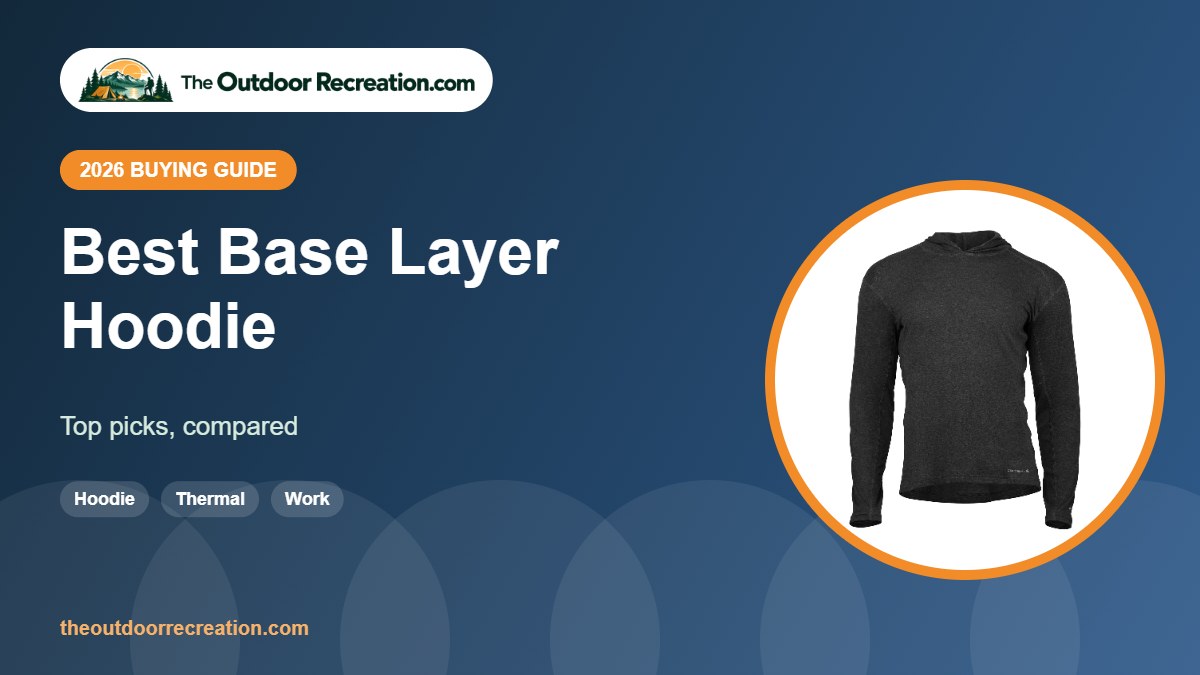
- Best overall: Carhartt Force Midweight Base Layer Hoodie
- Best budget: Fleece-Lined Hooded Compression Shirt
- Best non-hooded alternative: Under Armour ColdGear Fitted Mock
- Best merino alternative: Merino.tech Men’s Merino Base Layer Top
- Best set for deep cold: Fleece Hunting Base Layer Set
- Best bottoms to pair: Carhartt Force Merino Blend Base Layer Pant
Comparison Table
| Product | Best for | Type | Standout feature | |
|---|---|---|---|---|
| Carhartt Force Midweight Base Layer Hoodie | Best overall | Midweight synthetic | Hood, FastDry wicking | View |
| Fleece-Lined Hooded Compression Shirt | Best budget | 85% polyester/15% spandex | Fleece-lined hood | View |
| Under Armour ColdGear Fitted Mock | Best non-hooded alternative | Dual-layer ColdGear | Mock neck, mesh vents | View |
| Merino.tech Men’s Merino Base Layer Top | Best merino alternative | 100% merino | 17.5-micron superfine wool | View |
| Fleece Hunting Base Layer Set | Best set for deep cold | 90% poly/10% spandex | Fleece-backed, wicking | View |
| Carhartt Force Merino Blend Base Layer Pant | Best bottoms to pair | Synthetic-merino blend | Flatlock seams | View |
Detailed Reviews

1Carhartt’s Force Midweight hoodie uses Force and FastDry technology to wick sweat and dry fast, with odor-resistant properties for long workdays.
The fitted hood adds warmth under a hard hat or helmet, making it great for cold-weather work, hunting and fishing.
Pros & Cons
What we like
- Integrated hood
- FastDry wicking
- Odor resistant
Watch out for
- Workwear styling
- Hood is snug for big heads
Key Specs
- Tech: Force, FastDry
- Feature: hood
- Use: work, hunting, fishing

2This compression shirt has a fleece-lined thermal body and an attached hood, designed for winter sports like skiing, football and ice fishing.
The 85 percent polyester and 15 percent spandex fabric stretches with you. It is a budget hooded base layer for very cold days.
Pros & Cons
What we like
- Hooded
- Fleece-lined warmth
- Very stretchy
Watch out for
- Compression fit is tight
- Generic brand
Key Specs
- Fabric: 85% polyester, 15% spandex
- Feature: hood
- Fit: compression

3. Under Armour ColdGear Fitted Mock
3Under Armour’s ColdGear Fitted Mock is snug and form-fitting without full compression. Dual-layer fabric pairs a warm brushed interior with a smooth, fast-drying exterior.
Stretch-mesh back and underarm panels add ventilation, and the mock neck adds warmth without a zipper. It is a favorite for golf, running and skiing.
Pros & Cons
What we like
- Warm, fast-drying dual layer
- Mock neck
- Mesh ventilation panels
Watch out for
- Fitted cut is snug
- Synthetic odor
Key Specs
- Fabric: dual-layer ColdGear
- Neck: mock
- Fit: fitted
- Vents: stretch-mesh panels

4. Merino.tech Men’s Merino Base Layer Top
4Merino.tech’s men’s top is one of the best-selling merino base layers on Amazon. It is 100 percent superfine 17.5-micron merino, which feels soft rather than itchy, and comes in lightweight, midweight and heavyweight versions.
Merino stays warm when damp and resists odor, so you can wear it for several days on a trip. The midweight is our all-round pick for hiking, skiing and cold commutes.
Pros & Cons
What we like
- 100% superfine merino
- Three weights to choose from
- Odor resistant for multi-day use
Watch out for
- Less durable than synthetics
- Needs gentle washing
Key Specs
- Material: 100% merino wool, 17.5 micron
- Weights: light, mid, heavy
- Use: hiking, skiing, travel

5This hugely popular men’s thermal set is made from 90 percent polyester and 10 percent spandex with a cozy fleece backing, designed to resist pilling and shrinkage.
The brand highlights breathable, moisture-wicking fabric, and it is a favorite for hunting, ice fishing and outdoor work in extreme cold.
Pros & Cons
What we like
- Very warm fleece backing
- Stretchy fit
- Resists pilling and shrinking
Watch out for
- Synthetic odor on long trips
- Warm for hard hikes
Key Specs
- Fabric: 90% polyester, 10% spandex
- Interior: fleece
- Includes: top and bottom

6. Carhartt Force Merino Blend Base Layer Pant
6Carhartt’s Force midweight pant blends synthetic fibers with merino wool for wicking, odor resistance and temperature regulation.
Strategically placed flatlock seams reduce chafing under work pants and hunting bibs. It is a durable base layer bottom for long days outside.
Pros & Cons
What we like
- Merino blend comfort
- Flatlock seams
- FastDry wicking
Watch out for
- Bottoms only
- Workwear sizing
Key Specs
- Material: synthetic-merino blend
- Seams: flatlock
- Tech: Force, FastDry
How We Chose
We compared fabrics, fit, coverage and features across more than 50 listings, then read verified owner feedback to find comfort and durability issues that spec sheets miss. We did not receive free products, and we do not claim hands-on testing. TOR Scores combine published specs, verified owner feedback and overall value.
How to Choose a Base Layer
A base layer sits next to your skin. Its job is to move sweat away so you stay dry, because wet skin loses heat far faster than dry skin. Warmth comes second; that is mostly the job of the layers on top. For a different angle, see our picks for the best base layer vs 2nd layer.
- Material. Merino wool is warm when damp and resists odor. Synthetic polyester and polypropylene dry fastest and cost less. Blends try to give you both.
- Weight. Lightweight (around 150 g/m² for merino) suits high-output activity. Midweight (about 200 to 250 g/m²) is the all-round choice. Heavyweight is for low activity in serious cold.
- Fit. Snug, not tight. Fabric has to touch your skin to wick sweat.
- Seams. Flatlock seams lie flat under pack straps and harnesses.
- Features. Quarter zips vent heat, thumb loops keep sleeves down, and hoods add warmth without a hat.
Merino vs Synthetic vs Fleece-Lined Base Layers
- Merino wool is soft, warm when damp and naturally odor resistant, so you can wear it for days. It costs more and is less durable than synthetics.
- Synthetic (polyester, polypropylene) wicks quickly and dries fast. It is tough and affordable, but holds odor.
- Fleece-lined thermals have a brushed inside face that traps heat. They are warm and cheap for low-output cold such as standing, watching sports or hunting from a stand, but less good for hard exercise.
- Cotton is the one to avoid. It soaks up sweat and stays wet, which chills you quickly.
How to Wear a Base Layer Hoodie
Wear it next to your skin, then add a fleece or insulated jacket and a shell on top. Pull the hood up under a helmet, hard hat or jacket hood when the wind picks up, and drop it when you warm up. A base layer hoodie also doubles as a sun hoodie on bright spring days. We cover this in more depth in our roundup of the best base layer material.
Related guides: best base layer with hood, best base layer with black, best base layer for hunting, best base layer for men. See every pick in our Base Layers category.
Sources and further reading: CDC: preventing hypothermia and frostbite, CDC: winter weather safety and National Park Service: the Ten Essentials. Product details come from brand listings on Amazon.
Frequently Asked Questions
What does a base layer do?
A base layer moves sweat away from your skin so you stay dry and warm. Dry skin loses much less heat than wet skin.
How tight should a base layer be?
Snug enough to touch your skin everywhere so it can wick sweat, but not so tight it restricts movement or circulation.
What base layer weight should I choose?
Lightweight for high-output activity or mild weather, midweight for most cold-weather use, and heavyweight for low activity in deep cold.
Why should I avoid cotton base layers?
Cotton absorbs sweat and stays wet, which pulls heat from your body. In cold weather, that can lead to chilling or worse.
How do I wash a merino base layer?
Use a cool, gentle cycle with wool-safe detergent, skip fabric softener and dry flat. Avoid high dryer heat.
Final Verdict
The Carhartt Force Midweight Base Layer Hoodie is the best base layer hoodie. The Fleece-Lined Hooded Compression Shirt is the best budget pick.







Write Your Review
No reviews yet. Be the first to share your experience!