

Hiking cameras fall into a few clear types.
Here is how the best of each compare.
The Outdoor Recreation is reader-supported. As an Amazon Associate we earn from qualifying purchases, at no extra cost to you.
Quick Picks
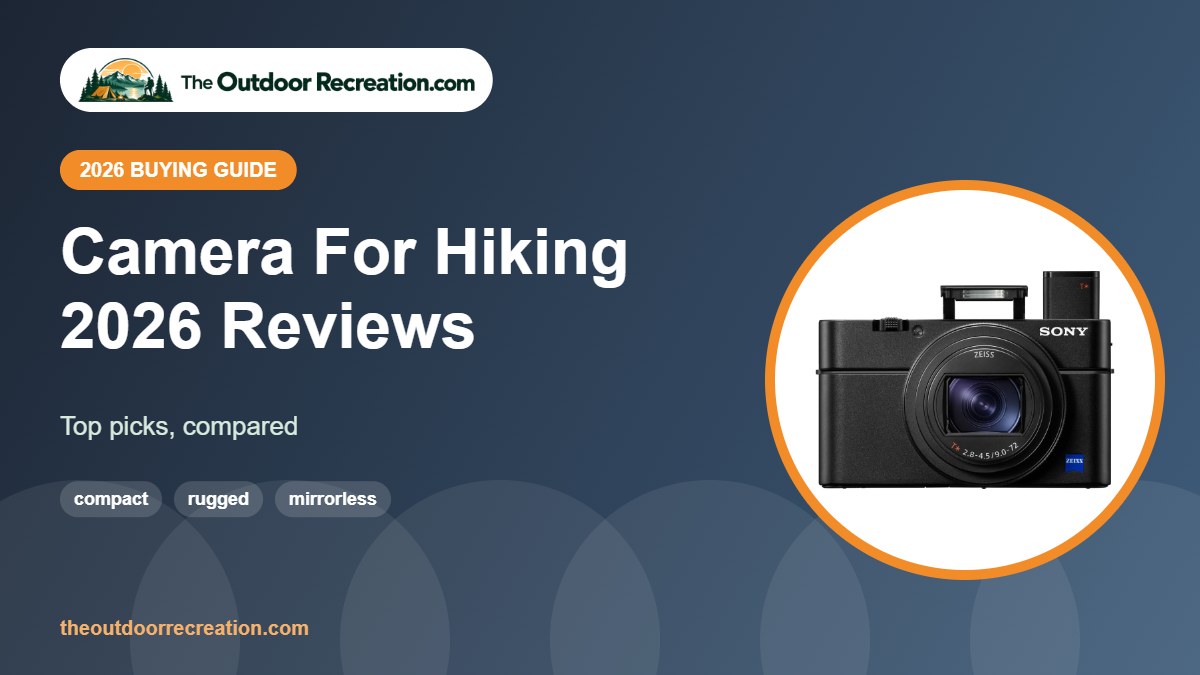
- Best compact: Sony RX100 VII
- Best rugged: OM SYSTEM Olympus Tough TG-7
- Best mirrorless: Canon EOS R50 Mirrorless Kit (18-45 mm)
- Best action: GoPro HERO13 Black
- Best wide-angle vlog compact: Sony ZV-1 II
Comparison Table
| Product | Best for | Key spec | Standout feature | |
|---|---|---|---|---|
| Sony RX100 VII | Best compact | 1 in sensor | 24-200 mm zoom | View |
| OM SYSTEM Olympus Tough TG-7 | Best rugged | Waterproof, shockproof | Freeze proof | View |
| Canon EOS R50 Mirrorless Kit (18-45 mm) | Best mirrorless | APS-C sensor | Light kit | View |
| GoPro HERO13 Black | Best action | 5.3K60 | HyperSmooth, HB-Series lenses, GPS | View |
| Sony ZV-1 II | Best wide-angle vlog compact | 1 in sensor | 18-50 mm wide zoom | View |
Detailed Reviews

1The Sony RX100 VII packs a 1-inch stacked sensor and a 24-200 mm equivalent zoom into a jacket-pocket body.
It is one of the most capable cameras you can carry on a hike without a camera bag.
Pros & Cons
What we like
- Huge zoom range
- Pocketable
- Fast autofocus
Watch out for
- Pricey
- Small grip
Key Specs
- Sensor: 1 in
- Zoom: 24-200 mm equiv.
- Video: 4K

2The Tough TG-7 is a rugged compact built to survive water, drops, dust and freezing temperatures.
Its microscope mode and GPS logging make it a great hiking and snorkeling camera.
Pros & Cons
What we like
- Waterproof and rugged
- Close-up macro mode
- GPS log
Watch out for
- Smaller sensor
- Modest zoom
Key Specs
- Waterproof: yes
- Video: 4K
- Extras: GPS, macro modes

3The Canon EOS R50 is a small, light APS-C mirrorless camera with an 18-45 mm kit lens and beginner-friendly guided menus.
It is a big step up in image quality from phones while staying hiking-friendly.
Pros & Cons
What we like
- Light for APS-C
- Guided menus
- Interchangeable lenses
Watch out for
- Kit lens is basic
- Not weather sealed
Key Specs
- Sensor: APS-C, 24.2 MP
- Lens: 18-45 mm kit
- Video: 4K

4GoPro HERO13 Black records 5.3K60 video and 27MP photos with HyperSmooth stabilization, and it works with HB-Series lens mods such as the Ultra Wide and Macro lenses. GPS is back on HERO13.
It has the biggest accessory ecosystem of any action camera and connects over Wi-Fi to the GoPro Quik app.
Pros & Cons
What we like
- Excellent stabilization
- Lens mod system
- Huge accessory ecosystem
Watch out for
- Premium price
- Battery drains fast at top settings
Key Specs
- Video: 5.3K60
- Photo: 27MP
- Stabilization: HyperSmooth
- GPS: yes
- Connectivity: Wi-Fi, Bluetooth

5The Sony ZV-1 II has a wide 18-50 mm equivalent zoom that fits big landscapes and selfie-style trail clips.
Its directional mic and simple controls make it easy for beginners.
Pros & Cons
What we like
- Very wide lens
- Good mic
- Easy to use
Watch out for
- Short zoom
- No viewfinder
Key Specs
- Sensor: 1 in, 20.1 MP
- Lens: 18-50 mm equiv.
- Video: 4K
How We Chose
We compared weight, sensor size, zoom range, weather resistance, battery life and ease of use across dozens of cameras, then read verified owner feedback on real trail use. We did not receive free products, and we do not claim hands-on testing. TOR Scores combine published specs, verified owner feedback and overall value. We cover this in more depth in our roundup of the camera for hiking vs. phone cameras.
How to Choose a Camera for Hiking
- Weight and size: pocket compacts and small mirrorless cameras are easiest to carry for miles.
- Zoom: superzooms reach distant wildlife; wide lenses suit landscapes and selfies.
- Weather resistance: rugged waterproof cameras survive rain, dust and drops.
- Battery: carry spares or USB charging for multi-day trips.
- Stabilization: helps handheld video while walking.
If you only want better photos than your phone with no fuss, a 1-inch compact is the sweet spot; for the best quality, a light mirrorless kit. You may also find our guide to the best camera for hiking with a second camera helpful.
Sensor Size and Image Quality
Bigger sensors capture more light, giving cleaner images at dawn, dusk and in forests. Phones and rugged compacts use small sensors; premium compacts like the RX100 and G7 X use 1-inch sensors; mirrorless cameras like the a6400 and R50 use larger APS-C sensors. Bigger sensors usually mean bigger cameras and lenses, so balance quality with what you are willing to carry.
Batteries and Storage on Long Trips
Cold, video and long zoom use drain batteries quickly. Carry at least one spare, charge from a power bank on multi-day trips and turn off Wi-Fi and Bluetooth when you do not need them. Bring a second memory card in case one fails, and back up photos when you get back to town. Related: our shortlist of the best camera backpack 2026 reviews.
Carrying a Camera on the Trail
Keep the camera where you can reach it quickly: a hip-belt pouch, a shoulder-strap clip or a chest bag. Use a padded insert inside your pack for extra lenses and keep spare batteries close to your body in cold weather. A rain cover or dry bag protects non-rugged cameras during storms and river crossings.
Photography in National Parks
National parks are made for photography, but follow park rules: stay on trails, keep a safe distance from wildlife and never feed animals. Launching drones is prohibited in most national parks, so plan to use a ground camera with a good zoom instead. Early morning and evening light give the best results and fewer crowds. If you are comparing options, our guide to the best camera for hiking and backpacking is worth a look.
Cameras for Kids and Beginners
Kids and beginners do best with simple, rugged cameras that can survive drops and water. Large buttons, simple modes and waterproof bodies reduce stress about damage. A rugged compact or kids camera lets young hikers document the trip and stay engaged on the trail.
Packing a Camera for the Trail
- Keep the camera in a hip-belt pocket or chest clip for quick shots.
- Carry a spare battery in an inside pocket.
- Follow Leave No Trace: stay on trails and give wildlife space when filming.
- See our camera backpack for hiking guide for packs with quick access.
Action Camera Care and Settings
- Use a fast, high-endurance microSD card rated for 4K recording.
- Update firmware through the app for better stabilization and battery life.
- Keep spare batteries warm in an inside pocket on cold days.
- Use a lens guard; scratched lenses ruin footage.
- For most sports, 4K at 60 fps with stabilization on is a good default.
How to Choose an Action Camera
- Sensor size: bigger sensors handle low light much better.
- Stabilization: HyperSmooth, RockSteady and FlowState make bumpy footage watchable.
- Resolution and frame rate: 4K60 suits most people; 4K120 allows slow motion.
- Waterproofing: flagships are waterproof without a case; budget models need the housing.
- Battery: carry spares, especially in cold weather.
- App: a good phone app makes editing and sharing easy.
Related guides: best camera for hiking 2026 review, best camera for hiking 2026 year, best camera for hiking. See every pick in our Outdoor Gear & Tech category.
Sources and further reading: National Park Service: the Ten Essentials, Leave No Trace: the 7 Principles and National Park Service: camping basics. Product specs come from brand listings on Amazon; always check your airline’s current carry-on size rules before you fly.
Frequently Asked Questions
Is a phone good enough for hiking photos?
Often yes; a dedicated camera adds zoom, better low light and rugged options.
What camera is best for hiking?
A 1-inch compact for most people, a rugged camera for wet trips and a light mirrorless for the best quality.
How do I protect my camera on the trail?
Use a padded pouch, a rain cover and keep spare batteries warm.
Can I fly a drone in national parks?
Launching drones is prohibited in most national parks.
Do I need a waterproof camera for hiking?
Not always, but rugged waterproof models are worry-free in rain and near water.
Final Verdict
Pick a compact for ease, a rugged camera for wet trips and mirrorless for quality.



Write Your Review
No reviews yet. Be the first to share your experience!